








Headway SAKURA 2026
Spring is coming! Introducing the 2026 Headway Sakura Model~
Headway’s “Sakura Models” have been a staple since 2014, when their history began. For the latest 2026 limited edition, two distinct themes were incorporated into the design for each series.
The Aska Team Build Series Sakura Model features the Japanese pheasant, Japan’s national bird, as its motif. The beautiful plumage and dignified form of the Japanese pheasant symbolize Japan’s natural beauty. Appearing in classical literature, it has been deeply connected to people’s lives and culture since ancient times. Combining the pheasant, cherished in Japan for centuries, with scenes of cherry blossoms, we weave a new spring story.
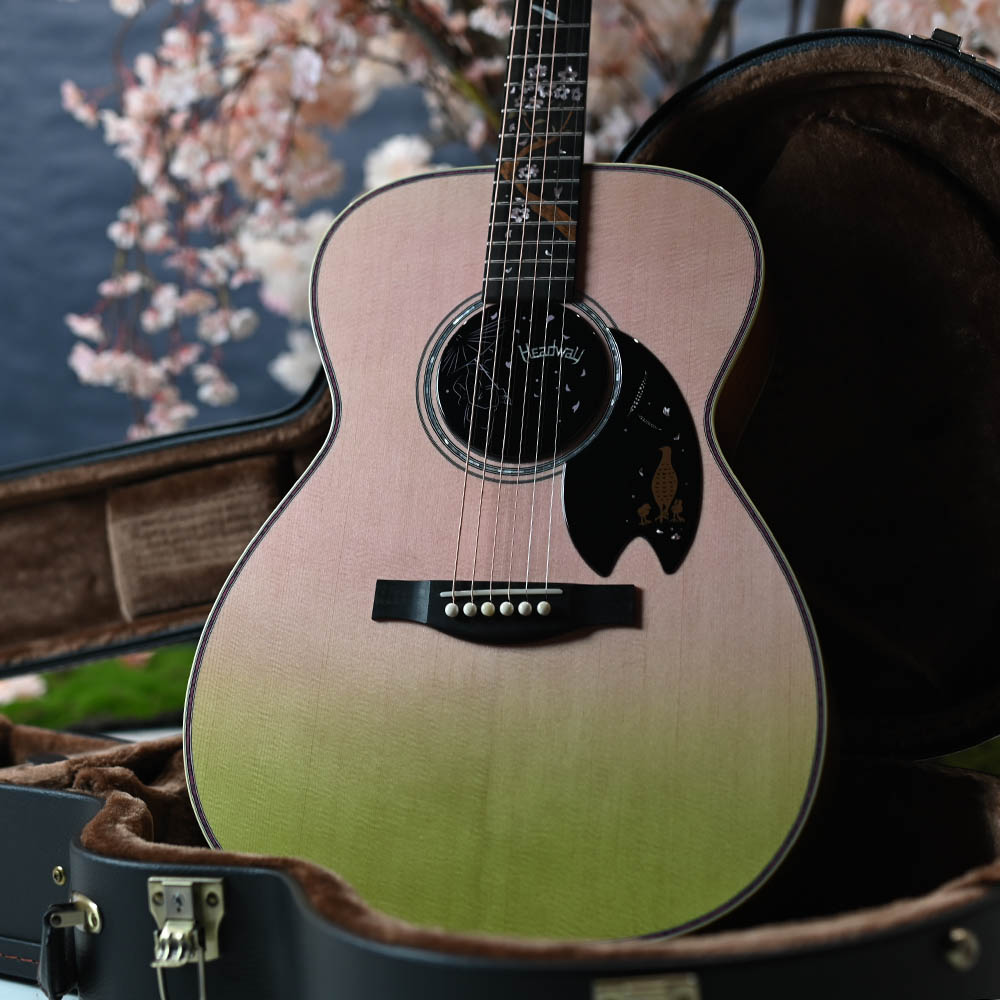
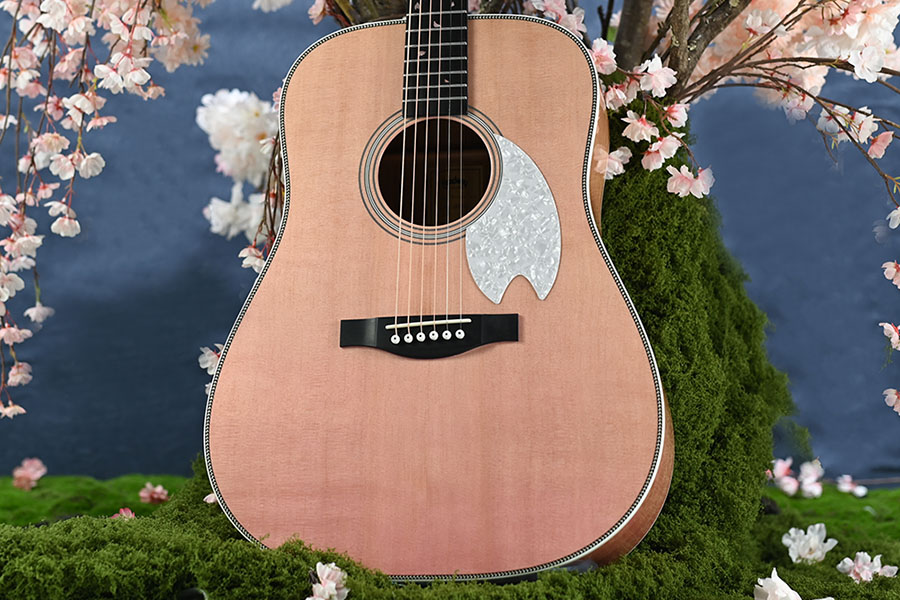
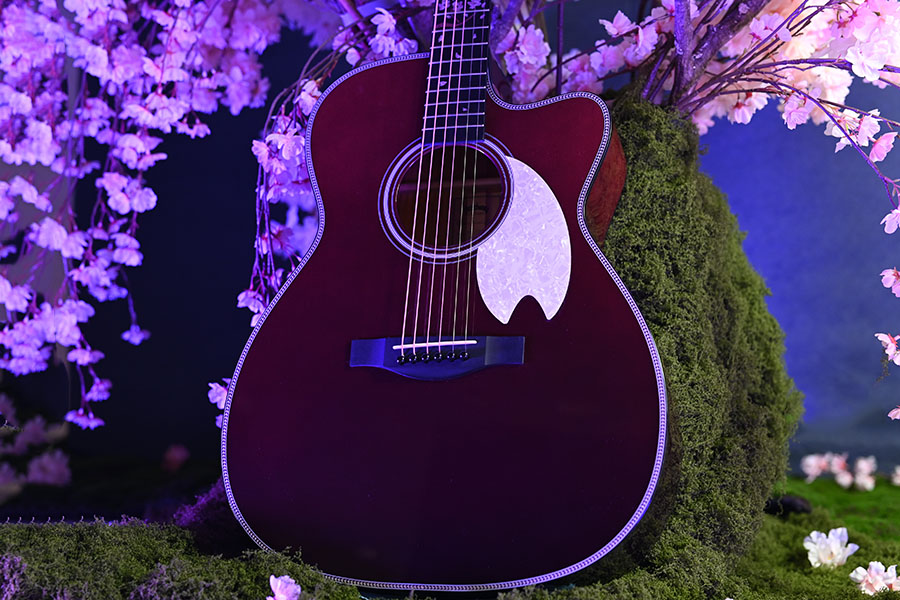
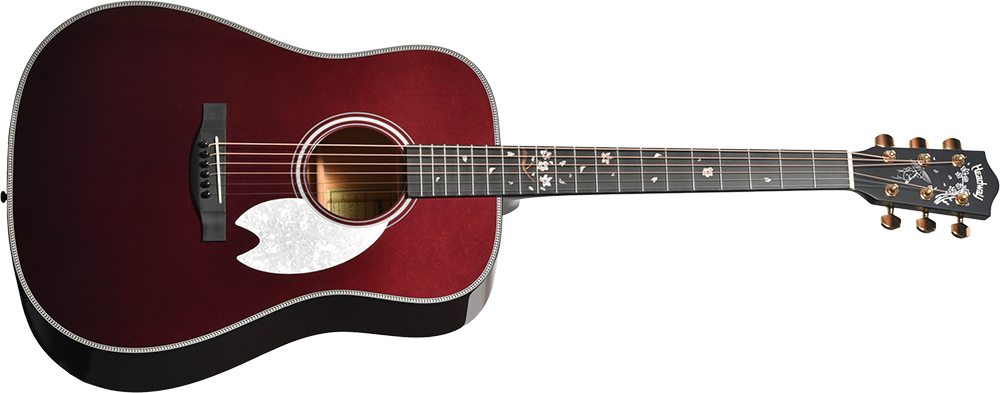
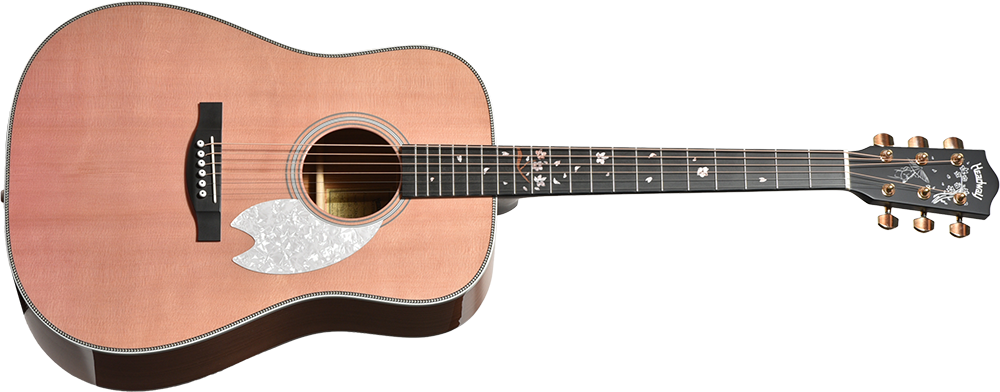
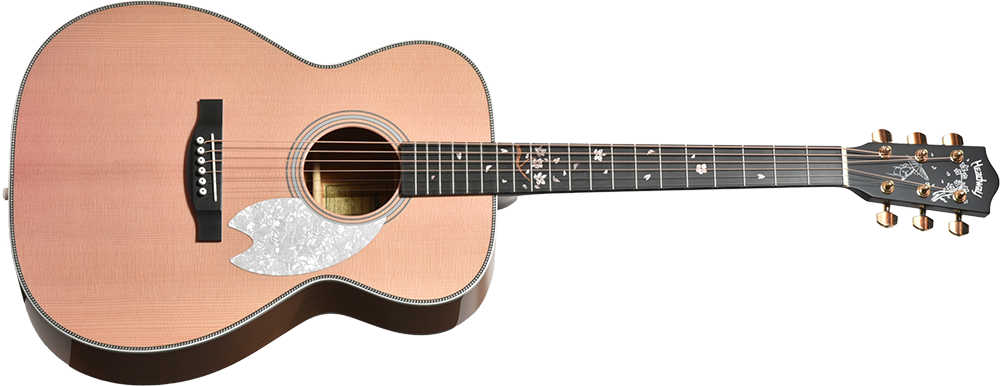
The Standard Series Sakura Model features a design embellished with the recurring motif of the “woman with a Japanese umbrella” seen in recent Sakura models, alongside ink wash brush-stroke style cherry blossoms. We offer two color schemes: a pale cherry blossom pink evoking blossoms swaying beneath the sunlight, and a deep night sakura color inspired by blossoms swaying under the moonlight.
Please enjoy these Headway Sakura Models, which evoke the arrival of spring!
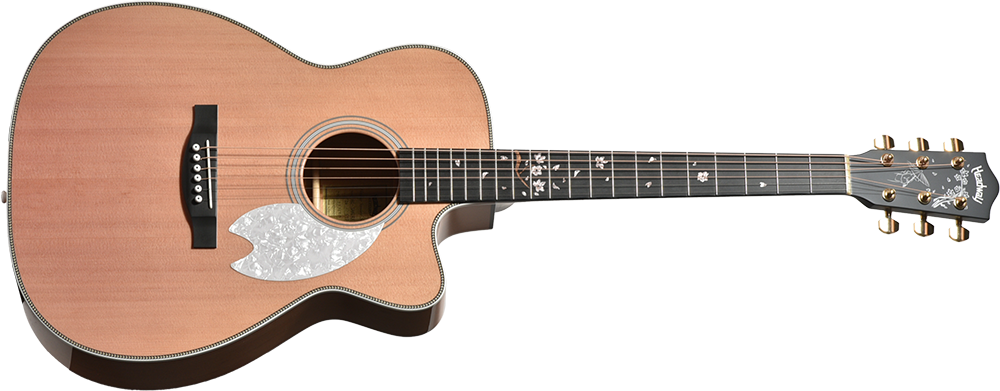
Limited Edition Spring 2026 ATB Sakura Model
Limited Edition Spring 2026
ATB Sakura Model
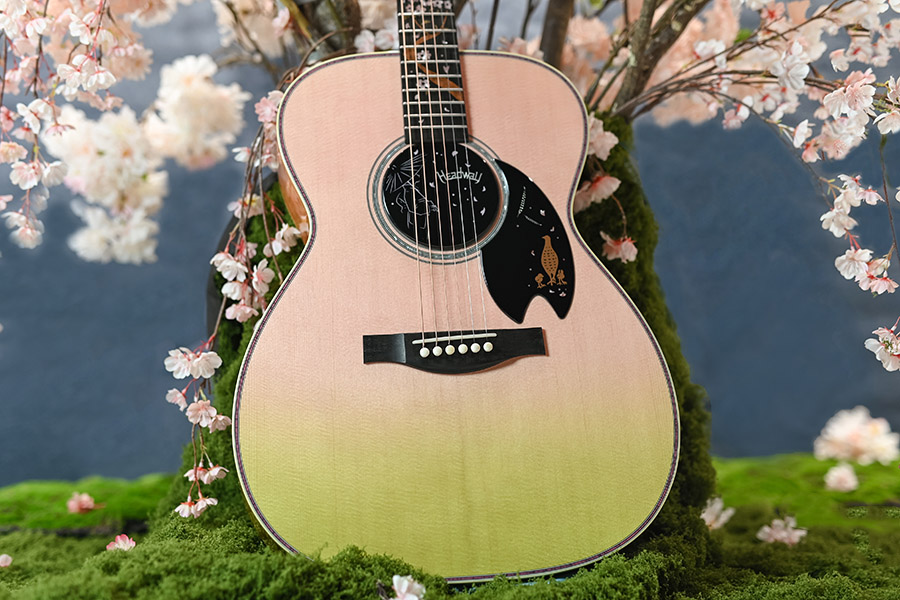
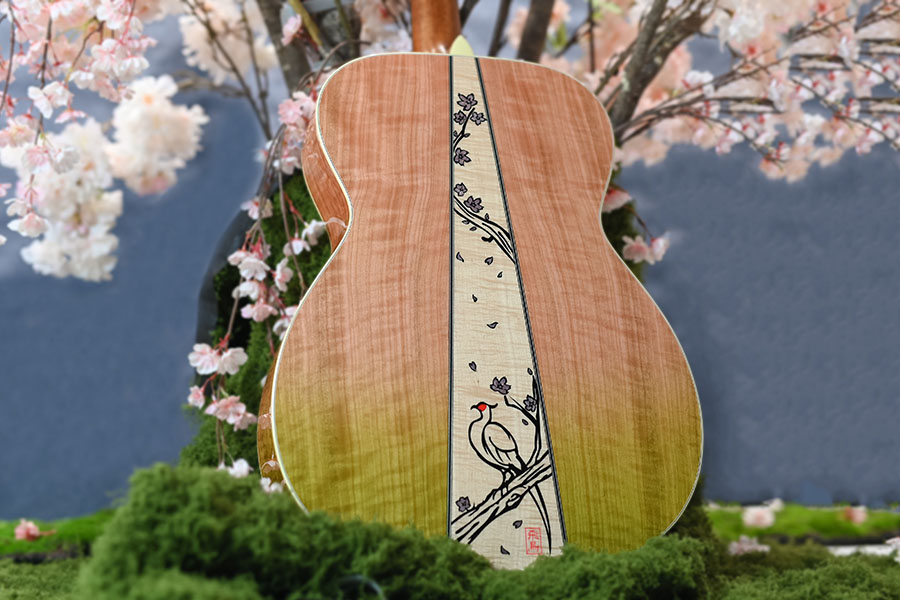
The 2026 Spring Aska Team Build Series Sakura Model features the Japanese pheasant, Japan’s national bird, as its motif. The beautiful plumage and dignified form of the Japanese pheasant symbolize Japan’s natural beauty. Appearing in classical literature, it has been deeply connected to people’s lives and culture since ancient times. Combining the pheasant, cherished in Japan for centuries, with the scene of cherry blossoms, we weave a new spring story.
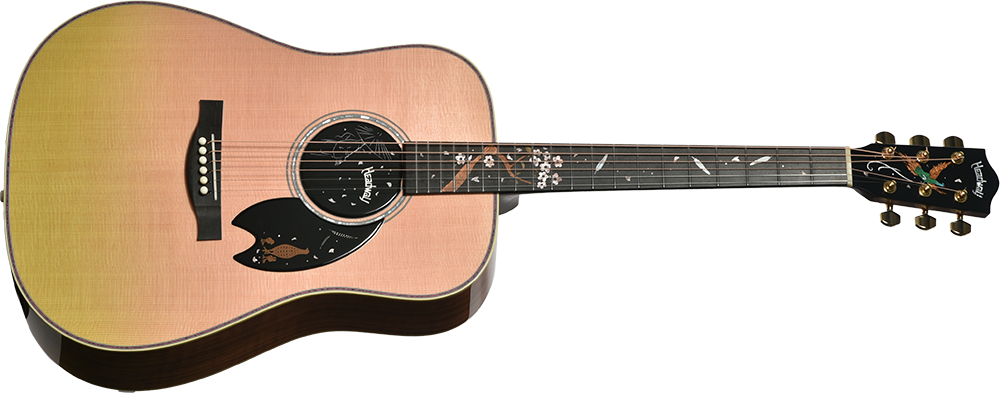
Features
Japan’s national bird, the pheasant, vividly designed
“Guitar craftsmanship only possible from a Japanese manufacturer” is a vital theme for us as we introduce Japanese domestic woods also known as “Wazai”, starting with our Sakura model. As a natural extension of this vision, incorporating the Japanese pheasant, a species unique to Japan, into our designs became an inevitable endeavor for us.
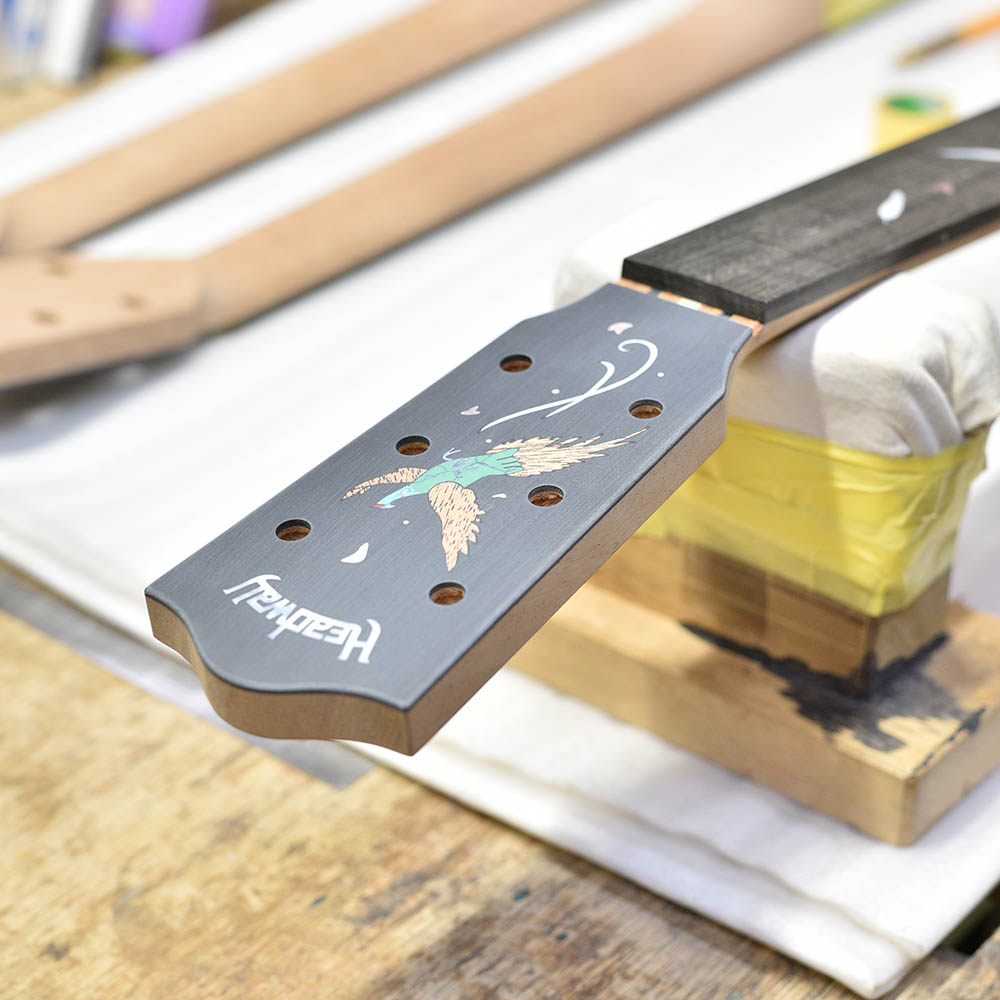
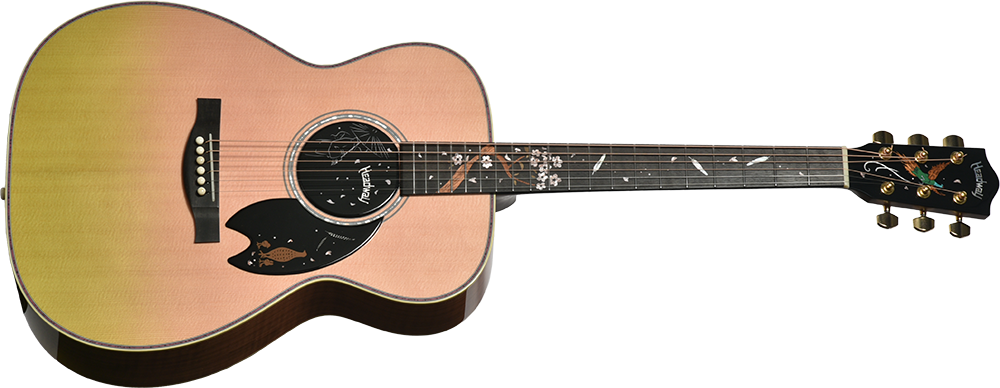
The pheasant adorning the headtop is a delicate representation of the vibrant male bird, crafted using multiple materials. It embodies the advanced techniques only achievable by the artisans of Aska workshop, who have mastered countless motifs over the years.
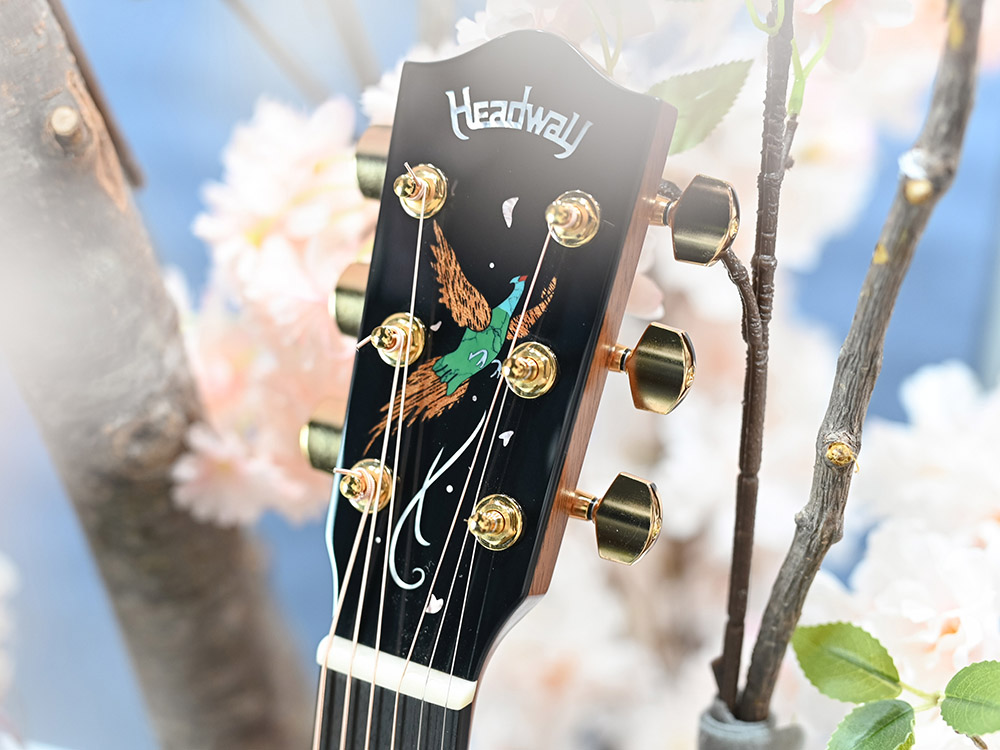
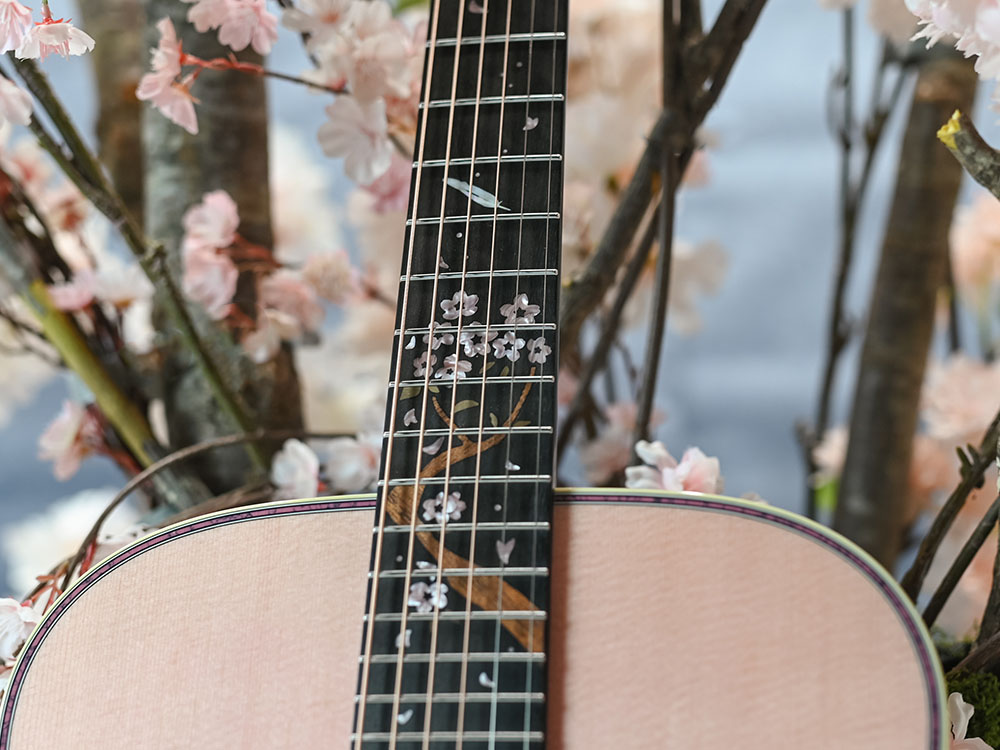
Cherry blossoms expressed through inlay workfeaturing pheasant feathers and Japanese aesthetics
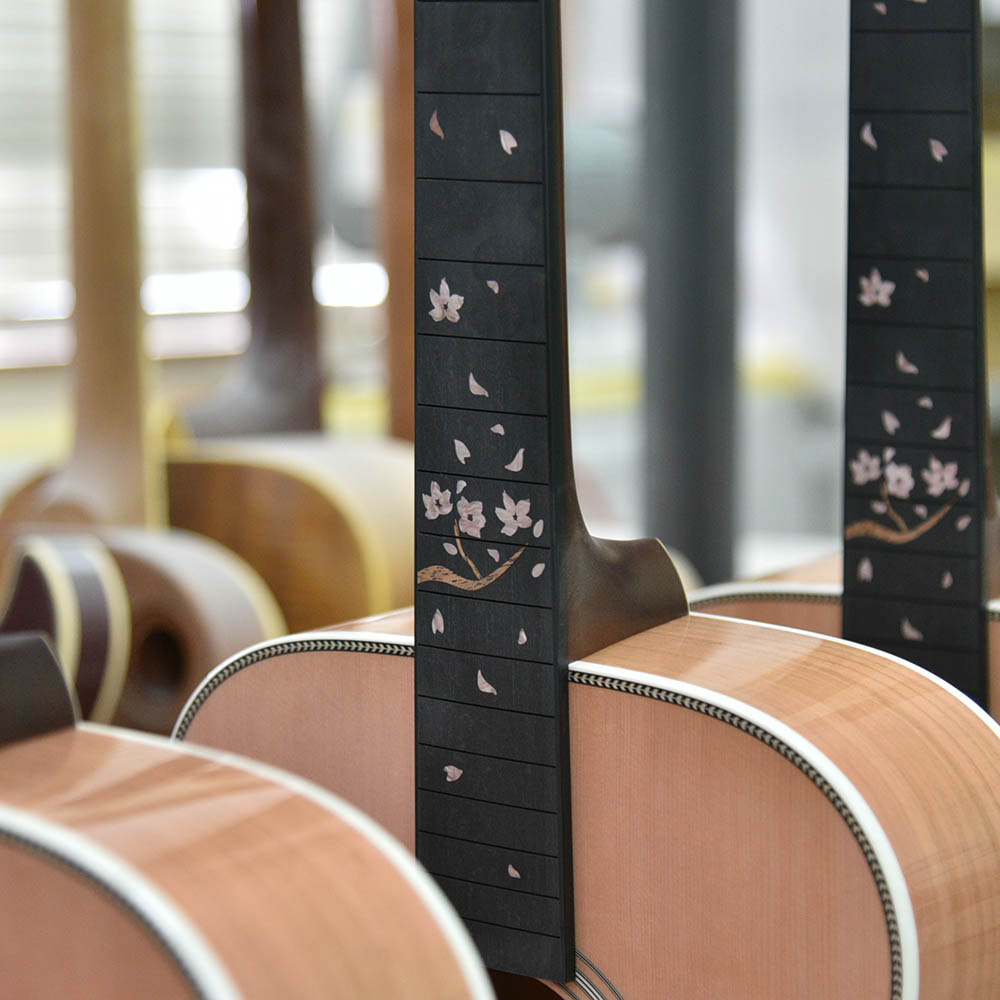
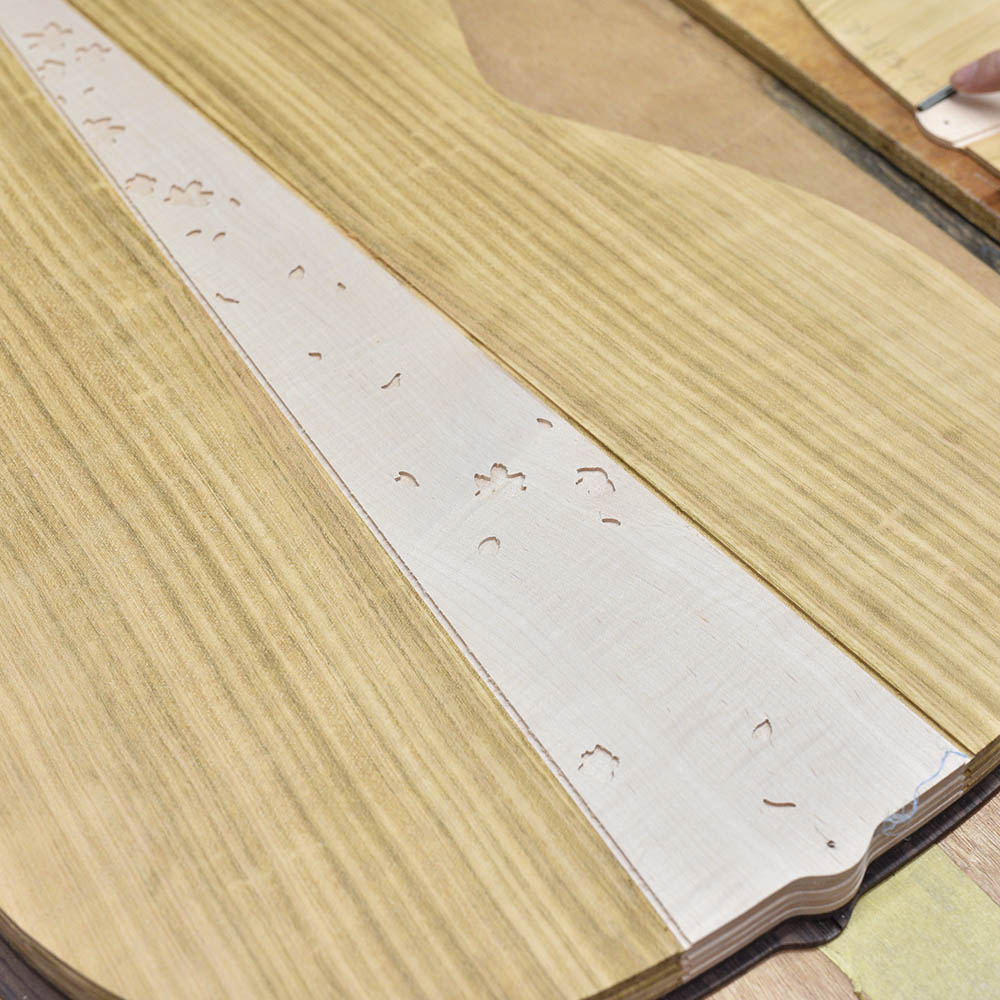
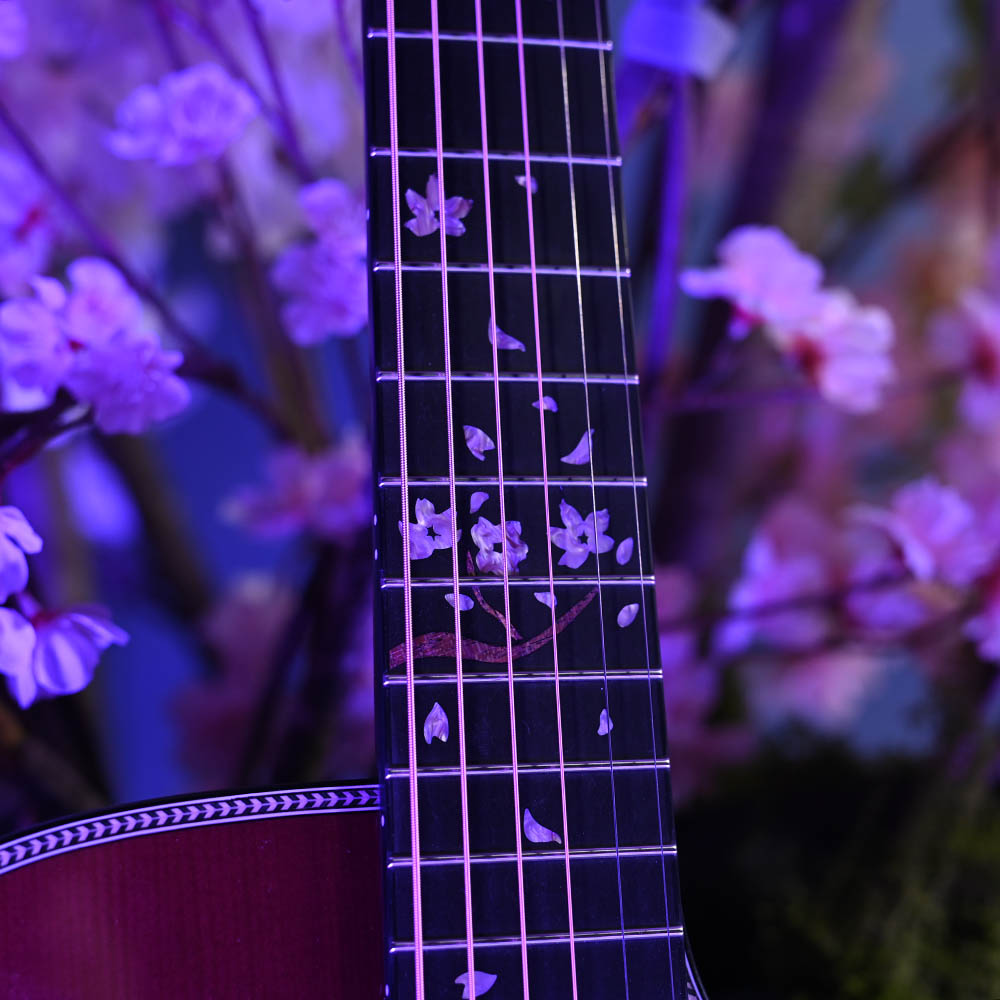
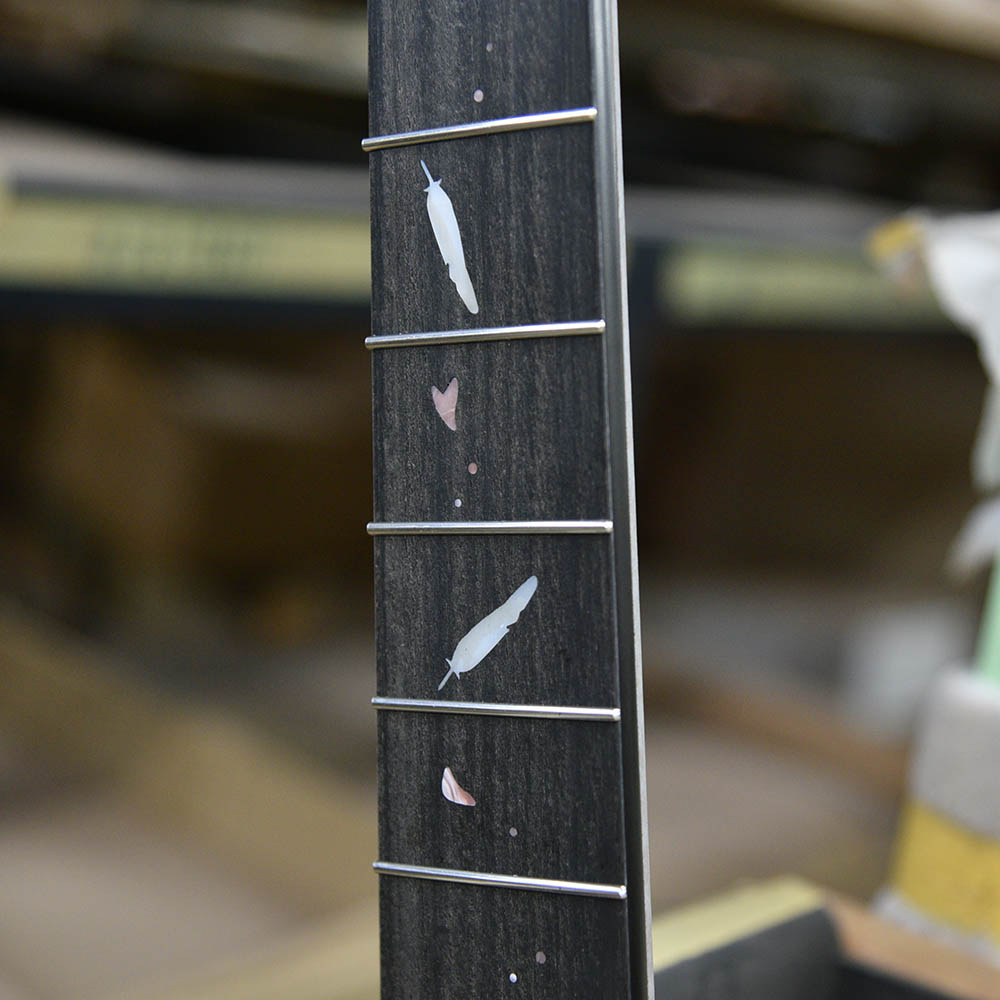
The ebony fingerboard features inlay work depicting cherry blossoms and pheasant feathers. To express a Japanese aesthetic in keeping with the pheasant theme, multiple materials were used to create a design evoking the spirit of Japan, with a winding cherry tree branch.
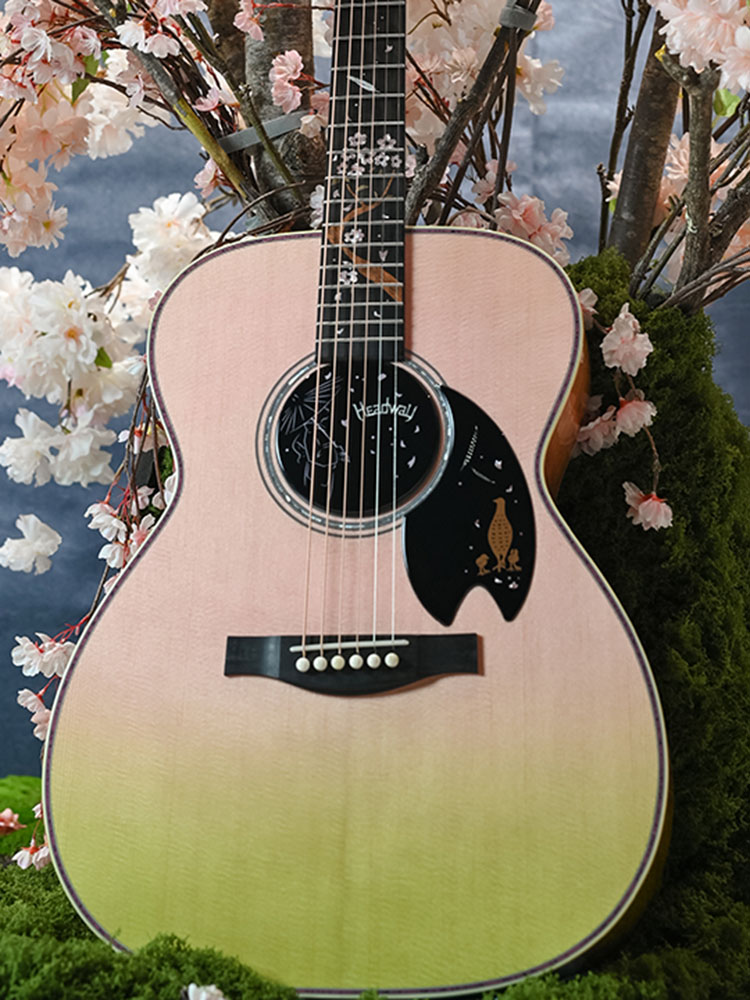
Expressing cherry blossoms in fullbloom and spring buds through coloring
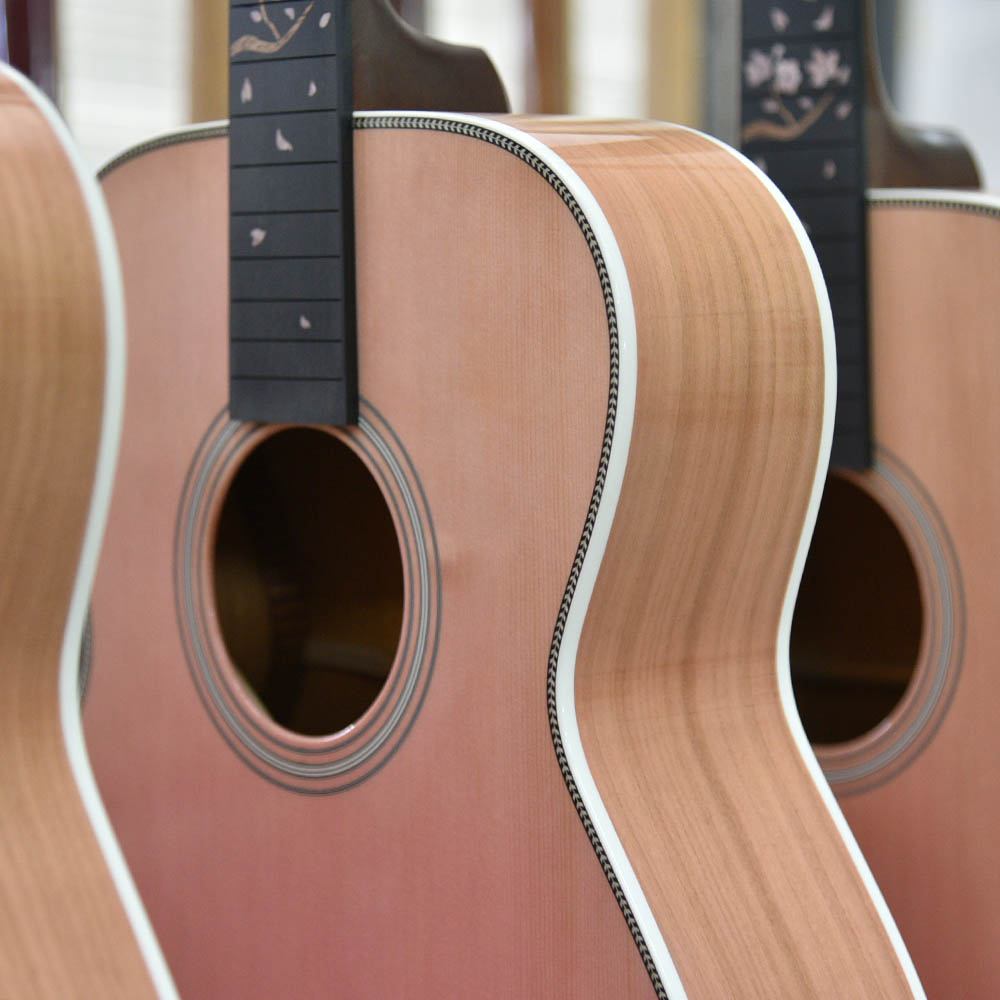
The coloring features a gradient blending a pale cherry blossom pink that accentuates the cherry wood grain with a fresh spring grass green evoking budding leaves. Combining these two distinct colors requires meticulous paint separation and precise color expression at overlapping edges, showcasing the skill of our experienced lacquer artisans who have crafted countless Sakura themed guitars.
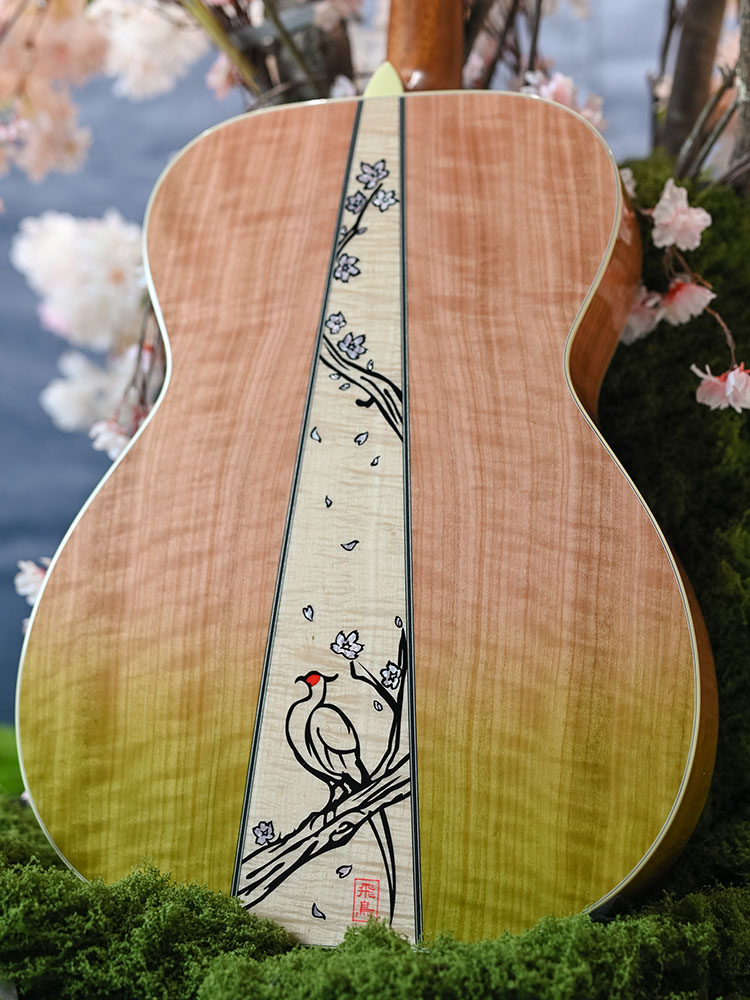
Body back design inspired by hanging scrolls in ink wash style
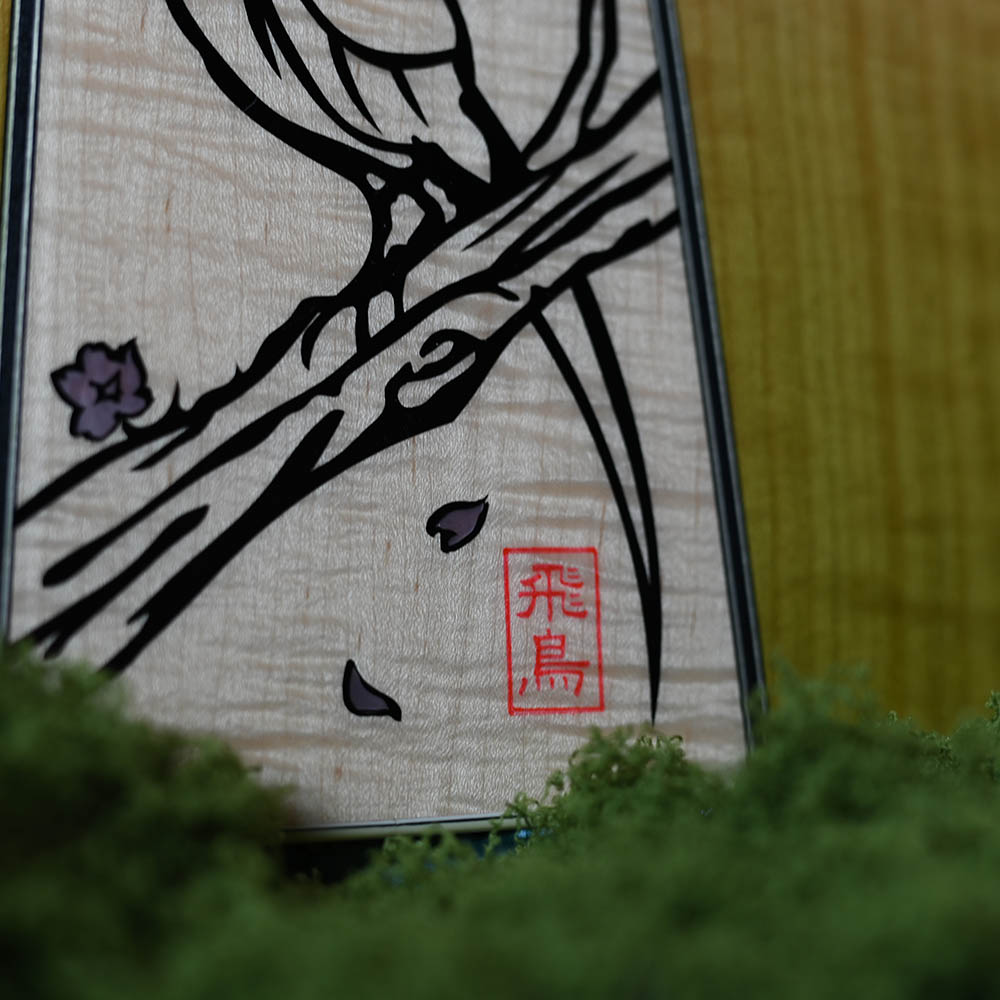
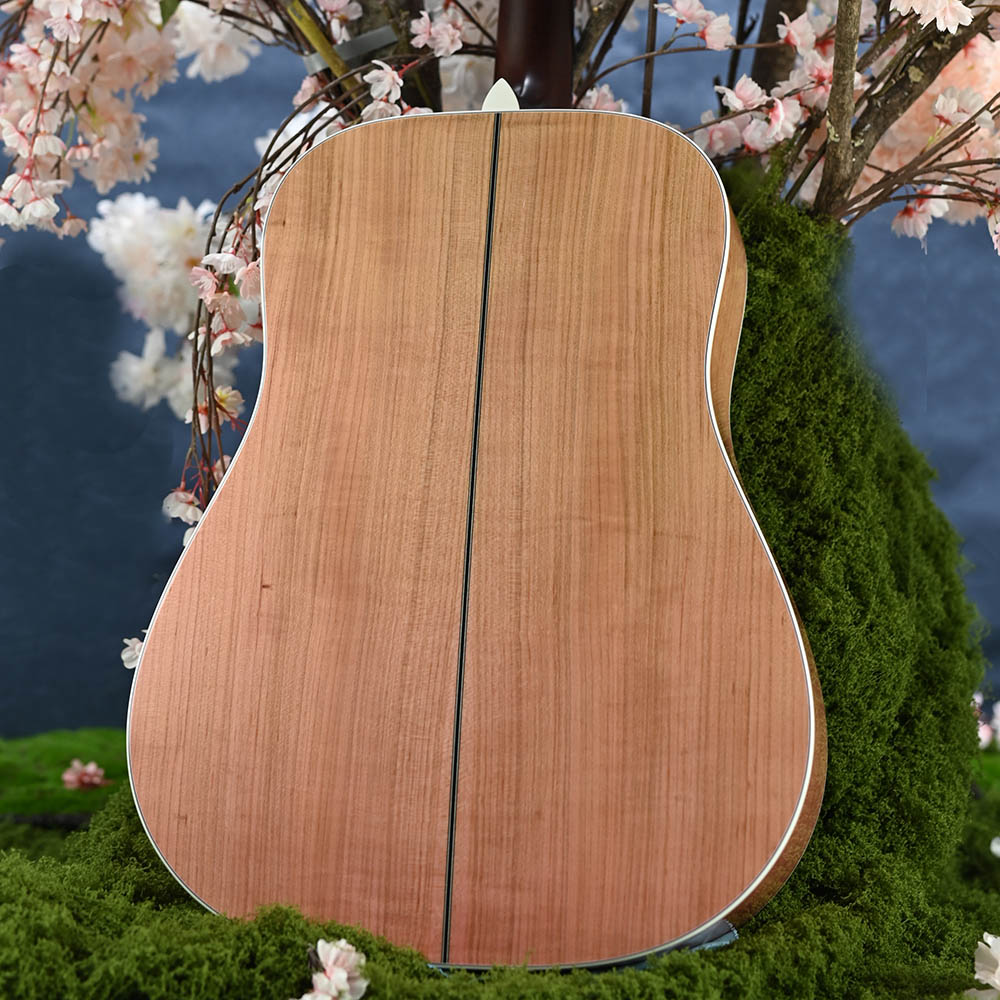
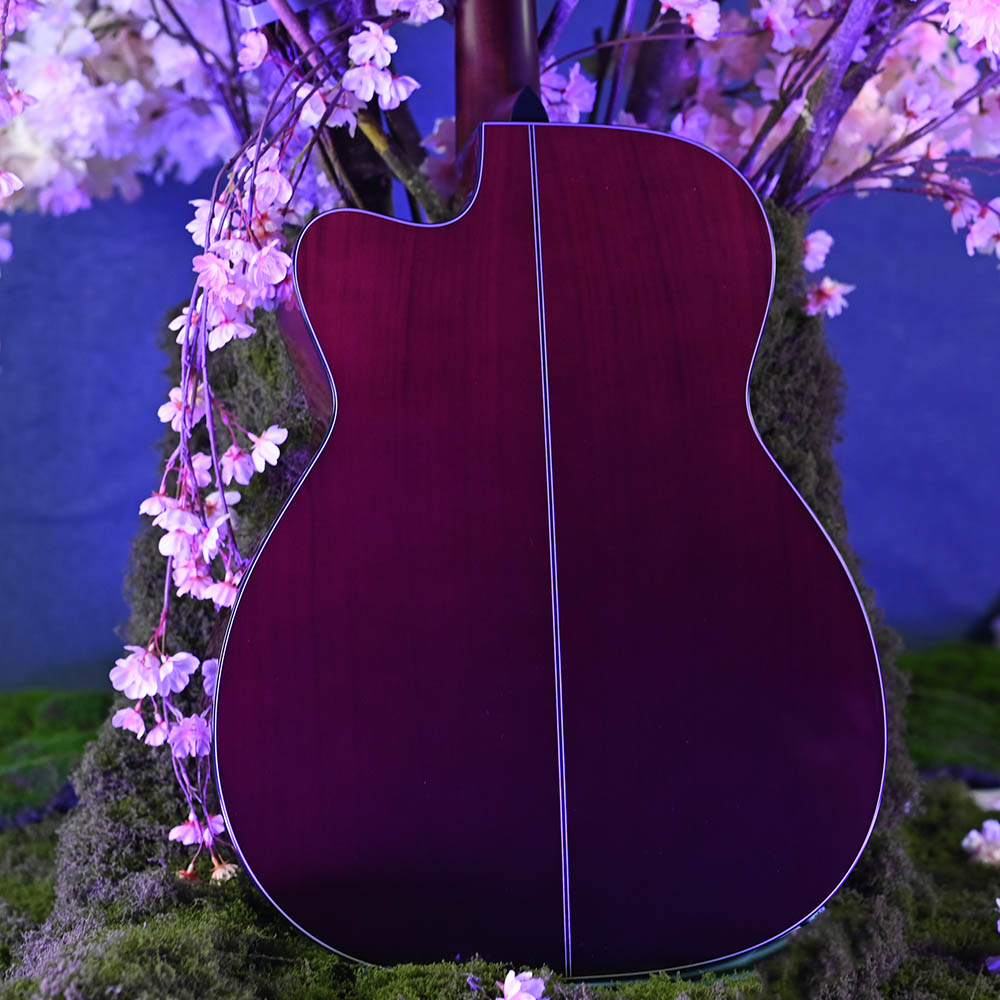
The center of the body back evokes the image of an ink-painted hanging scroll. It achieves depth not merely through paint imitating ink wash, but by combining multiple techniques such as embedding inlays within the cherry blossoms. The workshop’s “Aska” seal is also stamped onto each unit. Since craftsmen apply this seal by hand to every single item, slight variations create a sense of uniqueness for the piece you hold.
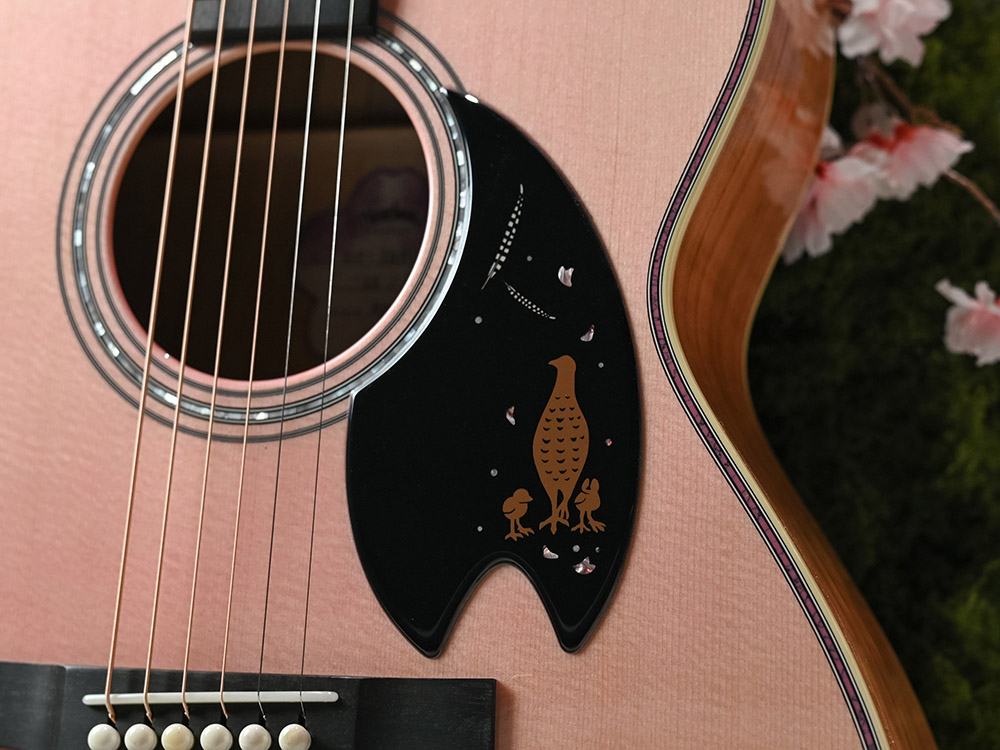
Design featuring a pheasant familyWalking through falling cherry blossoms
The design presents a female pheasant with a steadfast presence, a more subdued and calm scene compared to the image of the flamboyant male in the body back.
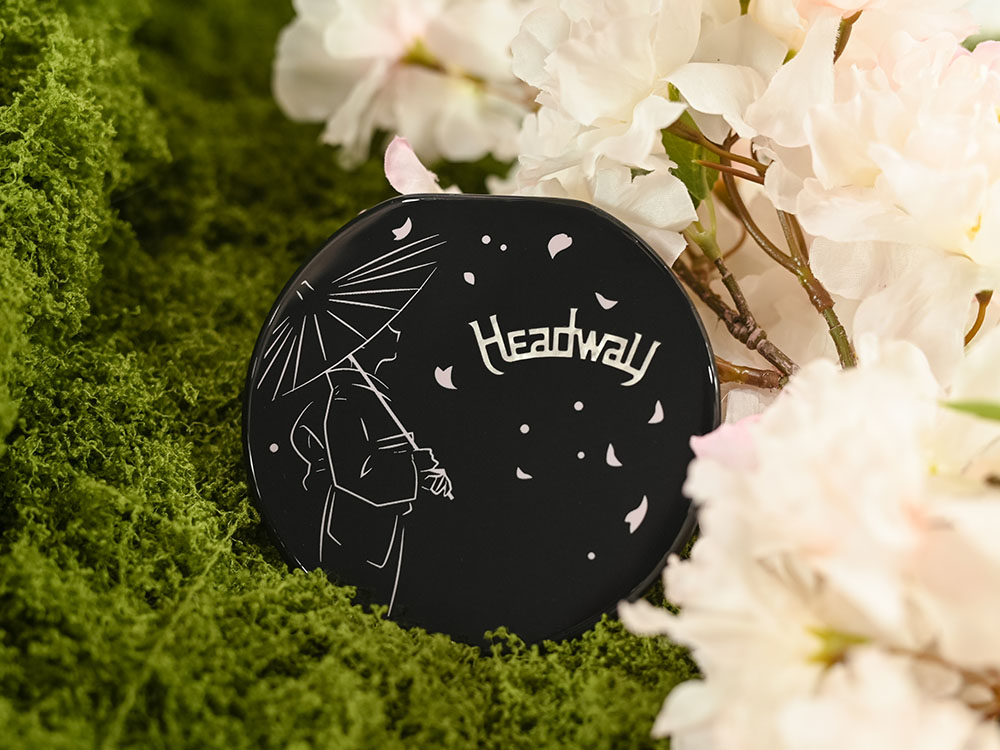
A woman with a Japanese umbrella standing amidst the Sakura trees
The design represents the spring season, where cherry blossoms and a pheasant appear before your eyes. Amidst the falling petals, the scene of a woman gazing upon them is captured.
Materials
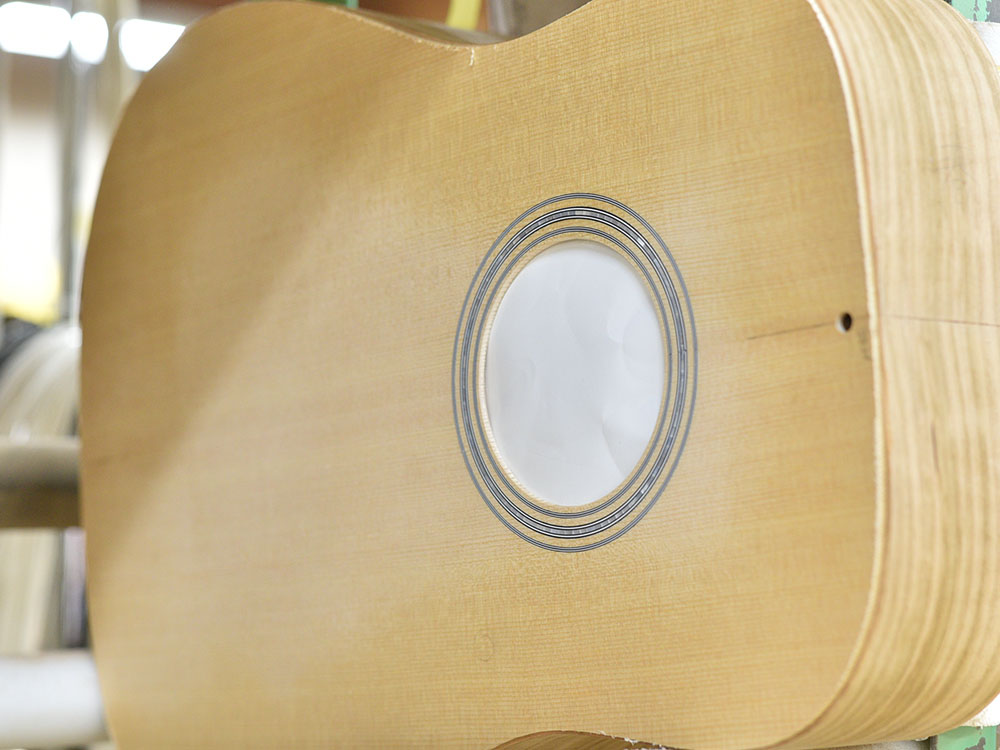
Carefully selected wood materials
The top wood utilizes carefully selected Sitka spruce from Aska workshop’s stock, specifically chosen for the Aska Team Build Series. Its straight, tightly packed grain forms the core of the sound. The “Yamazakura” (wild cherry) used for the back & sides is characterized by its distinctive tone, praised for its resonant sound and sweet timbre. The back features a three-piece construction, employing white, beautiful Kaede (Japanese maple) wood another representative Japanese wood like Sakura, for its beauty.
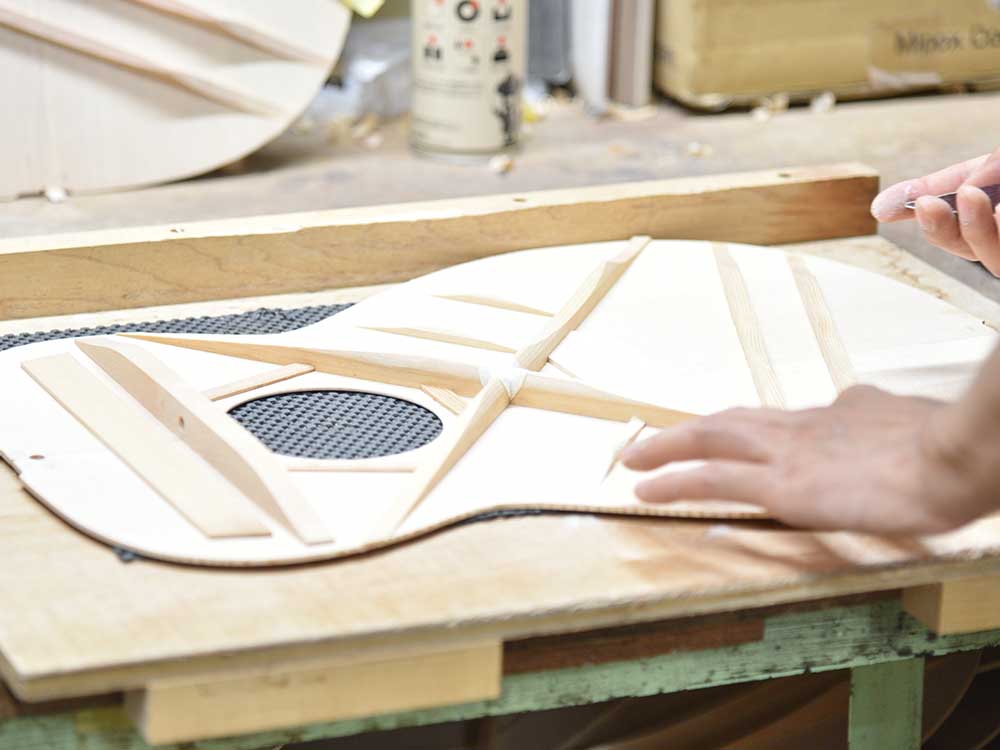
34 Bracing
We adopted the “34 Bracing” layout for these models, which offered the most promising results based on the late Master Builder Momose’s craftsmanship. This layout is closer to a “semi-forward shift” than a true forward shift, positioning the X-bracing intersection approximately 4.6mm closer to the bridge. Its significant appeal lies in its enhanced structural stability. The result is a sound that retains the warmth and harmonic richness characteristic of forward-shift bracing while delivering a responsive tone that reacts clearly even to the most delicate, sparkling touches.
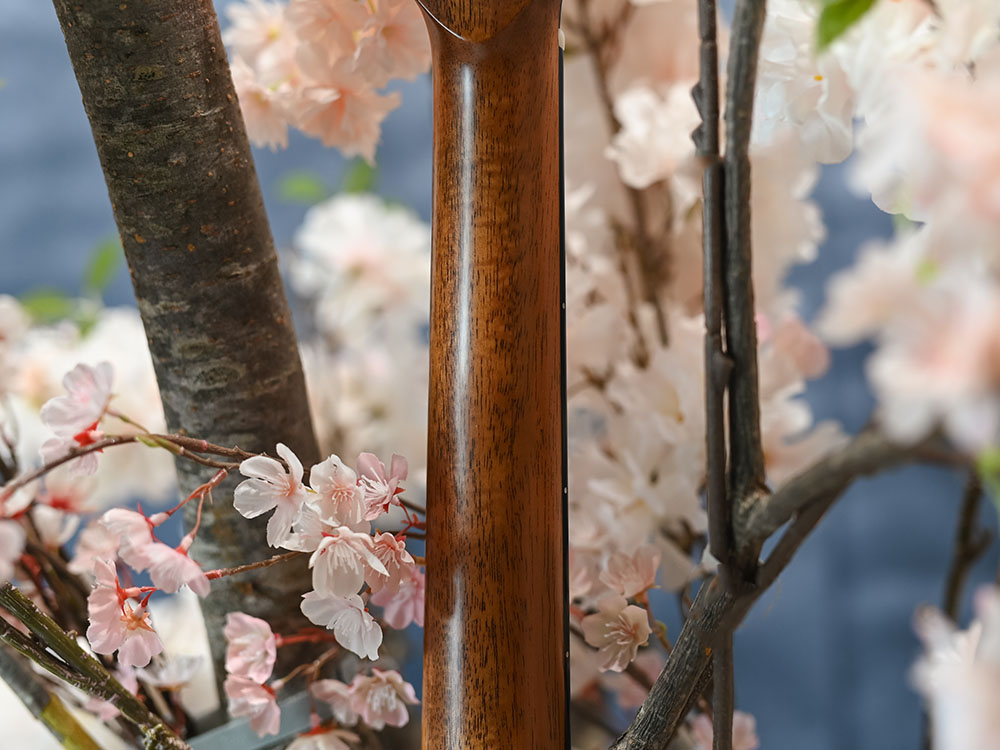
Extra-slim neck
We’ve adopted the Extra Slim U-Neck, featuring Headway’s thinnest profile yet and an ergonomic shape for comfortable grip. It’s not just thinner—internal carbon support reinforcement maintains Headway’s signature sturdiness and stability. We’re confident this neck grip will appeal to female players and those with smaller hands. A semi-glossy finish, reminiscent of a well-played neck, provides just the right grip—enough to make your hand feel like it’s suctioned to the neck. Furthermore, the carbon support enhances rigidity, leading to improved responsiveness.
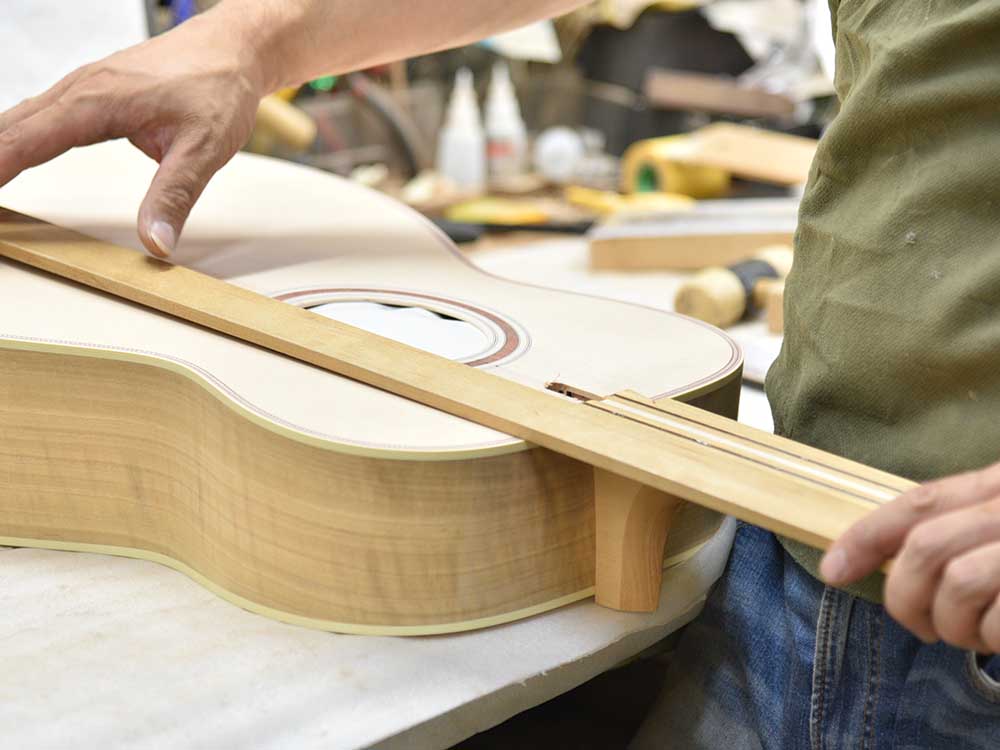
High-precision neck joint
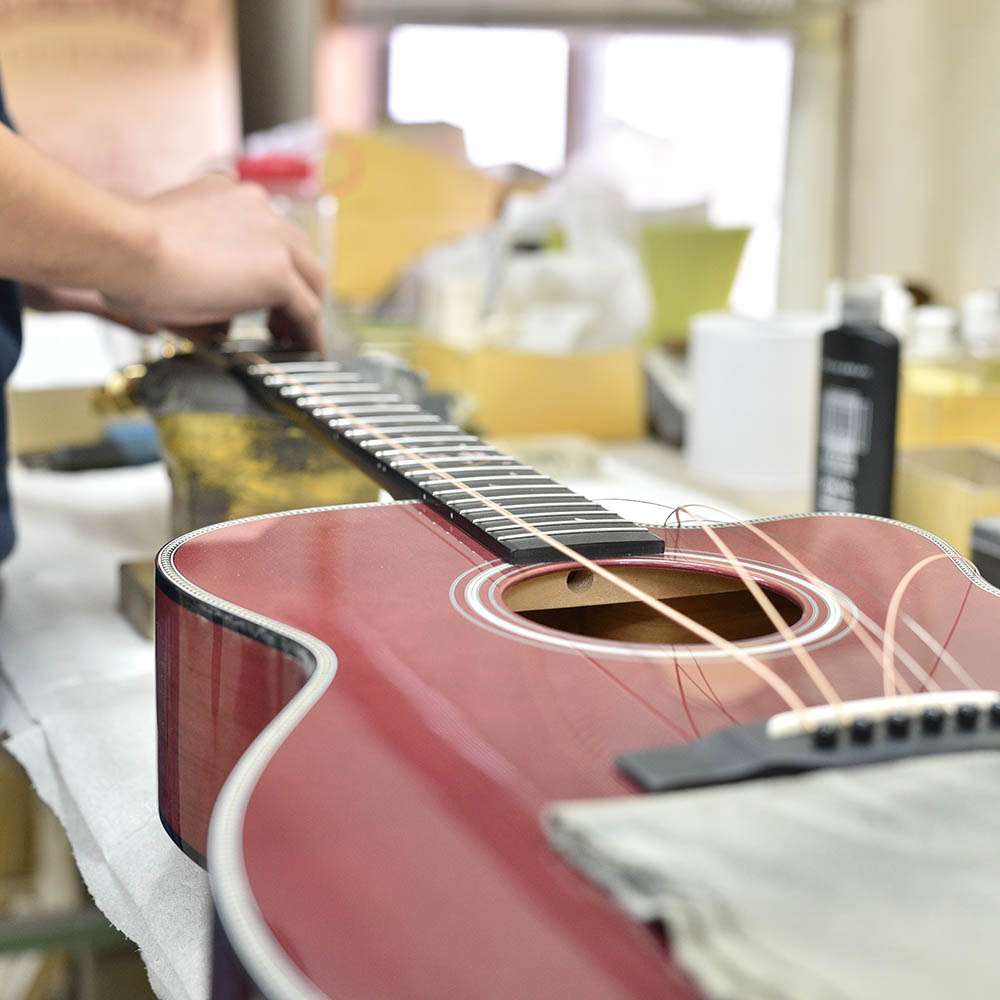
After separately finishing the body and neck, we employ a traditional jointing method known as the mortise-and-tenon technique. While models using simpler bolted joints have become more common in recent years, the mortise-and-tenon joint offers a larger contact area. When finished with high precision, it produces a rich resonance, making the neck and body sound as if they were a single piece of wood. The protrusions at the joint, called “tenons,” are made larger than standard, and the joint is assembled using specialized jigs. This method of joining after painting is called “post-processing assembly”.
Standrd Series
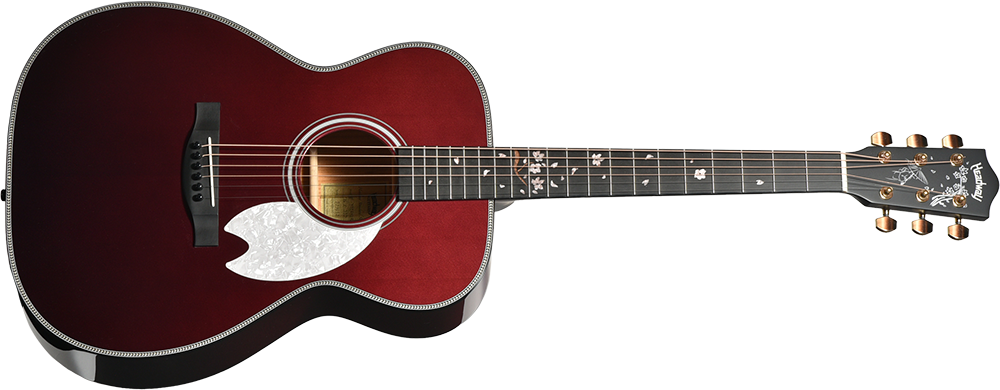
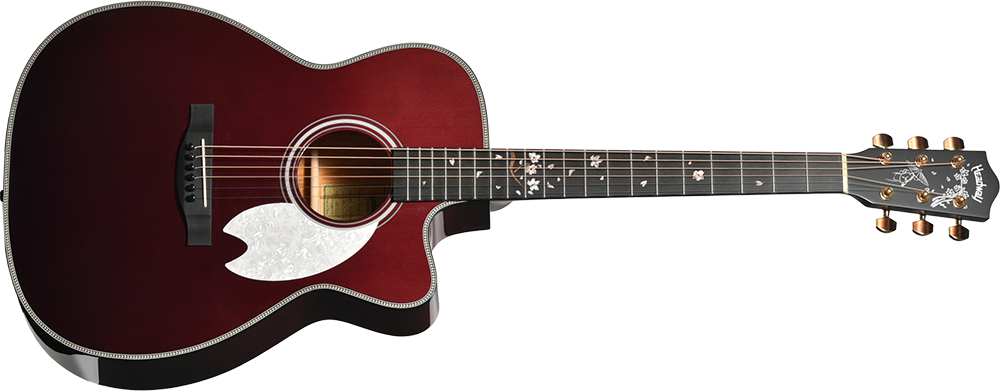
Features
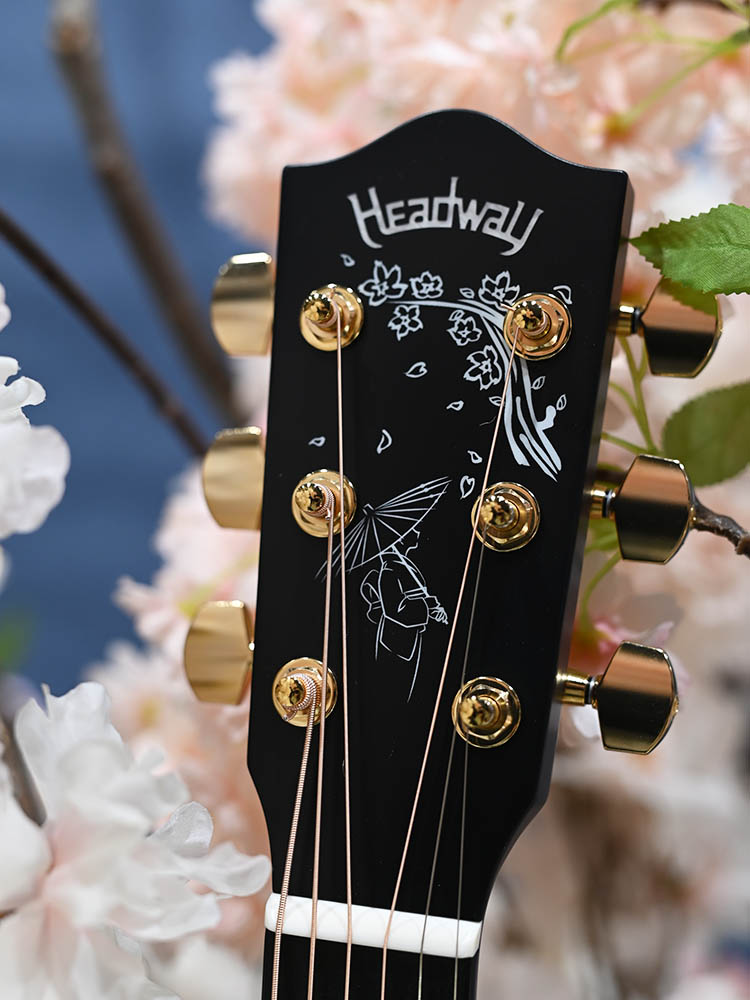
A woman holding a Japanese-style umbrella
drawn in brush-stroke patterns evoking traditional Japanese aesthetics
The headstock features a design of a woman holding a Japanese umbrella, a theme seen in recent Sakura models. The Japanese ink wash brush-stroke style design emphasizes a Japanese aesthetic, working together with the fingerboard inlay to bring the overall design together.
Cherry blossoms expressed through
inlay work featuring pheasant feathers and Japanese aesthetics
The ebony fingerboard features inlay work depicting cherry blossoms and pheasant feathers. To express a Japanese aesthetic in keeping with the pheasant theme, multiple materials were used to create a design evoking the spirit of Japan, with a winding cherry tree branch.
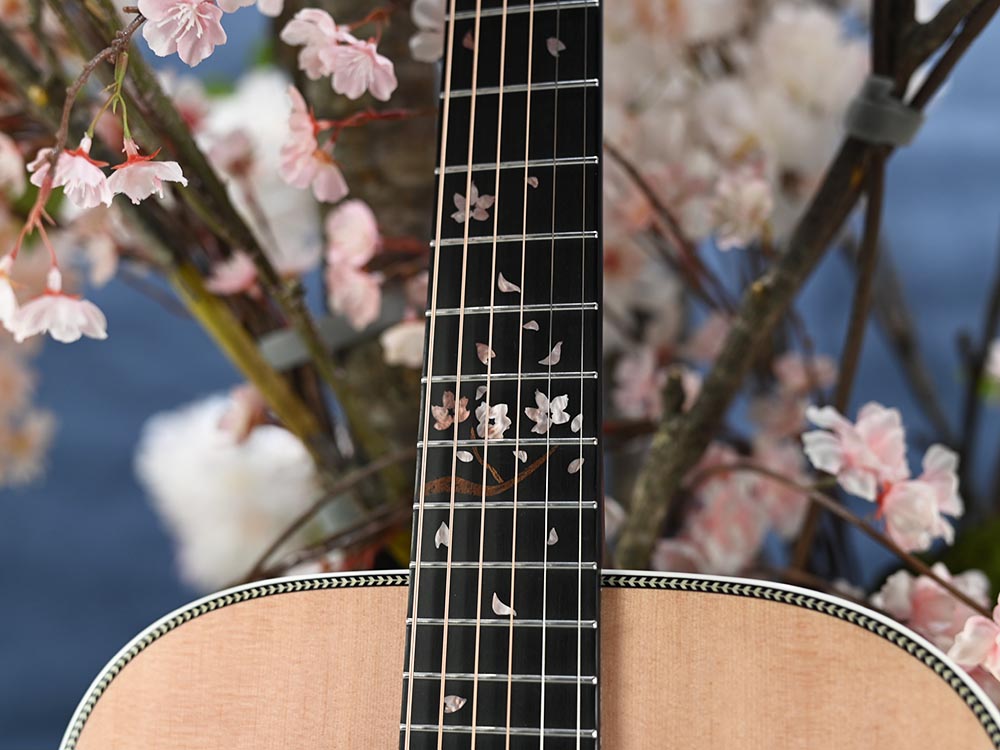
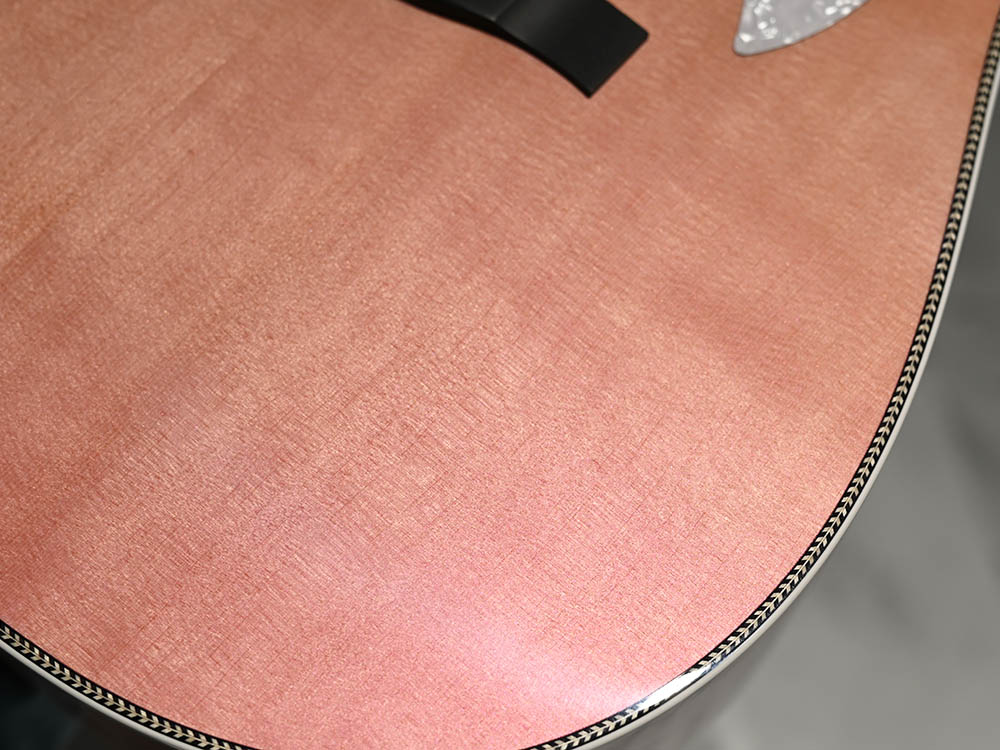
Cherry blossoms swaying in the sunlight
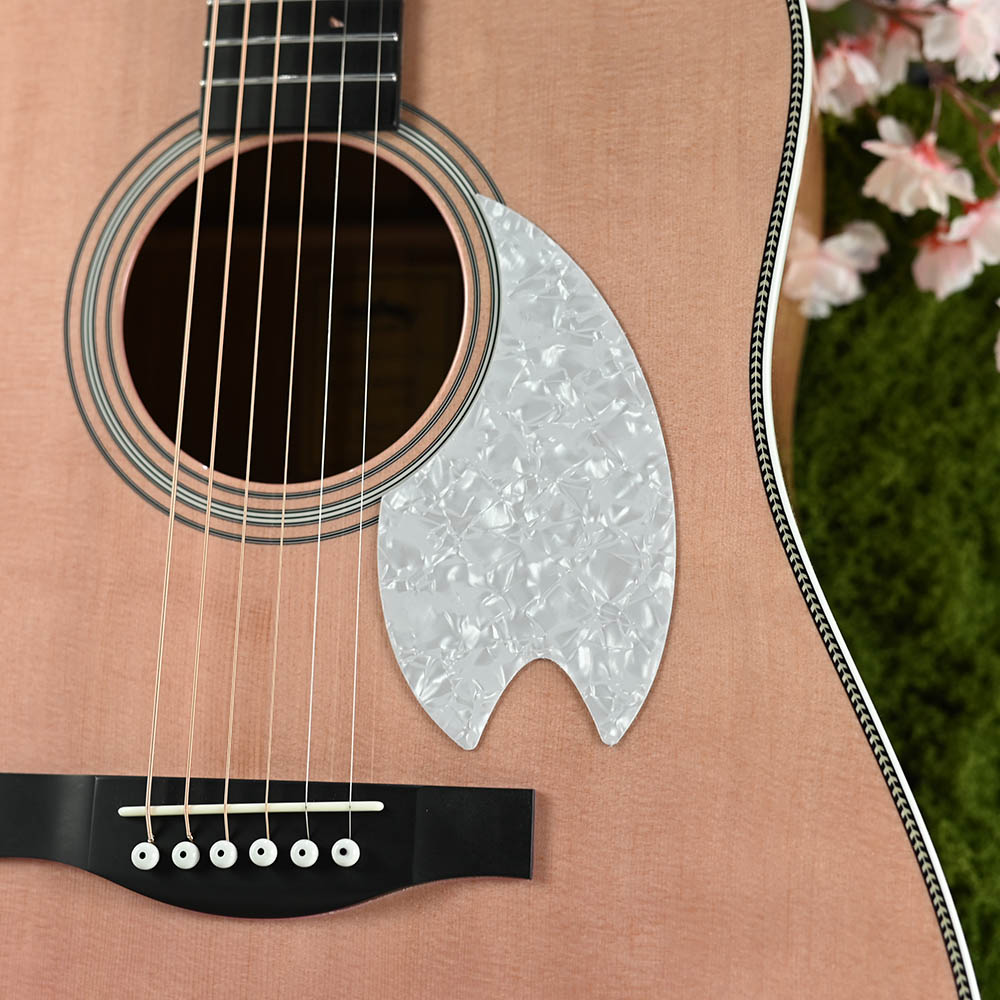
A soft cherry blossom gradient inspired by cherry blossoms swaying in spring sunlight filtering through trees. Paired with a pink pearl finish, the gradient color creates a unique hue that shifts with the viewing angle, evoking the sunlight and falling cherry blossoms.
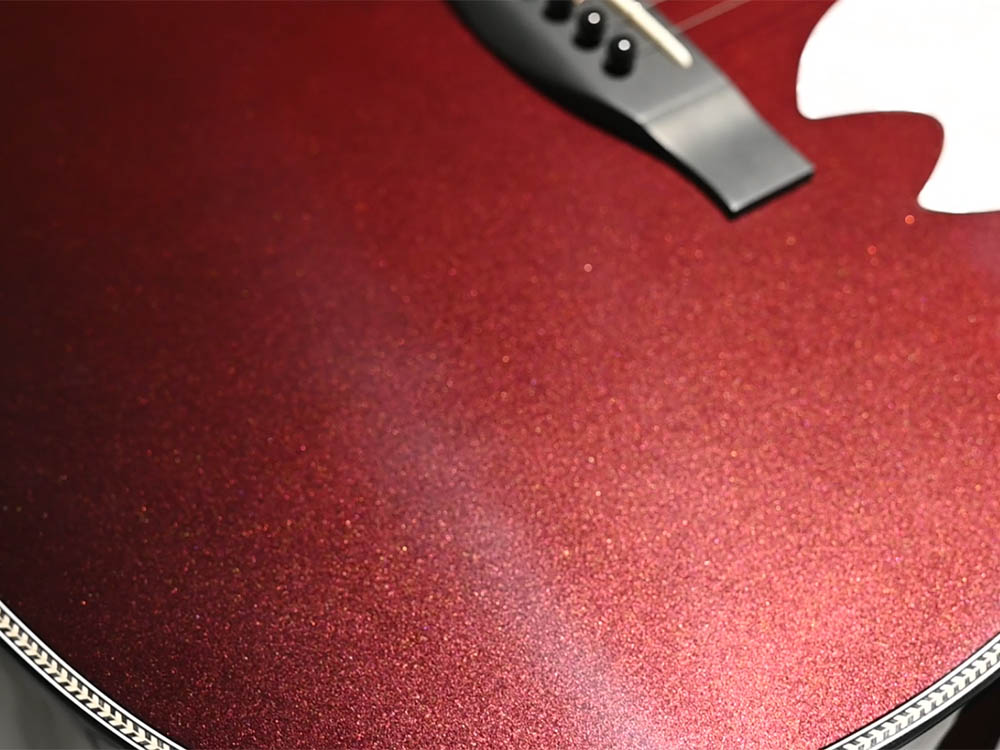
Cherry blossoms swaying in the moonlit night
A night-blooming cherry blossom gradient evoking cherry blossoms swaying in the moonlit night. While contrasting with the pale cherry blossom gradient of the same model’s alternate color, which imagines sunlight filtering through leaves, the shared application of pink pearl from above conjures images of cherry blossoms fluttering in the night breeze and the twinkling night sky.
Materials
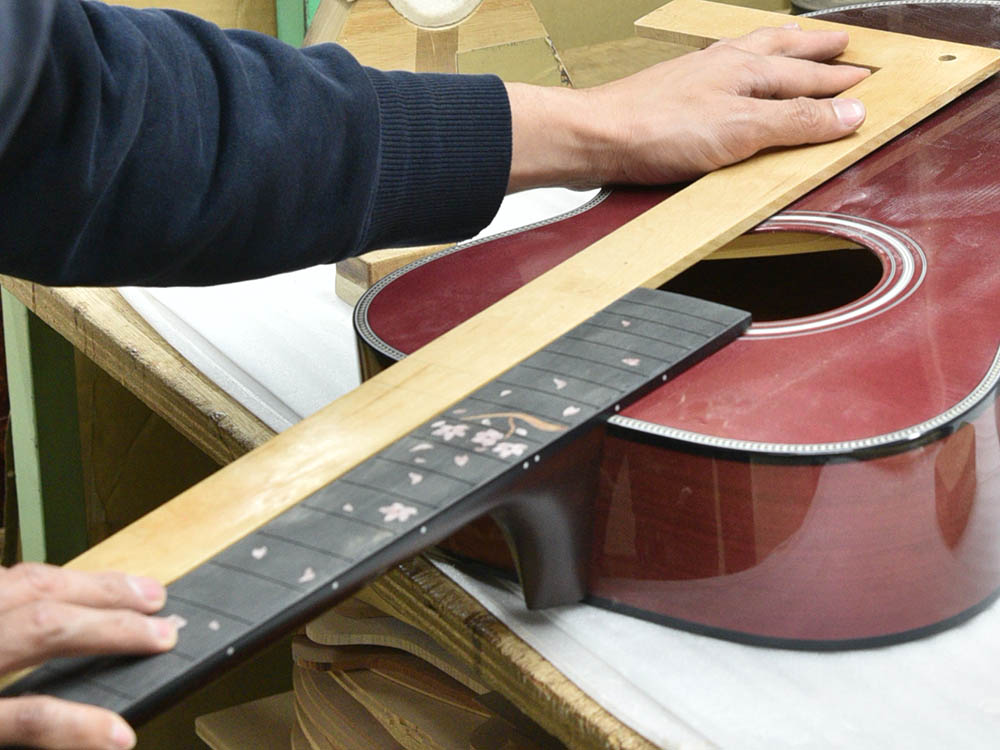
High-precision neck joint
After separately finishing the body and neck, we employ a traditional jointing method known as the mortise-and-tenon technique. While models using simpler bolted joints have become more common in recent years, the mortise-and-tenon joint offers a larger contact area. When finished with high precision, it produces a rich resonance, making the neck and body sound as if they were a single piece of wood. The protrusions at the joint, called “tenons”, are made larger than standard, and the joint is assembled using specialized jigs. This method of joining after painting is called “post-processing assembly”.
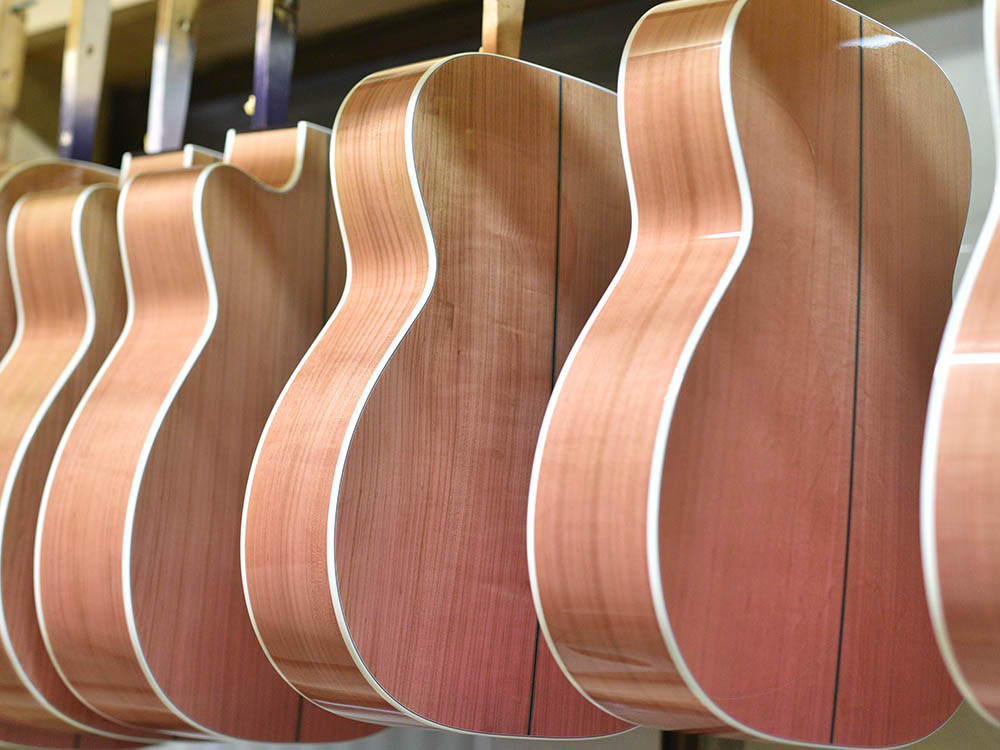
Back & sides made of Sakura wood
Headway’s policy for crafting Sakura wood guitars involves not only the design but also the actual use of domestically sourced sakura wood in its production. Among these, “Yamazakura” (wild sakura) stands as the Sakura variant we use the most, characterized by its distinctive sound—praised for its resonant tone and sweet timbre.