








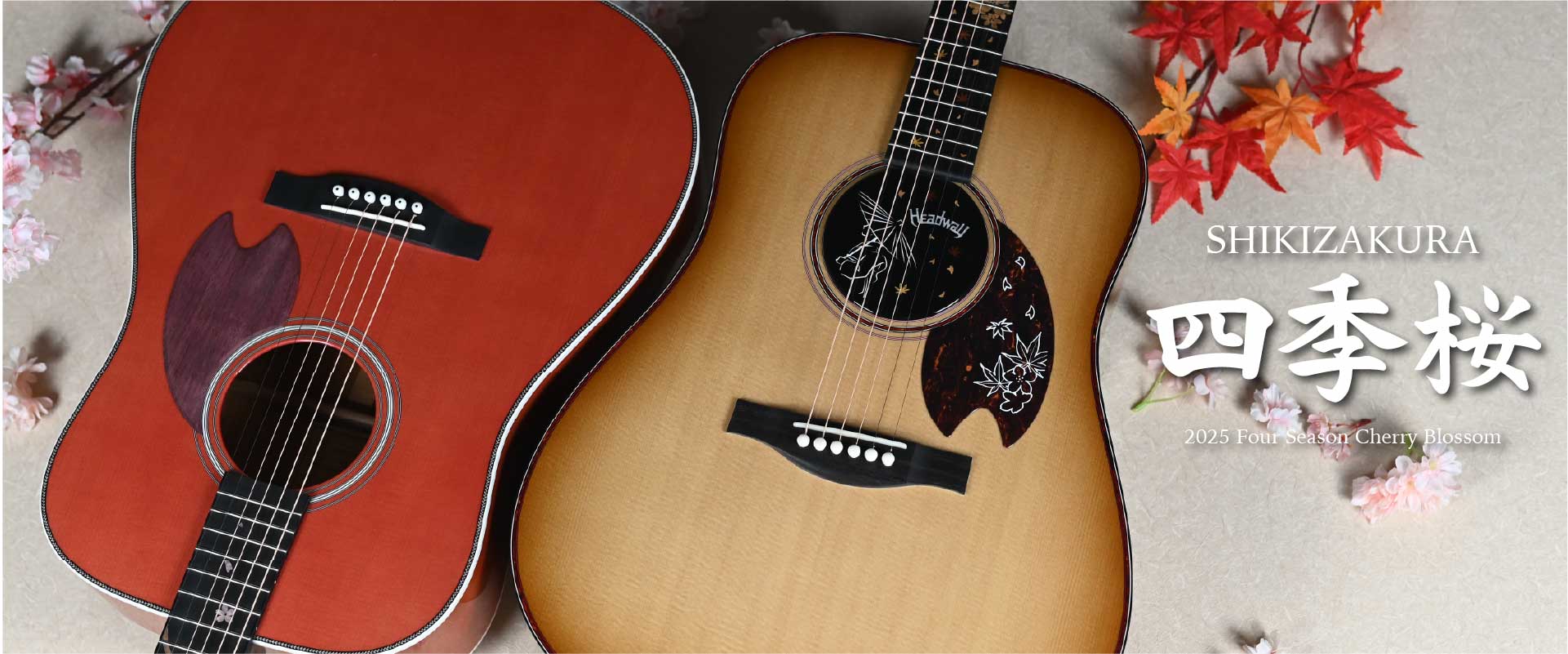
2025 models featuring a “Sakura × Autumn leaves” design inspired by Obara’s Four-Seasons Sakura Trees
2025 models featuring a “Sakura × Autumn leaves” design inspired by Obara’s Four-Seasons Sakura Trees
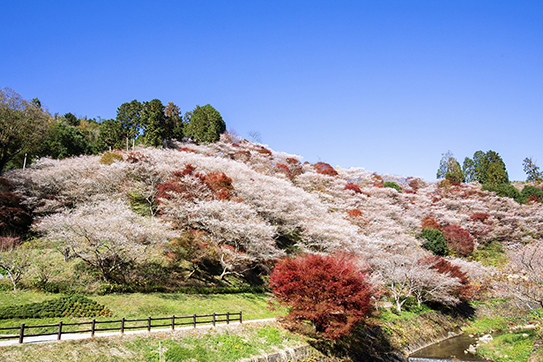
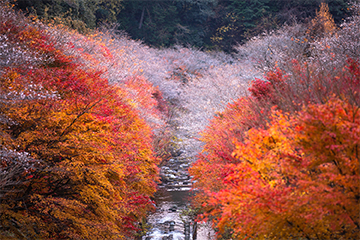
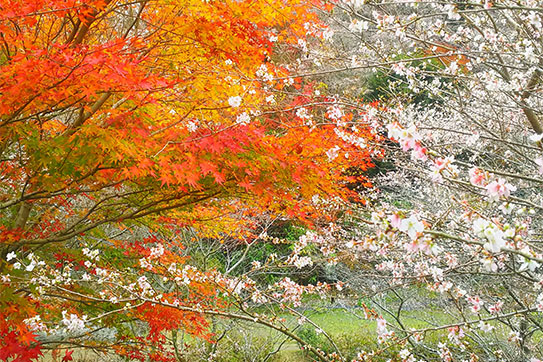
The seasonal autumn-limited edition model of the “Four Seasons Sakura” guitar, whose production began in 2021, will be available again this year. This model was developed based on the inspiration from the “Four Seasons Cherry Blossom” in the Obara district of Toyota City, Aichi Prefecture, which features the rare natural phenomenon of cherry blossoms blooming during the autumn foliage season. The Four Seasons Cherry Tree is known for blooming twice a year, in spring and autumn. Especially in autumn, it creates a fantastical scene where visitors can enjoy both autumn foliage and cherry blossoms simultaneously. The Four Seasons Sakura Tree is known for blooming twice a year, in spring and autumn. Especially in autumn, it creates a fantastical scene where visitors can enjoy both autumn foliage and cherry blossoms simultaneously. By incorporating that beautiful contrast and ephemeral charm into the guitar’s design, we created a finish that evokes seasonal feelings while remaining enjoyable year-round. From the selection of wood and coloring to the design, it expresses the beauty inherent in the Four Seasons Cherry Blossoms.
About the Four Season Sakura trees
The Four Seasons Sakura is a variety of cherry tree that blooms from autumn through winter. While Sakura, or cherry blossom trees, are strongly associated with spring, there are actually tree species that continue to bloom even after the weather turns cold. The greatest appeal of the Four Seasons Sakura is that its blossoms can be enjoyed simultaneously with the autumn foliage. We adopted the Four Seasons Sakura as an autumn motif so that the scenes created by Japan’s four seasons could be felt close together, never fading away. Furthermore, the distinctive inlay designs were created based on materials provided by the Toyota City Obara Tourism Association, which manages and takes care of the Four Seasons Sakura trees in Obara.
Aska Team Build Series
Design
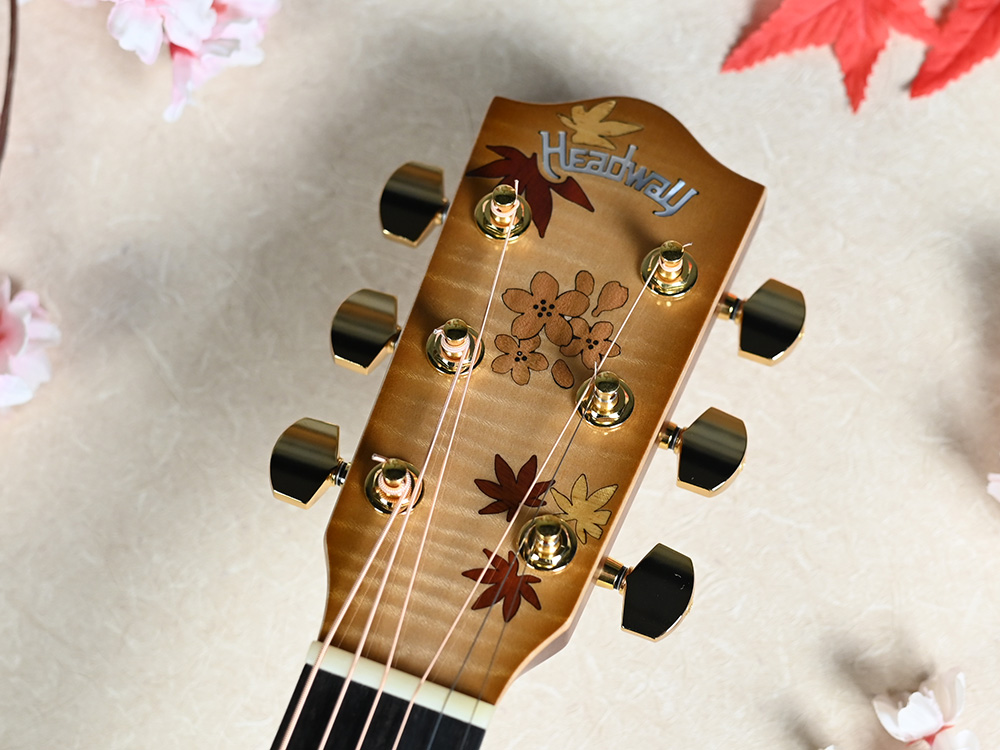
The collaboration of cherry blossoms and autumn foliage, dyed in the colors of autumn
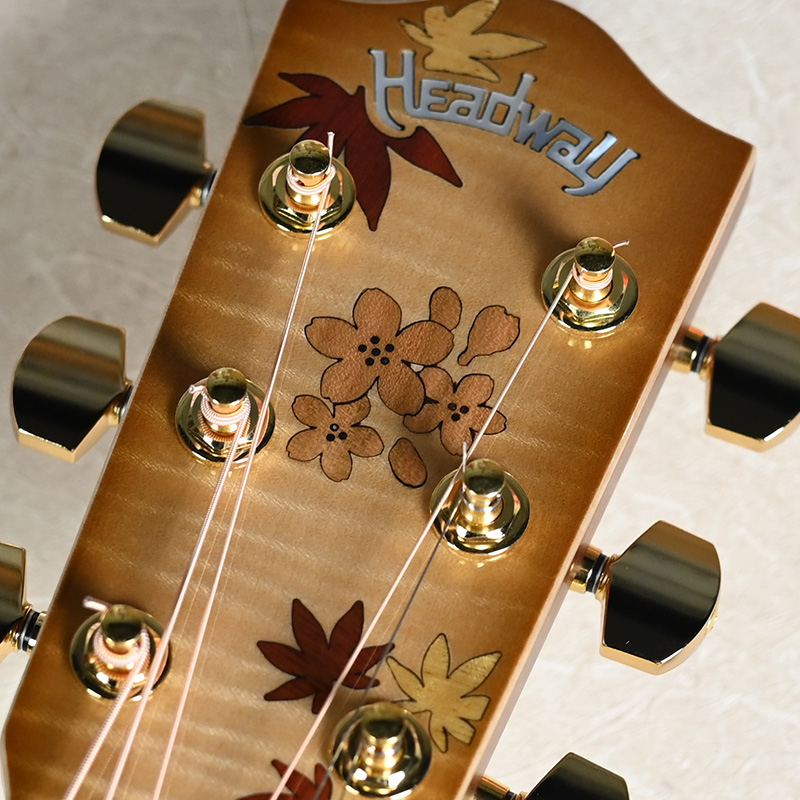
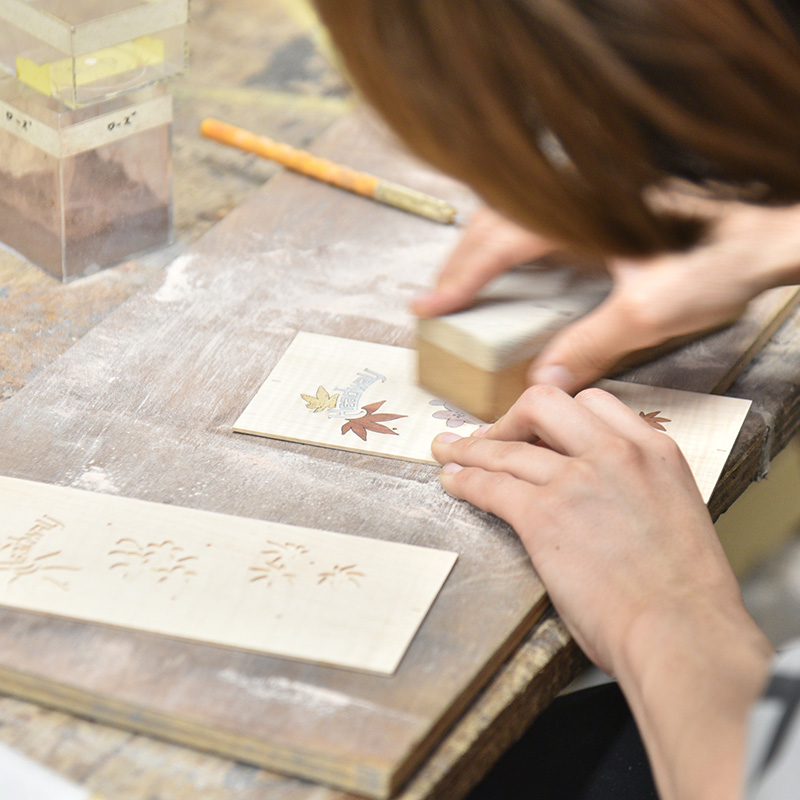
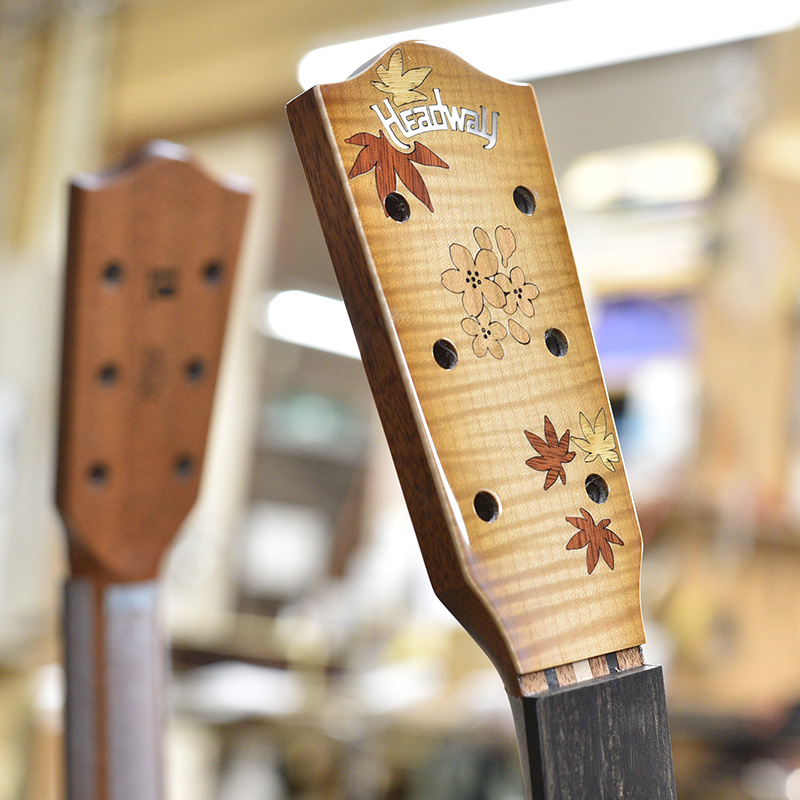
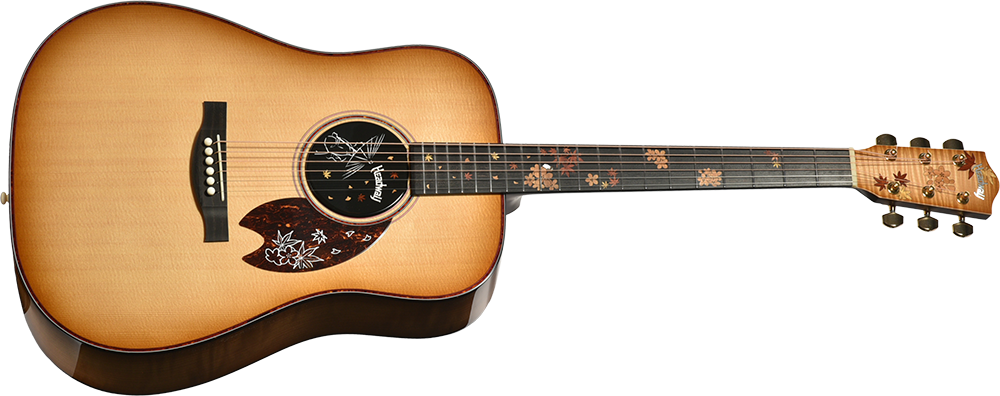
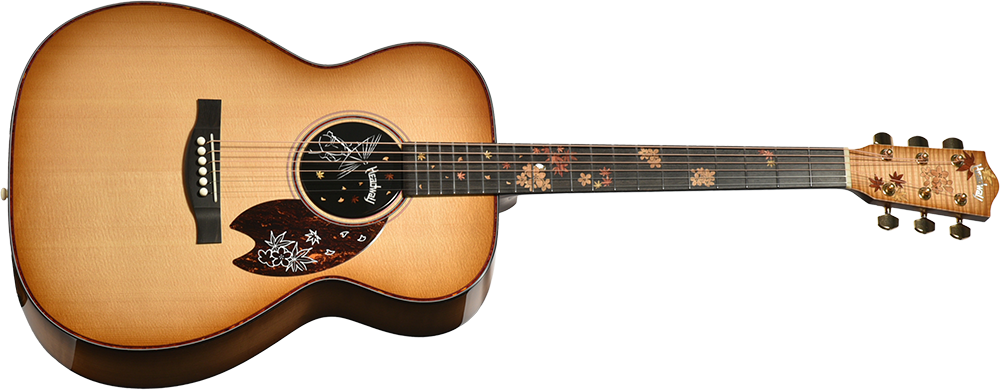
The Four Seasons Sakura Tree blooms coinciding with autumn foliage, creating a fantastical scene where cherry blossoms and autumn leaves coexist at their peak. This year’s Four Seasons Sakura models evoke autumn by incorporating brown-stained cherry wood as inlay. Autumn foliage is rendered using satinwood and mobinga wood, further enhancing the colors of Autumn.
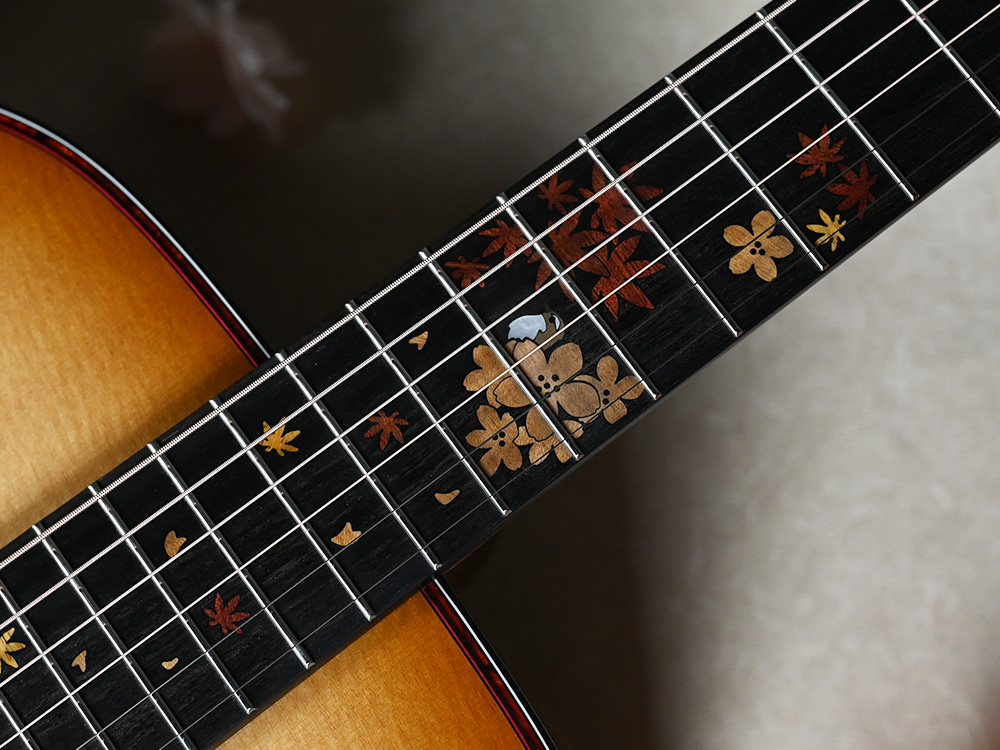
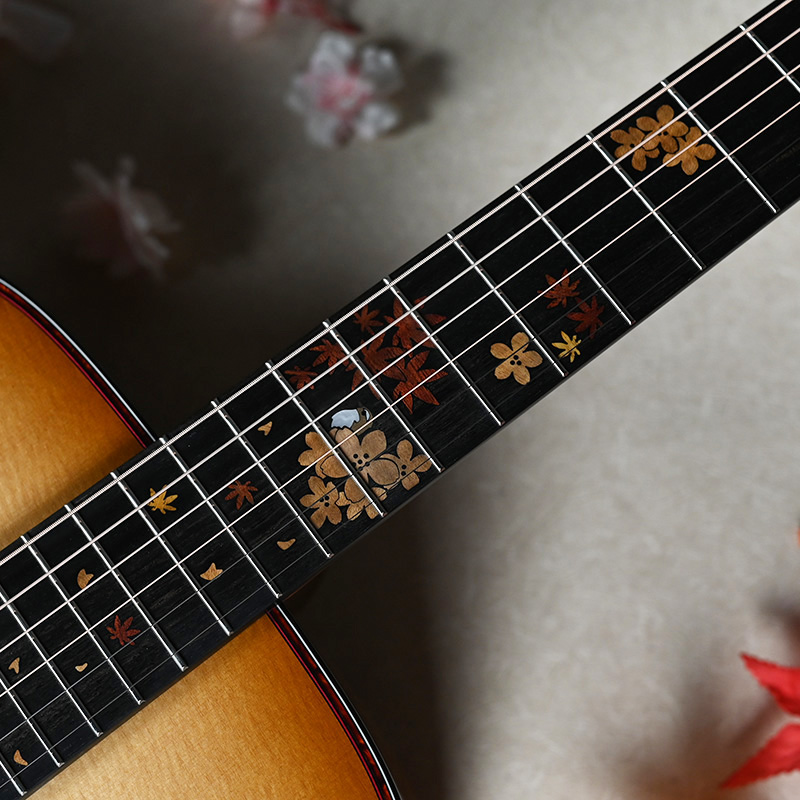
Inlay depicting a Japanese bush warbler hiding stealthily
The fingerboard features a design of a Japanese bush warbler, a bird long familiar to the region as the village bird when it was a Village. Known for its wariness, the bush warbler peeks out from between the autumn leaves and cherry blossoms in a composition that brings a smile to your face.
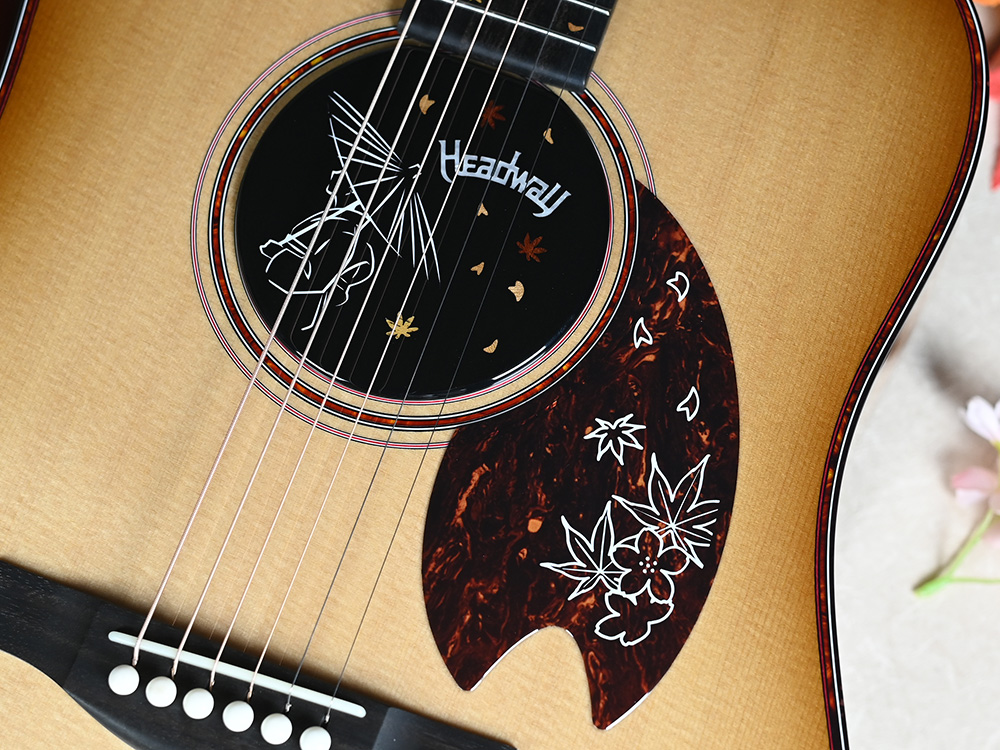
Autumn in Obara and the scene of fluttering, scattering autumn leaves
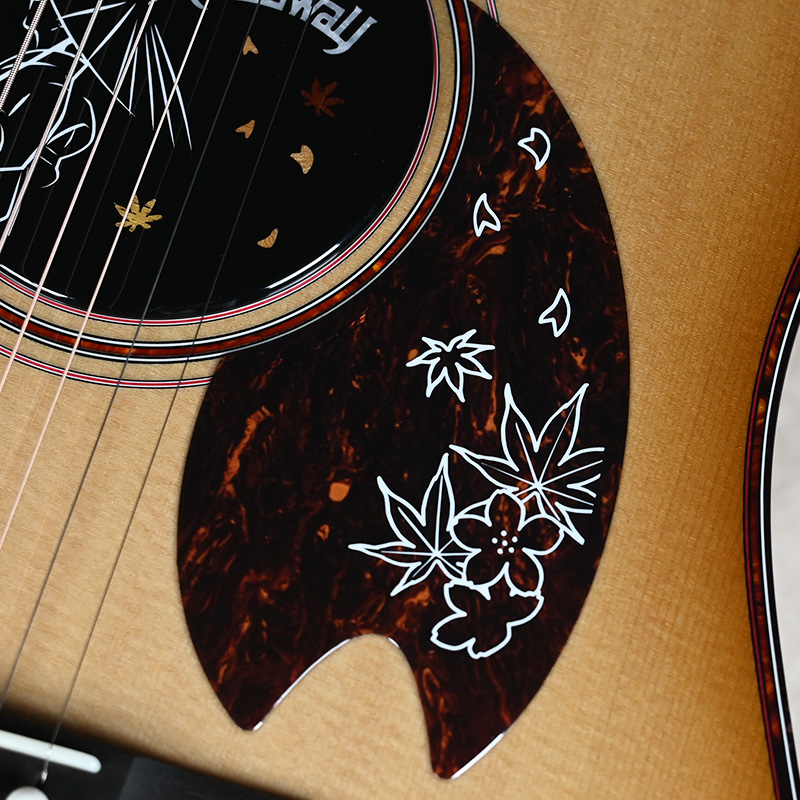
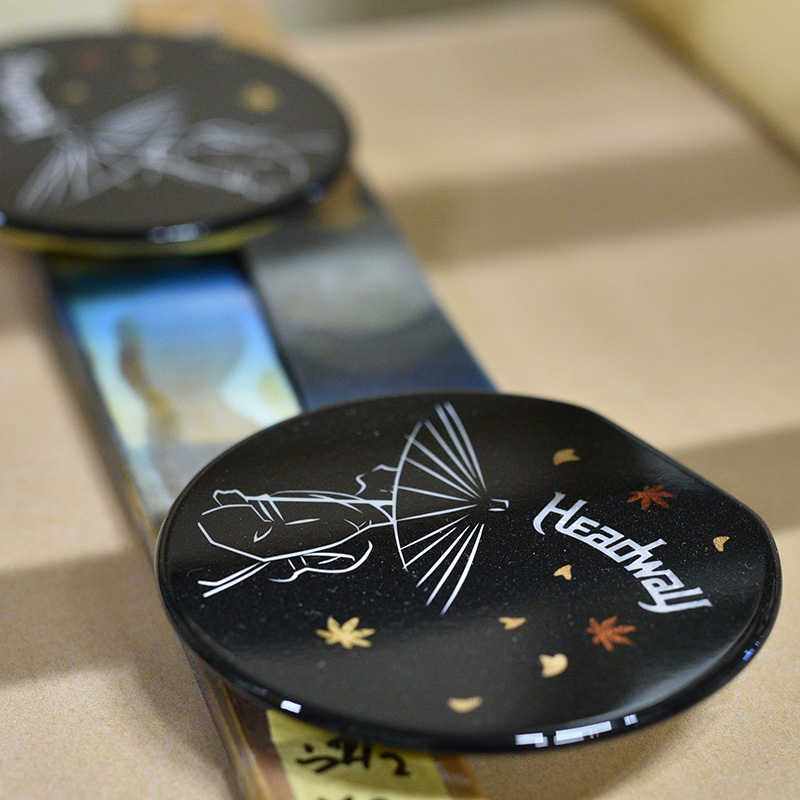
The pickguard, modeled after cherry blossom petals, uses tortoiseshell material to express the shifting colors of autumn, adorned with a delicate design where maple leaves and cherry blossoms coexist. The soundhole cover depicts a woman under a Japanese umbrella, which has become a symbol of the Sakura Guitar, depicting a scene where she stands amidst swirling maple leaves.
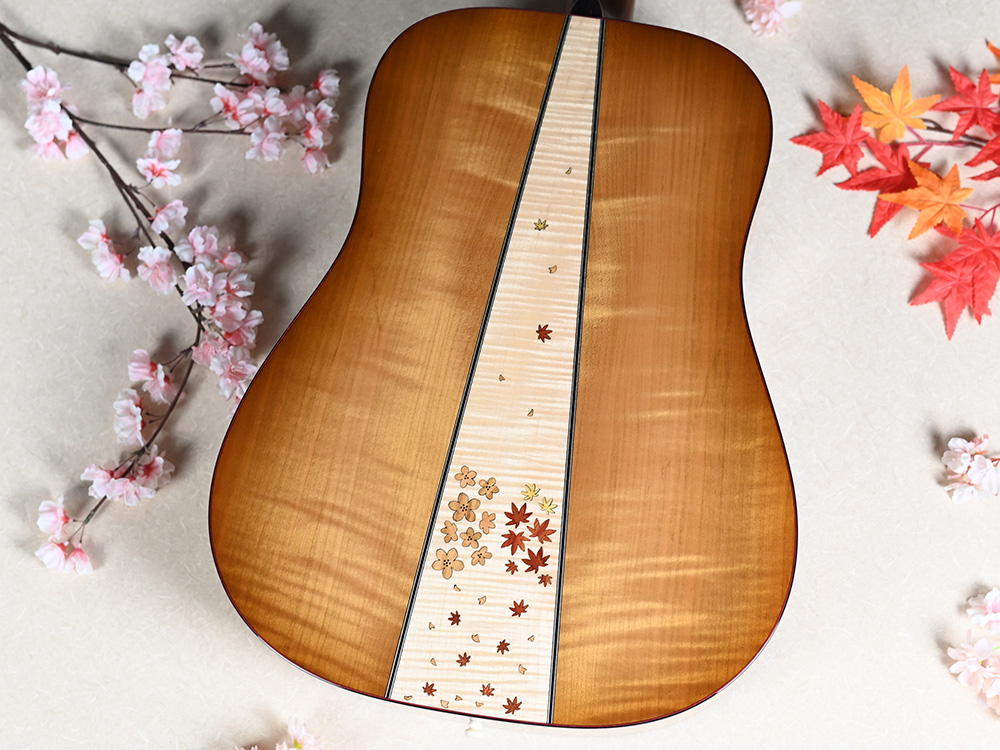
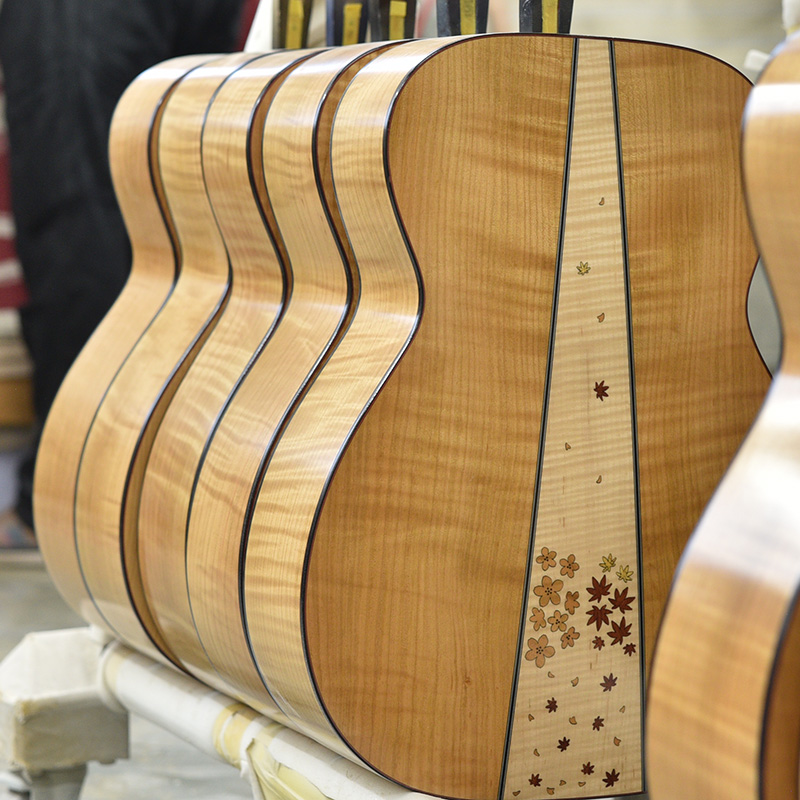
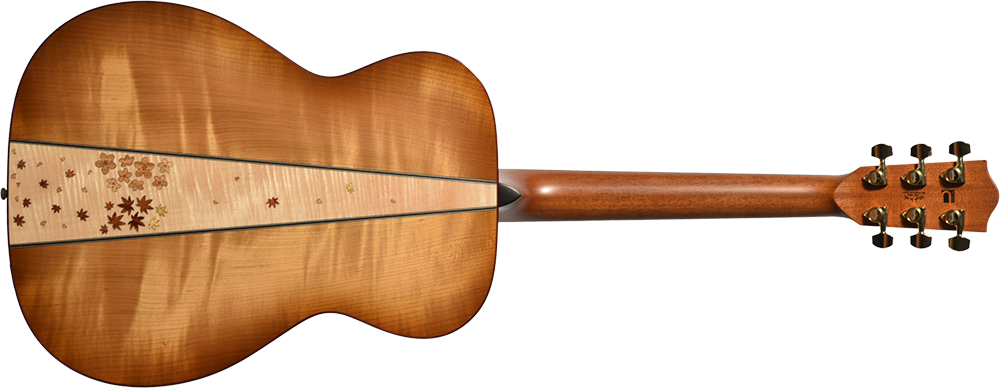
Body back depicting cherry blossoms and autumn leaves spreading across both sides of a road
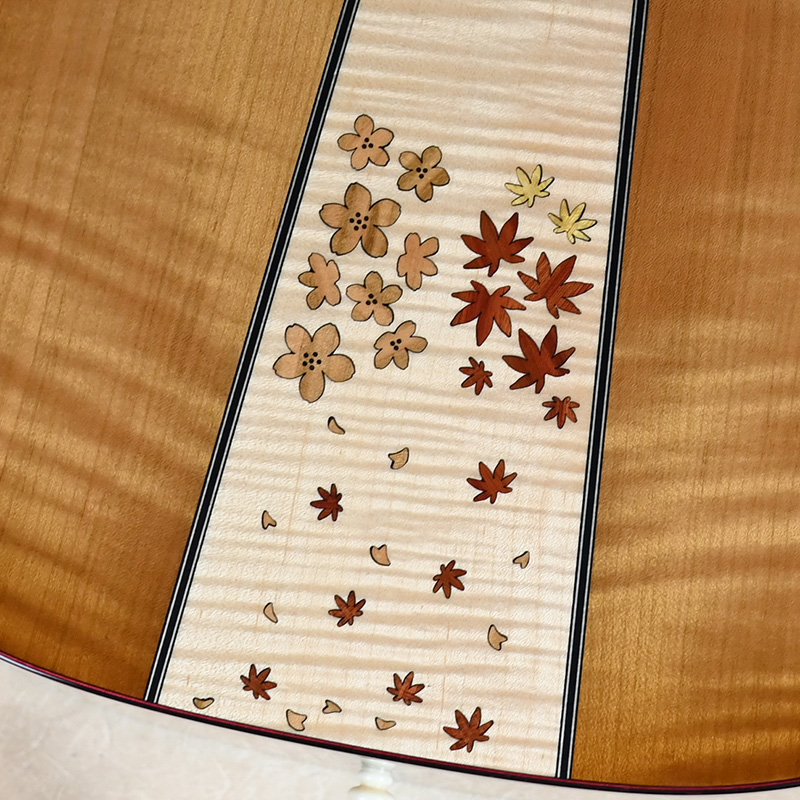
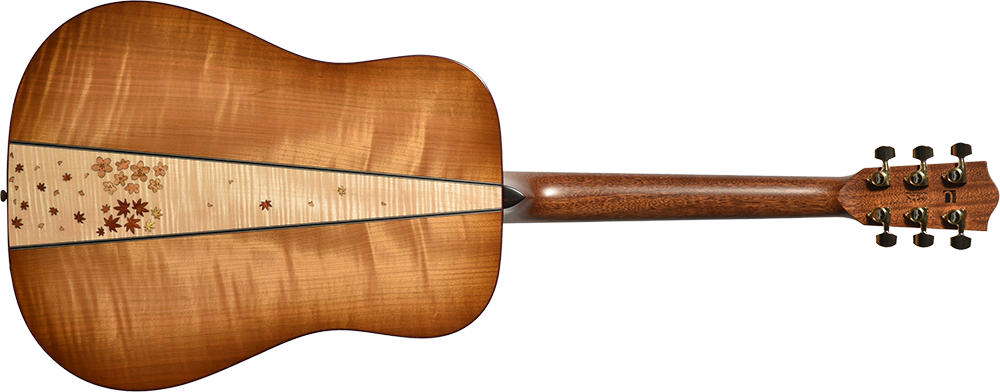
A three-piece body back where the brown burst pieces and the maple centerpiece harmonize beautifully. The maple wood, evoking depth, depicts rivers and roads flanked by cherry blossoms and autumn leaves, featuring stylized, charming cherry blossoms and maple leaves.
The collaboration of cherry blossoms and autumn foliage, dyed in the colors of autumn
The Four Seasons Sakura Tree blooms coinciding with autumn foliage, creating a fantastical scene where cherry blossoms and autumn leaves coexist at their peak. This year’s Four Seasons Sakura models evoke autumn by incorporating brown-stained cherry wood as inlay. Autumn foliage is rendered using satinwood and mobinga wood, further enhancing the colors of Autumn.
Inlay depicting a Japanese bush warbler hiding stealthily
The fingerboard features a design of a Japanese bush warbler, a bird long familiar to the region as the village bird when it was a Village. Known for its wariness, the bush warbler peeks out from between the autumn leaves and cherry blossoms in a composition that brings a smile to your face.
Autumn in Obara and the scene of fluttering, scattering autumn leaves
The pickguard, modeled after cherry blossom petals, uses tortoiseshell material to express the shifting colors of autumn, adorned with a delicate design where maple leaves and cherry blossoms coexist. The soundhole cover depicts a woman under a Japanese umbrella, which has become a symbol of the Sakura Guitar, depicting a scene where she stands amidst swirling maple leaves.
Body back depicting cherry blossoms and autumn leaves spreading across both sides of a road
A three-piece body back where the brown burst pieces and the maple centerpiece harmonize beautifully. The maple wood, evoking depth, depicts rivers and roads flanked by cherry blossoms and autumn leaves, featuring stylized, charming cherry blossoms and maple leaves.
Material
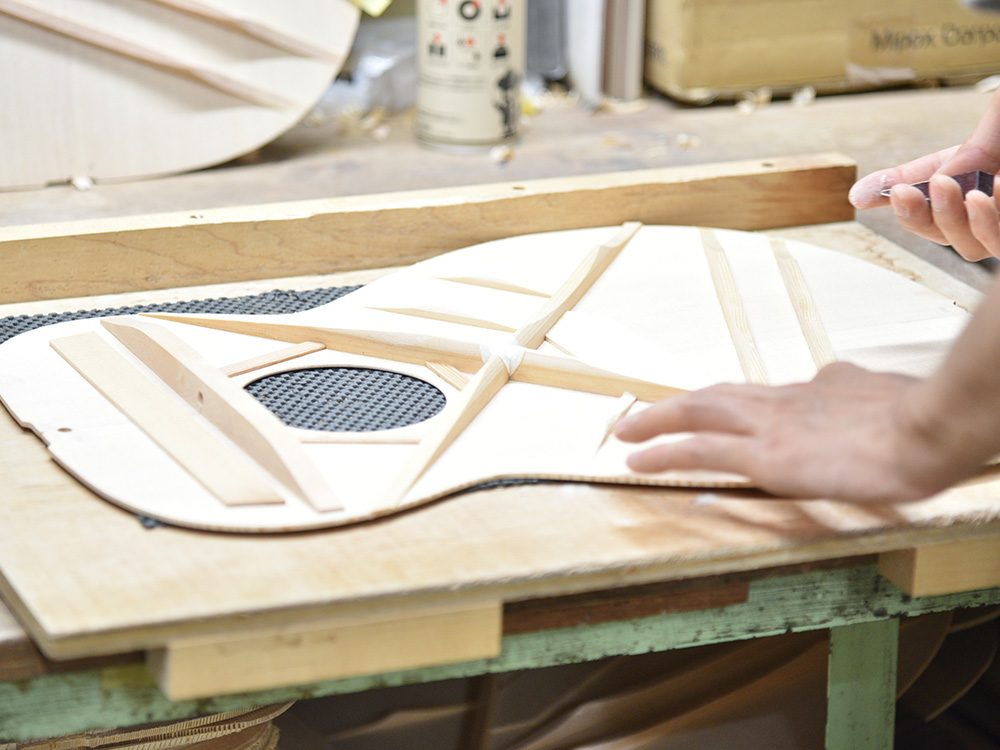
34-Bracing
For these models, we adopted the “34-Bracing” layout, which offered the most promising results based on the late Master Builder Yasuo Momose’s last developments. This layout is closer to a “semi-forward shift” than a true forward shift, positioning the X-bracing intersection approximately 4.6mm closer to the bridge. Its significant appeal lies in its enhanced structural stability. The result is a sound that retains the warmth and harmonic richness characteristic of forward-shift bracing while delivering a responsive, brilliant tone, and delicate touch.
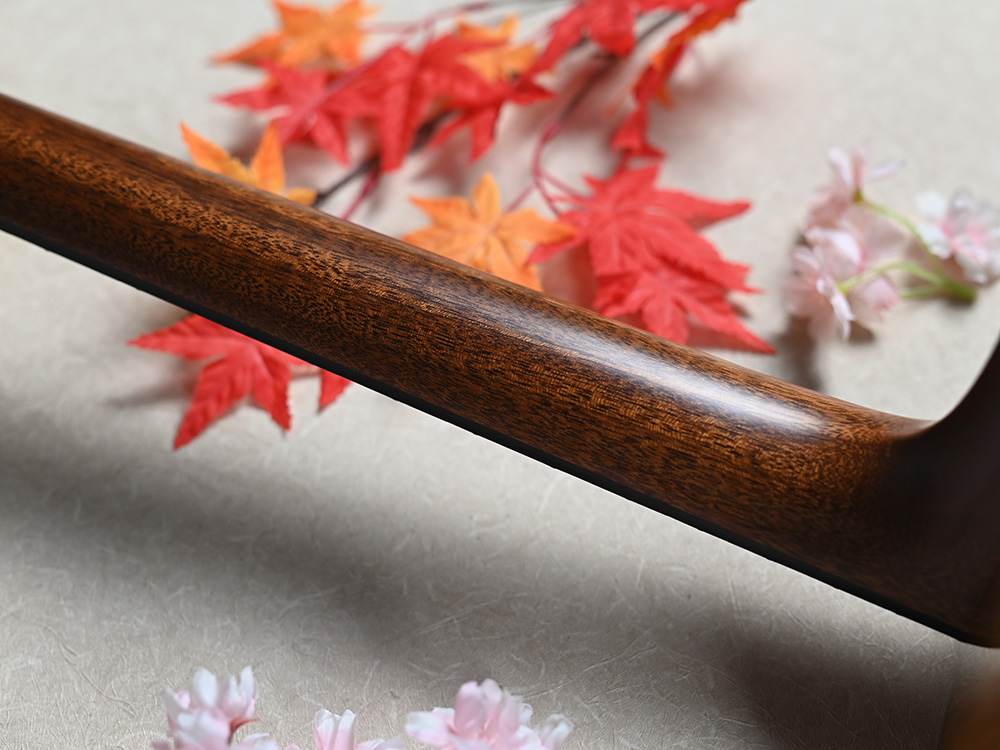
Extra-slim Neck
We also adopted the Extra Slim U-Neck, featuring Headway’s thinnest profile yet and an ergonomic shape for comfortable grip. This neck is not just thinner; internal carbon support reinforcement bars maintain Headway’s signature sturdiness and stability. We’re confident this neck grip will appeal to female players and players with smaller hands. A semi-glossy finish, reminiscent of a well-played neck, provides just the right grip—enough to make your hand feel like it has a tight grip on the neck. Furthermore, the carbon support enhances rigidity, leading to improved responsiveness.
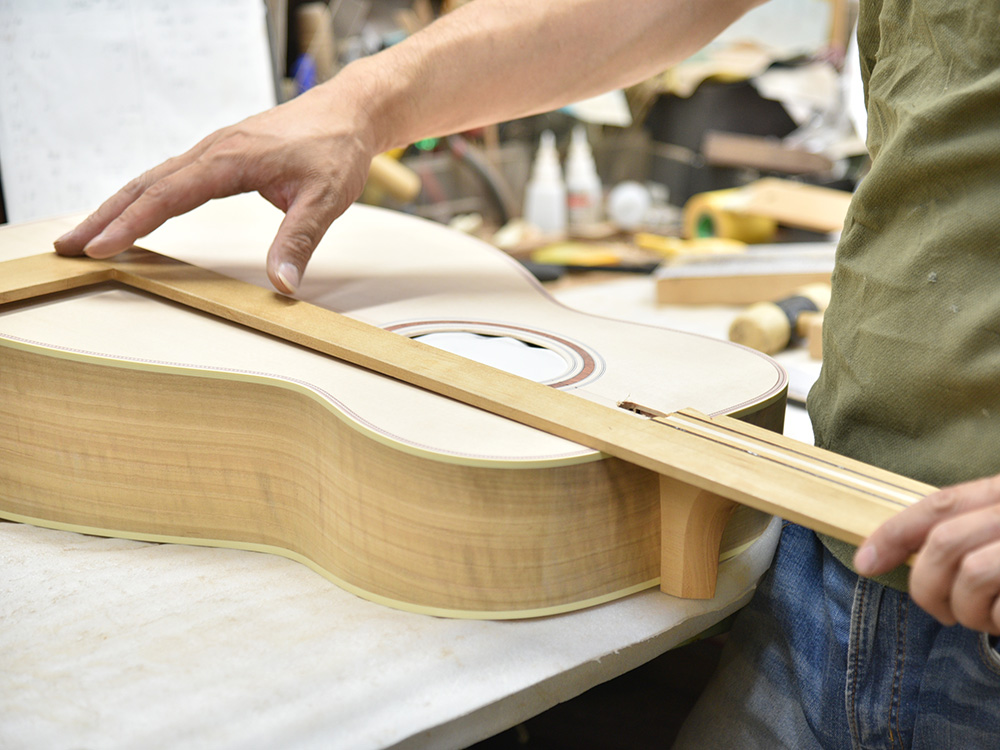
High-precision neck joint
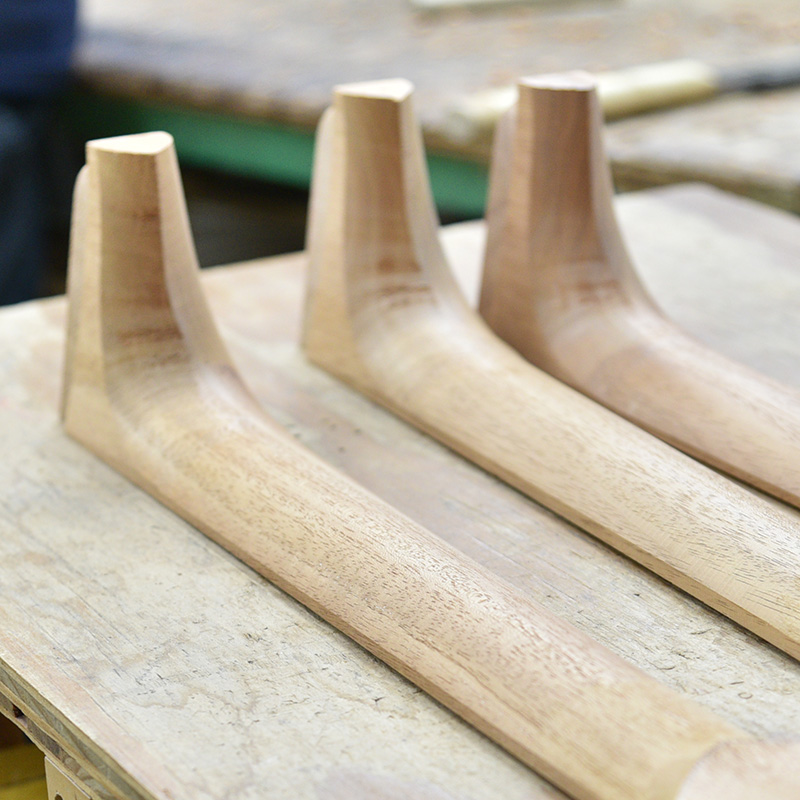
After separately finishing the body and neck, we employ a traditional jointing method known as the dovetail joint technique. While models using simpler bolted joints have become more common in recent years, the dovetail joint offers a larger contact area. When finished with high precision, it produces a rich resonance, making the neck and body sound as if they were a single piece of wood. The protrusions at the joint, are made larger than standard, and the joint is assembled using specialized jigs. This method of joining after painting is called “post-processing assembly.”
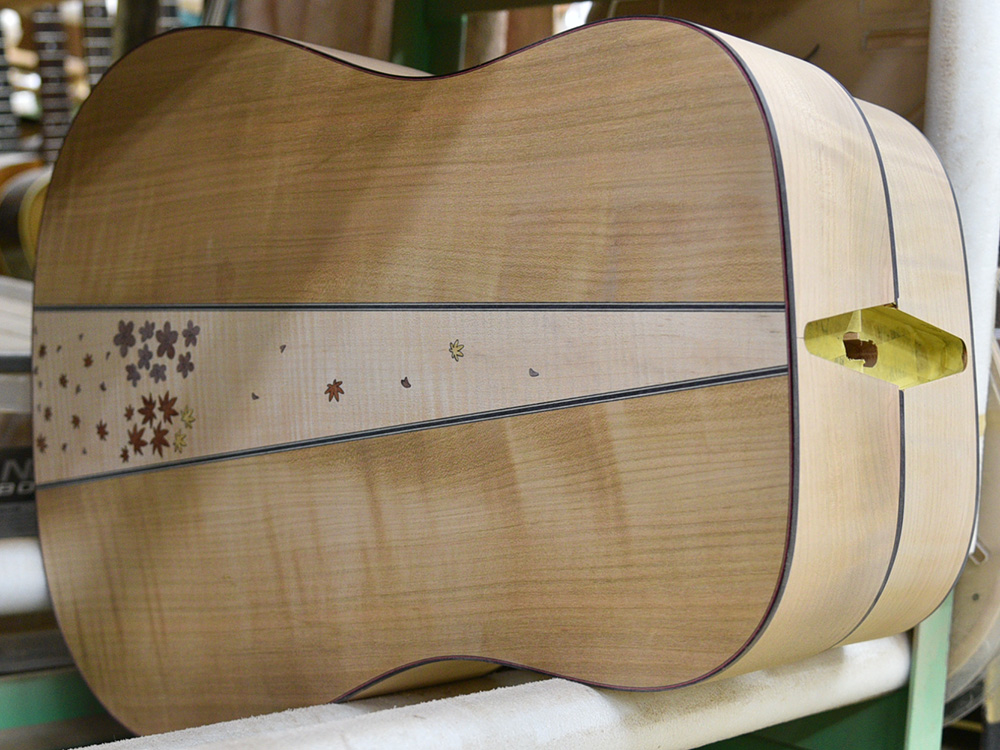
Sakura × Kaede
The body sides and back feature Japanese Yamazakura wood (also known as wild or mountain cherry), showcasing its distinctive flamed grain. This instrument employs a three-piece construction for its body back, with the center piece made from Kaede (Japanese maple) wood. Both woods are relatively hard and sturdy. The sweetness characteristic of Yamazakura is complemented by the crisp, clean tone of Kaede, resulting in an impressive sound that resonates sweetly and refreshingly even with a light stroke.
VIDEOS
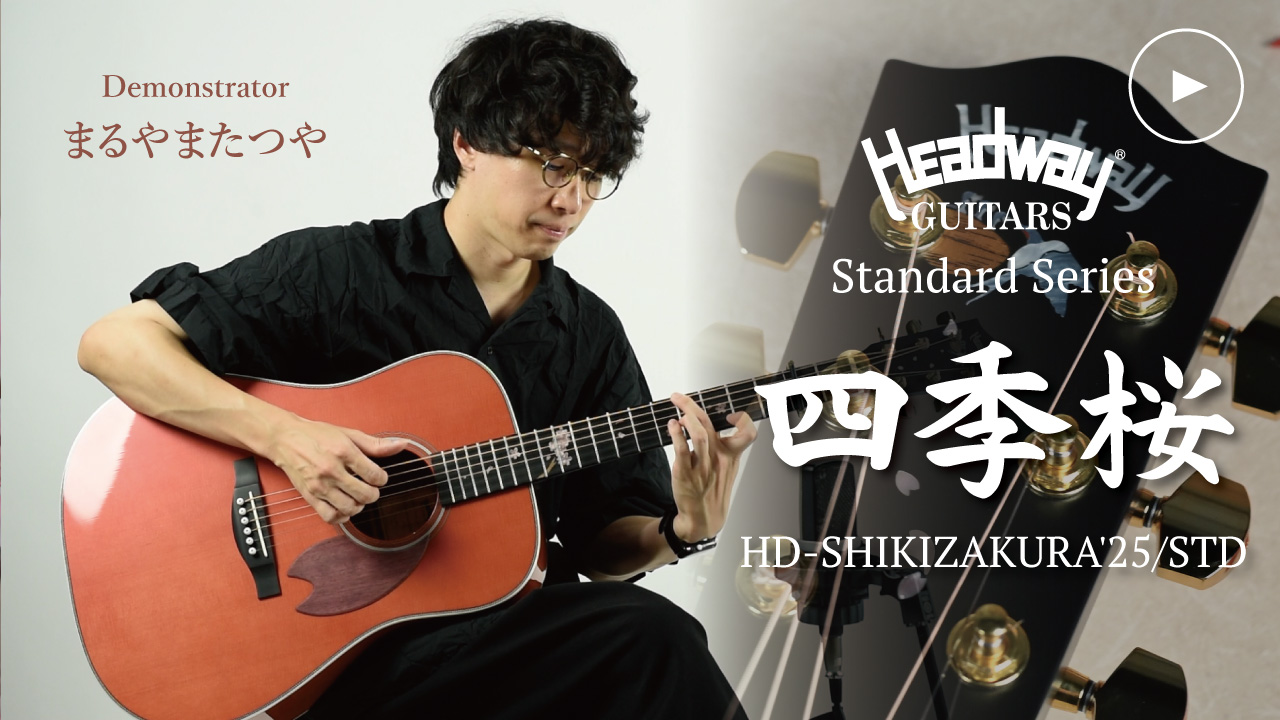
Standard Series
Design
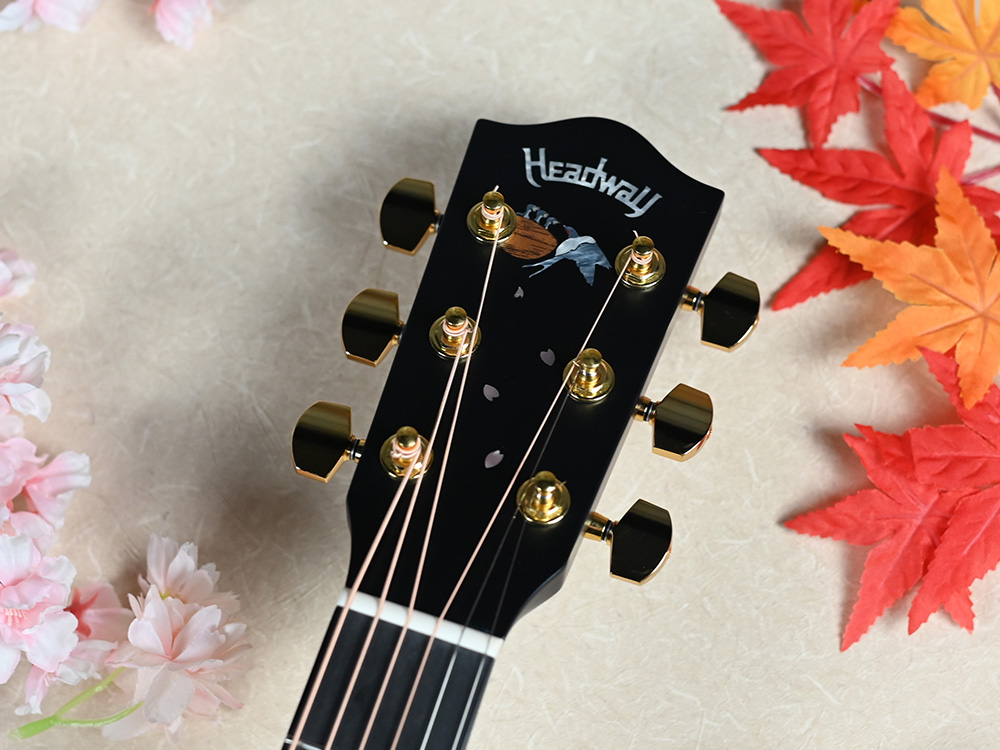
Swallows and Sakura
A design featuring the swallow, a bird deeply familiar to the Japanese people. The swallow is also a bird with ties to Headway; the late Master Builder Yasuo Momose looked forward to the swallows that visited his workshop every spring. This design focuses on the memory of the current master builders’ mentor and the subtle beauty of the Japanese landscape.
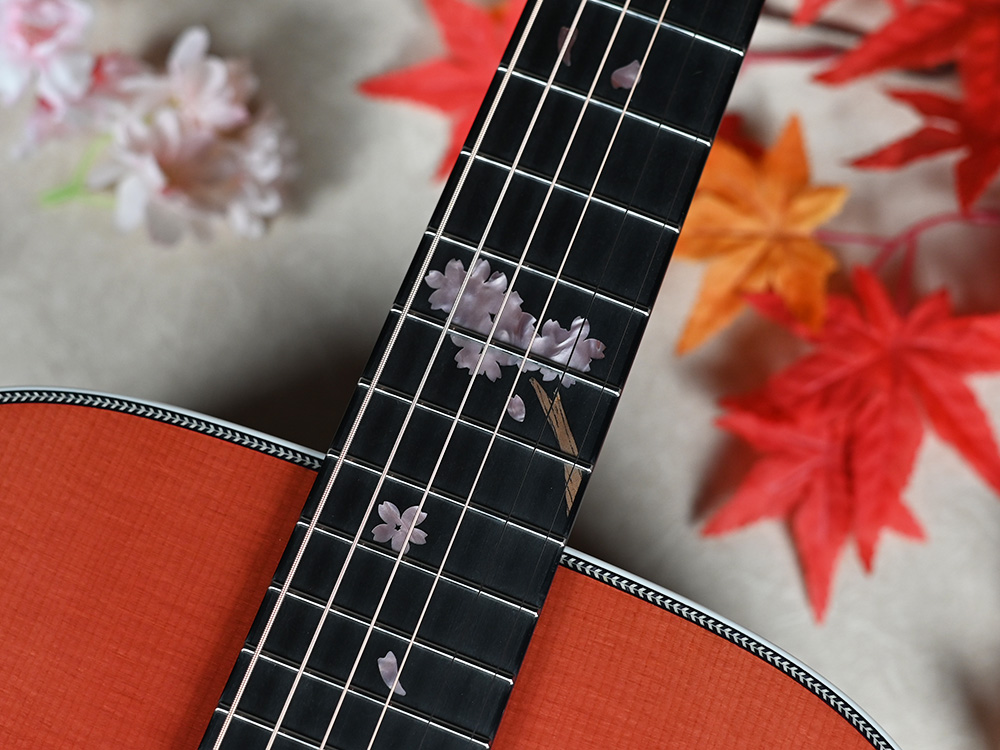
Inlay work depicting cherry blossoms in full bloom
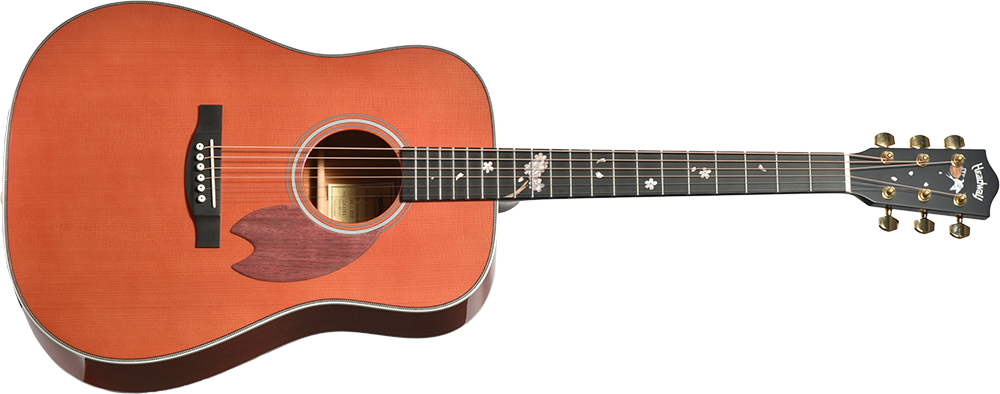
One of the elements symbolizing the Sakura model is the cherry blossom inlay skillfully crafted from acrylic and wood on the fingerboard of these models.
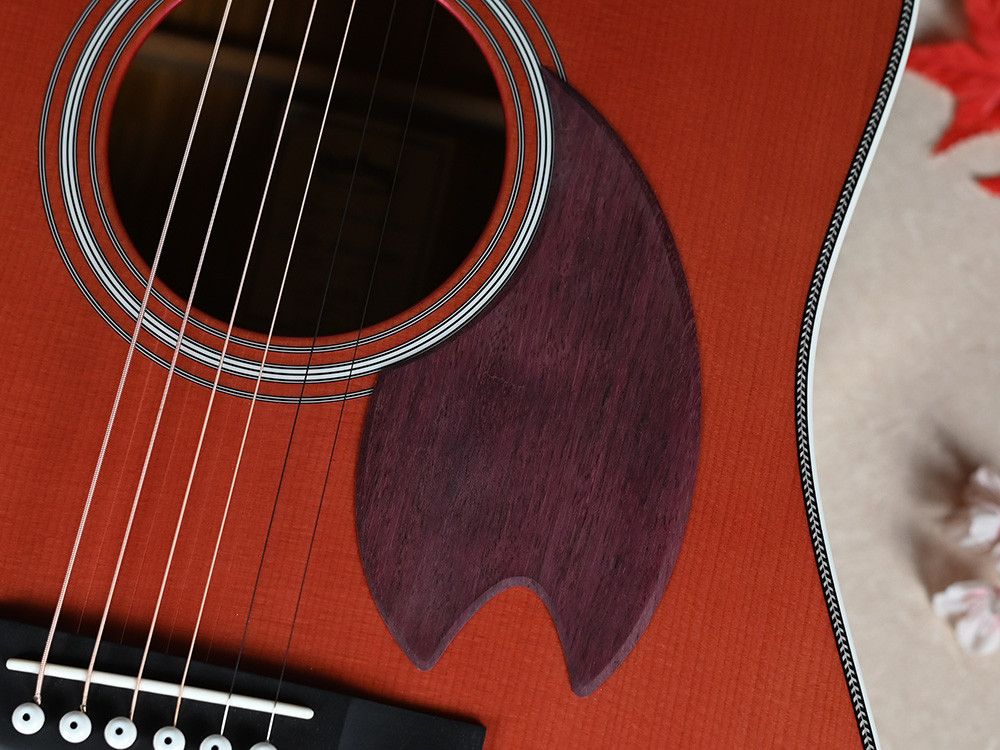
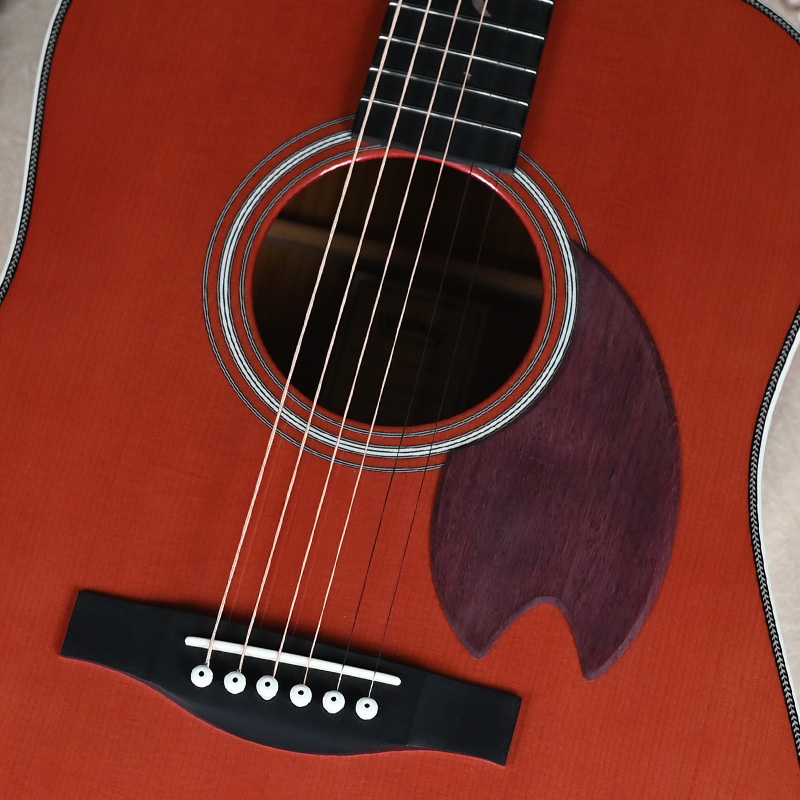
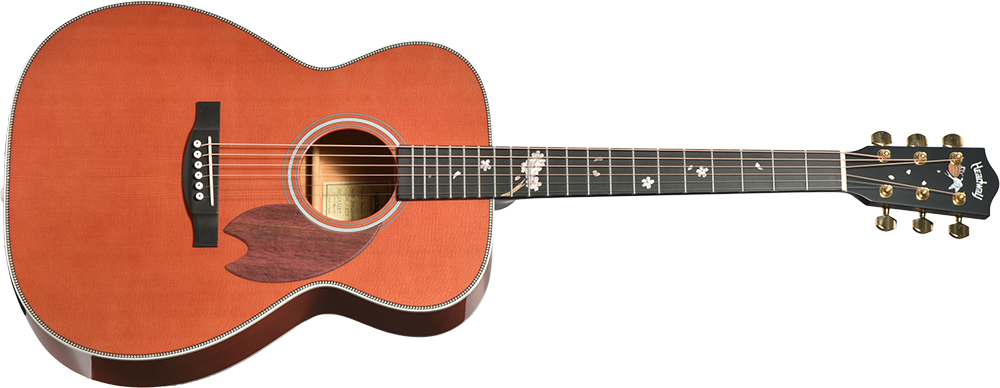
Vibrant and beautiful reddish-brown pickguard
The pickguard features purpleheart wood with its distinctive purple hue, incorporating a design that recreates cherry blossom petals.
「Autumn Redpink Pearl」
That changes expression depending on the angle
The “Autumn Redpink Pearl” coloring expresses the pink of cherry blossoms and the red of autumn leaves. Finished with a pearl coating that changes hue depending on the viewing angle, revealing different expressions of this complex color.
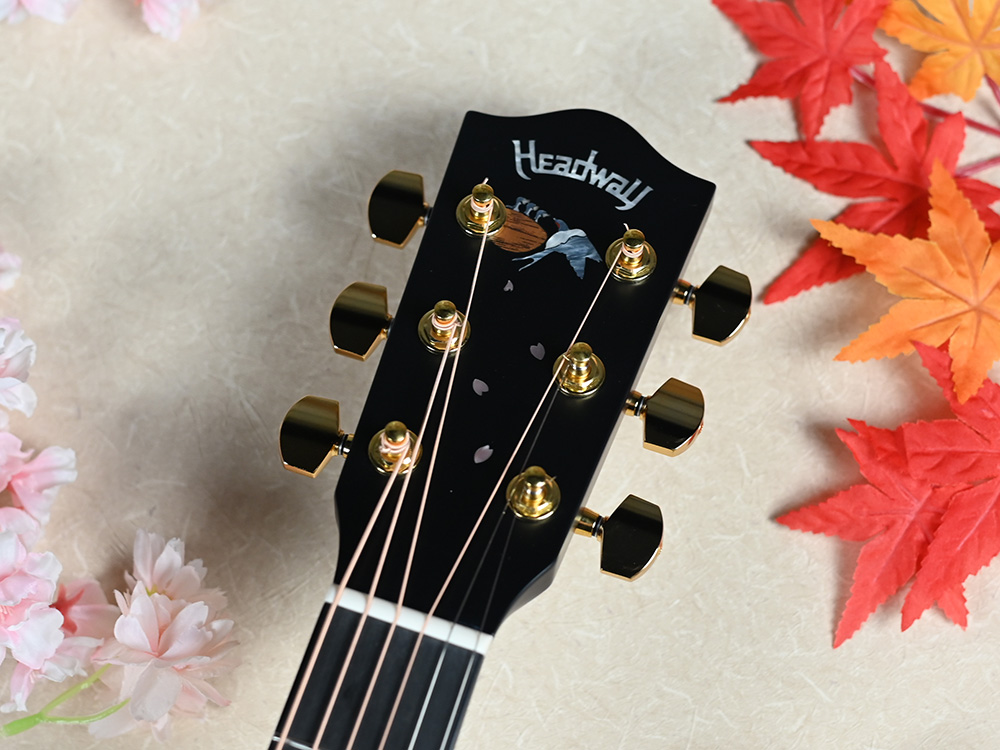
Swallows and Sakura
A design featuring the swallow, a bird deeply familiar to the Japanese people. The swallow is also a bird with ties to Headway; the late Master Builder Yasuo Momose looked forward to the swallows that visited his workshop every spring. This design focuses on the memory of the current master builders’ mentor and the subtle beauty of the Japanese landscape.
Inlay work depicting cherry blossoms in full bloom
One of the elements symbolizing the Sakura model is the cherry blossom inlay skillfully crafted from acrylic and wood on the fingerboard of these models.
Vibrant and beautiful reddish-brown pickguard
The pickguard features purpleheart wood with its distinctive purple hue, incorporating a design that recreates cherry blossom petals.
「Autumn Redpink Pearl」
That changes expression depending on the angle
The “Autumn Redpink Pearl” coloring expresses the pink of cherry blossoms and the red of autumn leaves. Finished with a pearl coating that changes hue depending on the viewing angle, revealing different expressions of this complex color.
Material
High-precision neck joint
After separately finishing the body and neck, we employ a traditional jointing method known as the dovetail joint technique. While models using simpler bolted joints have become more common in recent years, the dovetail joint offers a larger contact area. When finished with high precision, it produces a rich resonance, making the neck and body sound as if they were a single piece of wood. The protrusions at the joint, are made larger than standard, and the joint is assembled using specialized jigs. This method of joining after painting is called “post-processing assembly.”
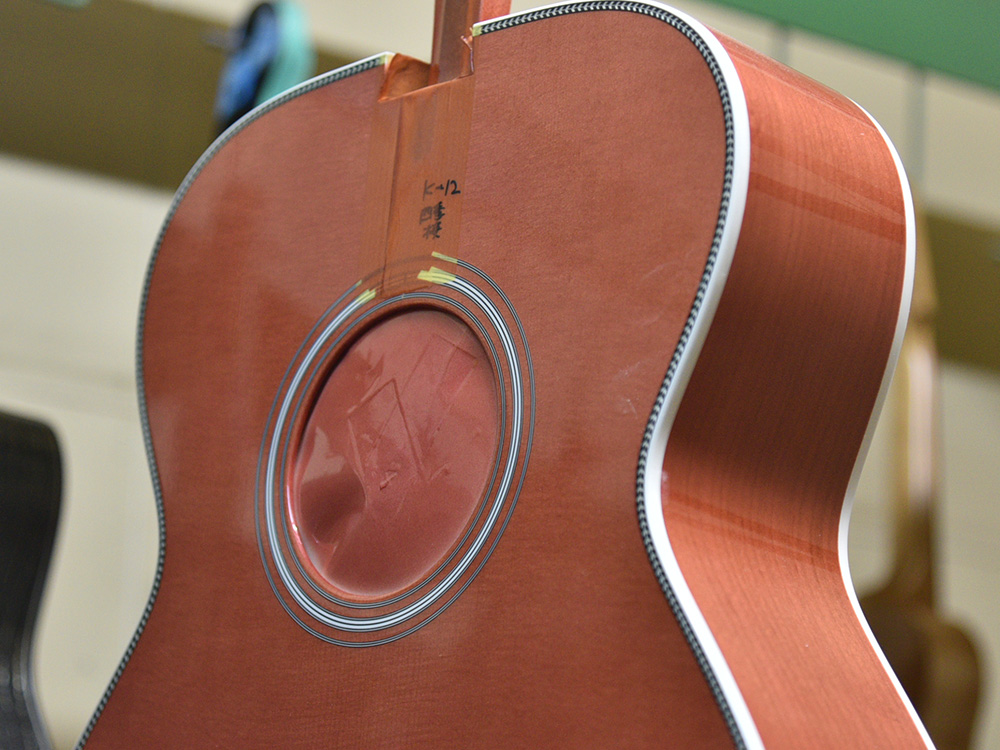
Yamazakura
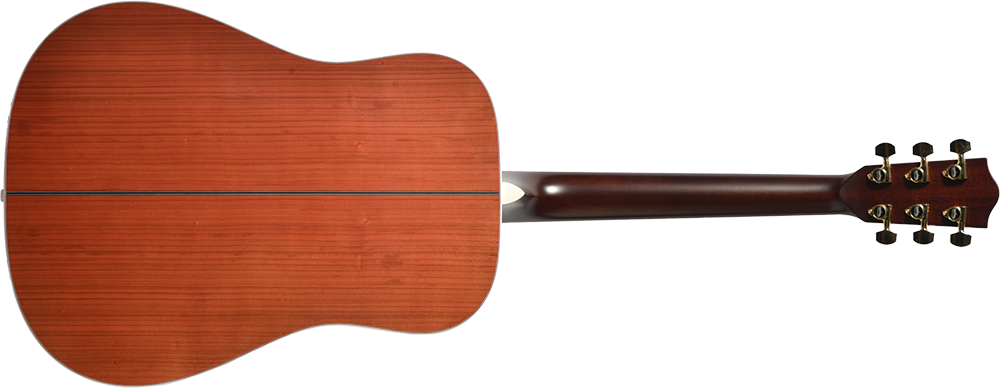
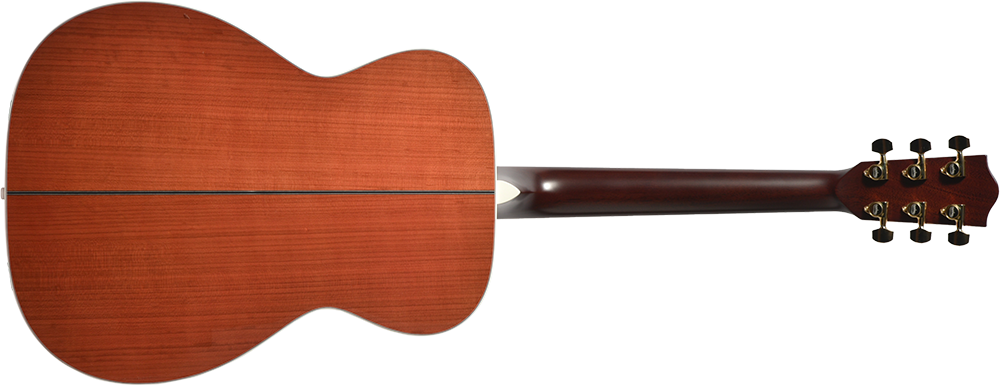
The sides and back are crafted from Yamazakura wood (also known as wild or mountain Sakura) sourced domestically. This wood possesses exceptional hardness, delivering rich low-mid ranges while maintaining the sweet, characteristic sound unique to Sakura wood. A centerline made from purpleheart—the same material used for the pickguard—adorns the body back center.
VIDEOS