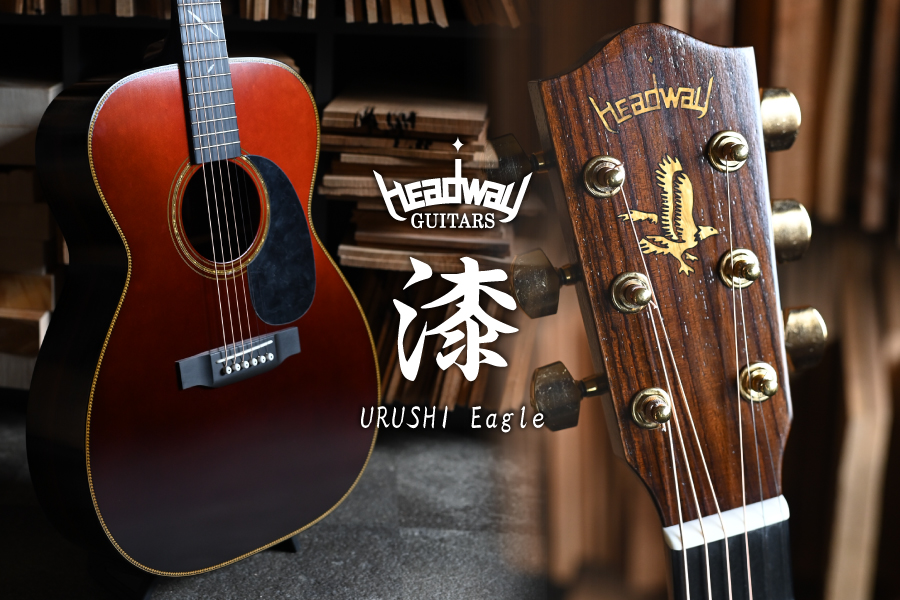










The Sound of “The Eagle” and the Resonance of Urushi Lacquer
Creating “Acoustic Guitars that grow alongside you” is one of Headway’s core philosophies.
The “The Eagle” model was born as a new challenge that embodies this philosophy.
“The Eagle” was crafted by Master Builder Yasuo Momose’s apprentices, who carried on his legacy. Momose himself had high hopes for this model during his lifetime.
And there’s one more thing: Headway has been focusing in recent years on crafting guitars with a “Japanese” aesthetic, a hallmark of Japanese guitar makers.
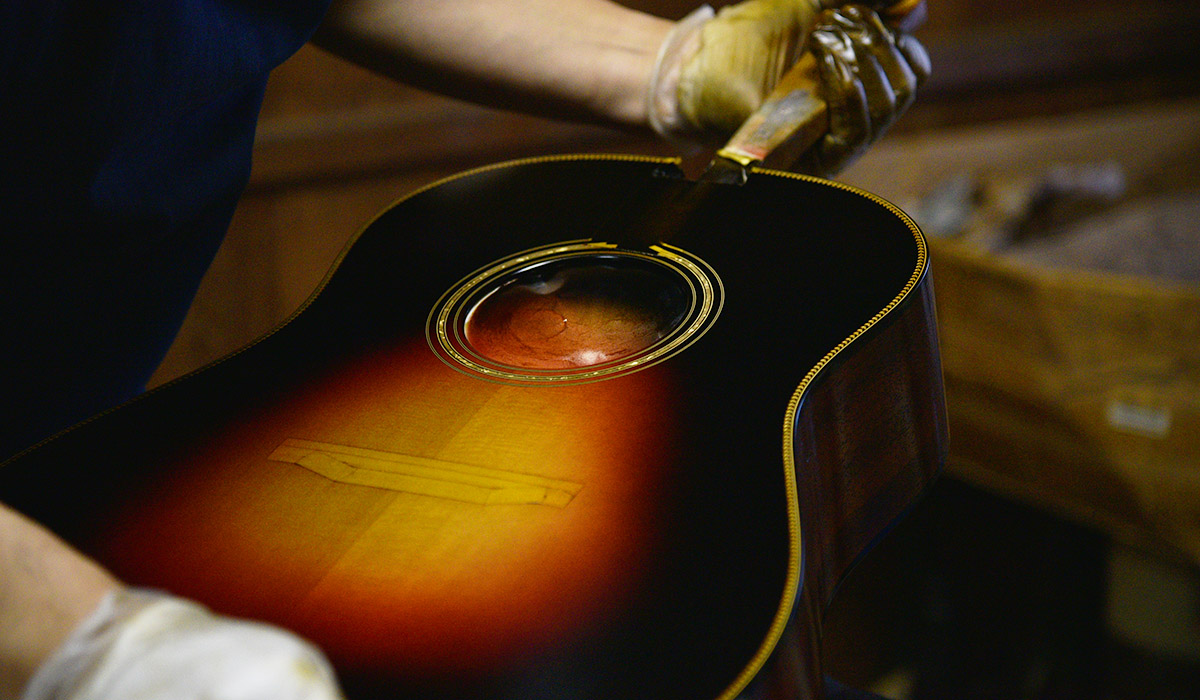
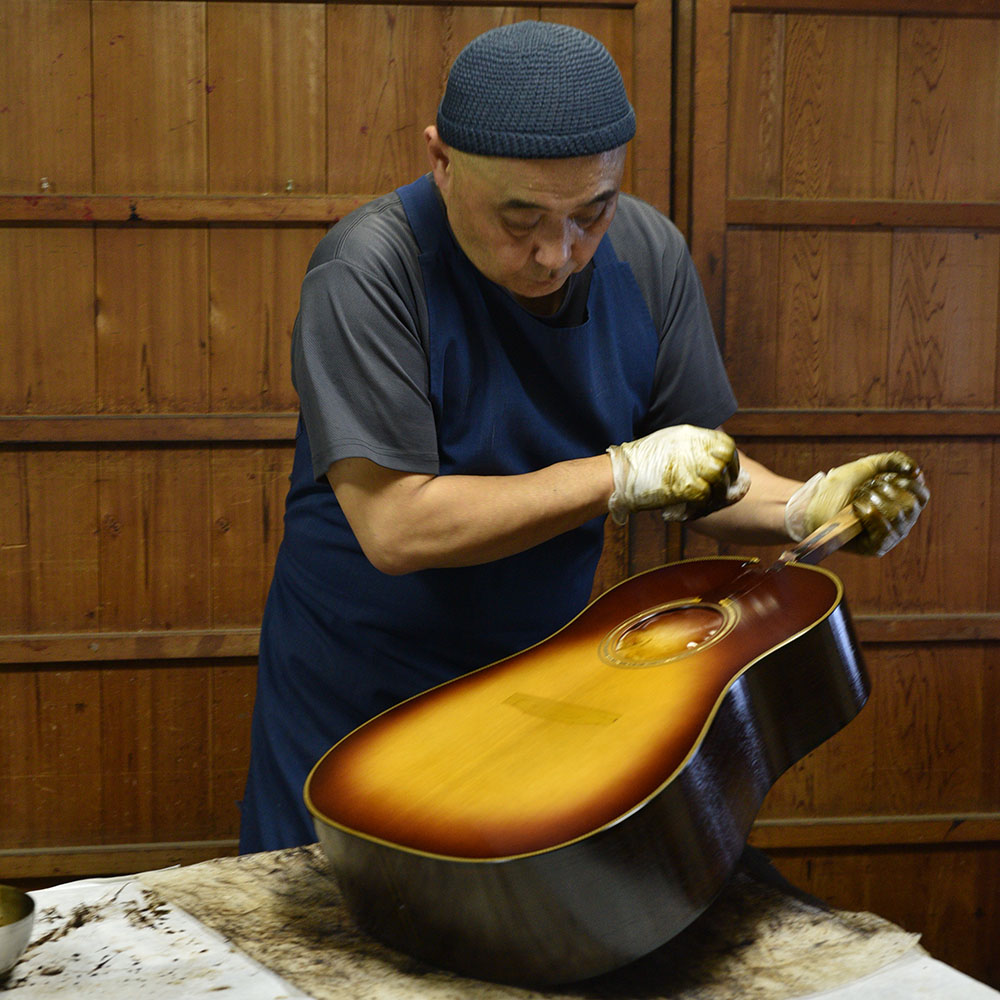
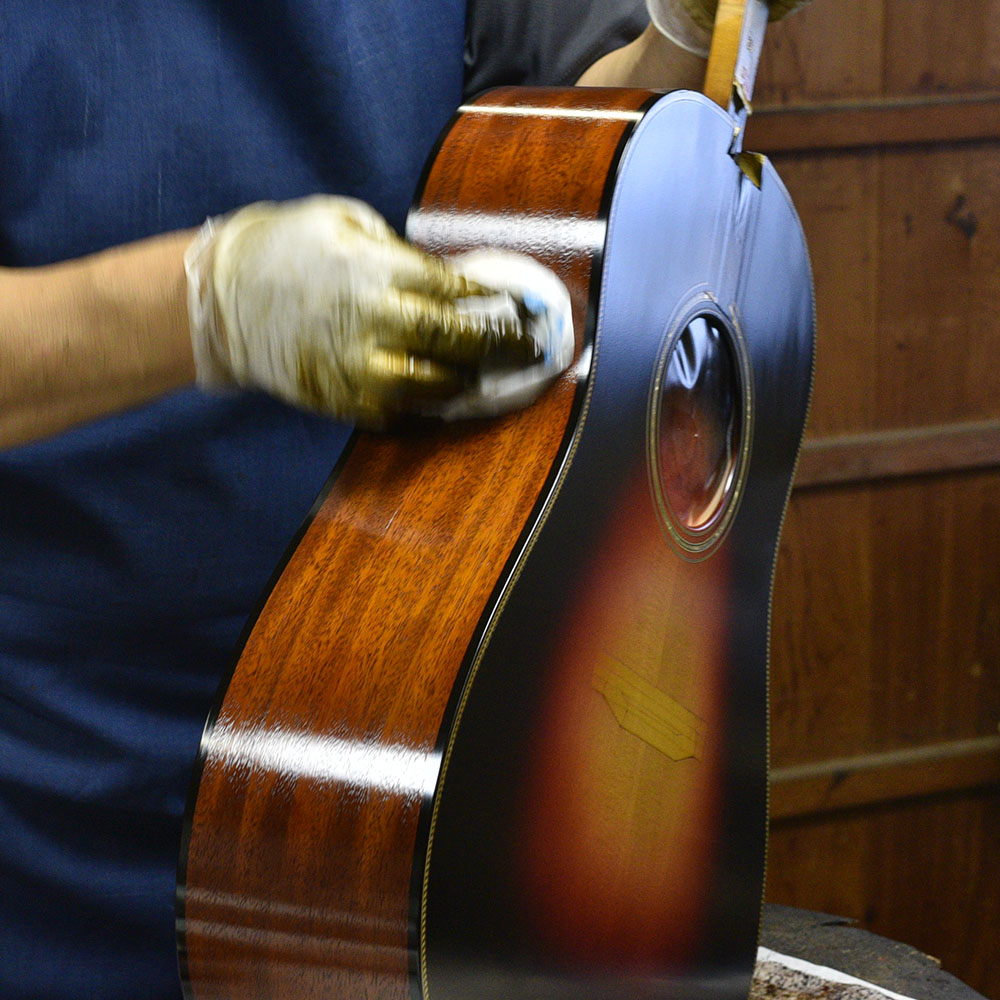
Among these, there is a special lacquer finish that can only be produced once a year, during the summer, Urushi lacquer.
This Urushi lacquer finish deepens in beauty and character the more it’s played, accompanying its owner for decades. The allure of this patina, combined with “The Eagle’s” philosophy of a “guitar that matures alongside you”, has given birth to a brand-new instrument.
Please enjoy to your heart’s content this one-of-a-kind instrument, where the rich resonance of “The Eagle”, which deepens the more you play it, blends with the depth and presence unique to a Urushi lacquer finish.

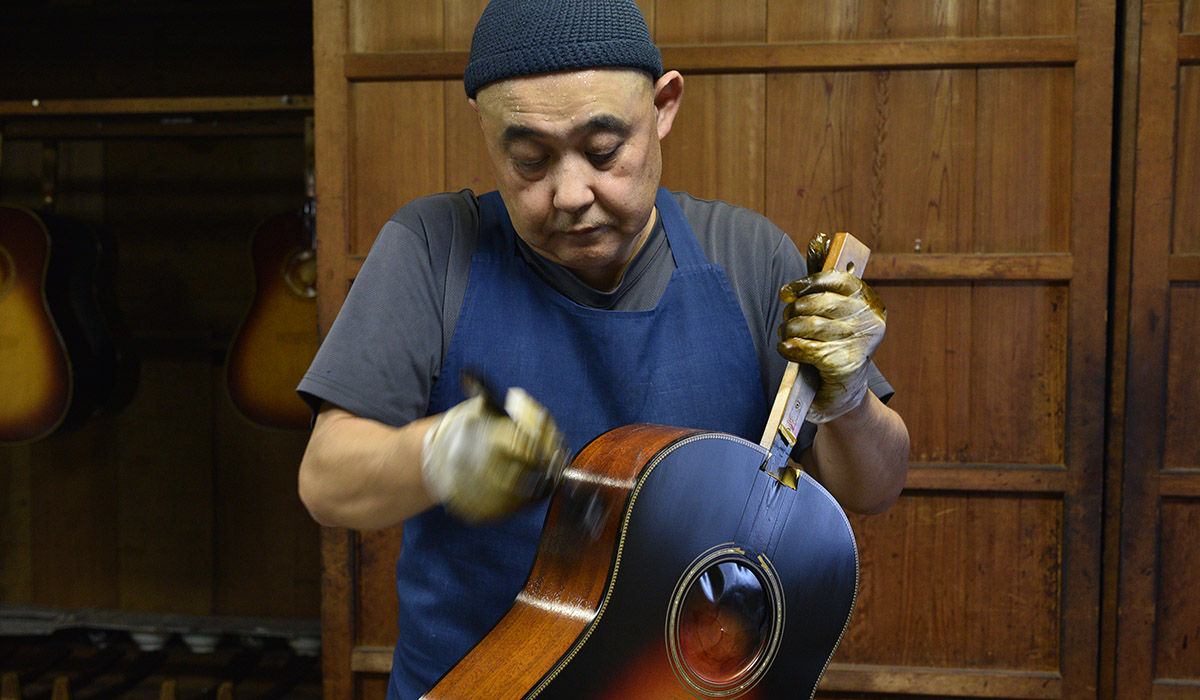
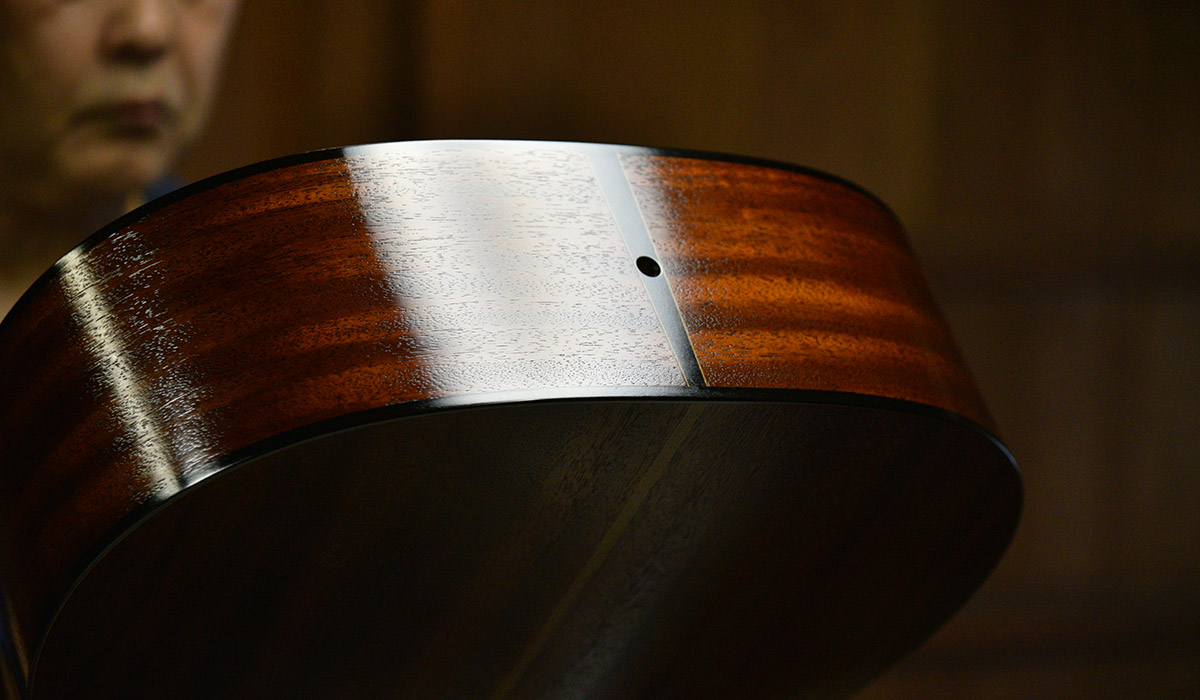
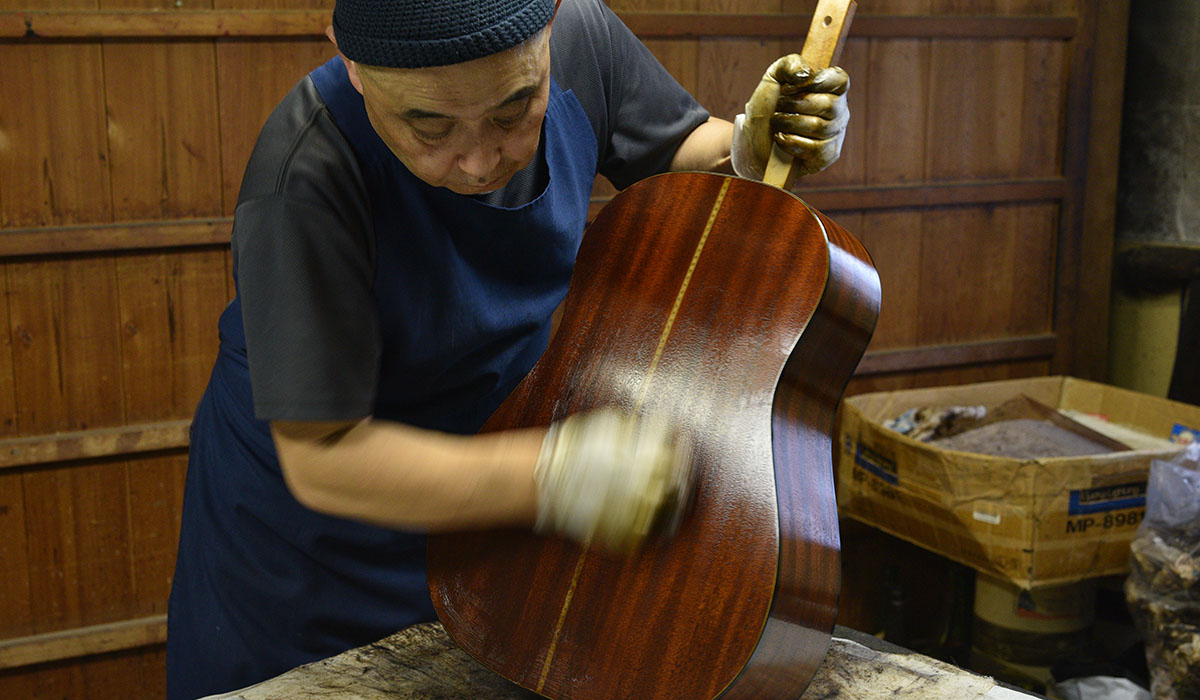
- 『KOBAYASHI』Lacquerware
Profile
Noboru Kobayashi
Born in 1964, in the Nagano prefecture
Associate member of Kokugakkai Crafts Division, member of Shinshu Wood Crafts Association.
Started working professionaly with Urushi Laquer in 1981.
Produced original Urushi accessories, and provided Urushi lacquer finishes for many woodworkers and furniture makers.
With his excellent lacquer painting skills and warm personality, he creates works full of unique Urushi charm to them.
A design that symbolizes -The Eagle-
デザイン
A design that symbolizes -The Eagle-
デザイン
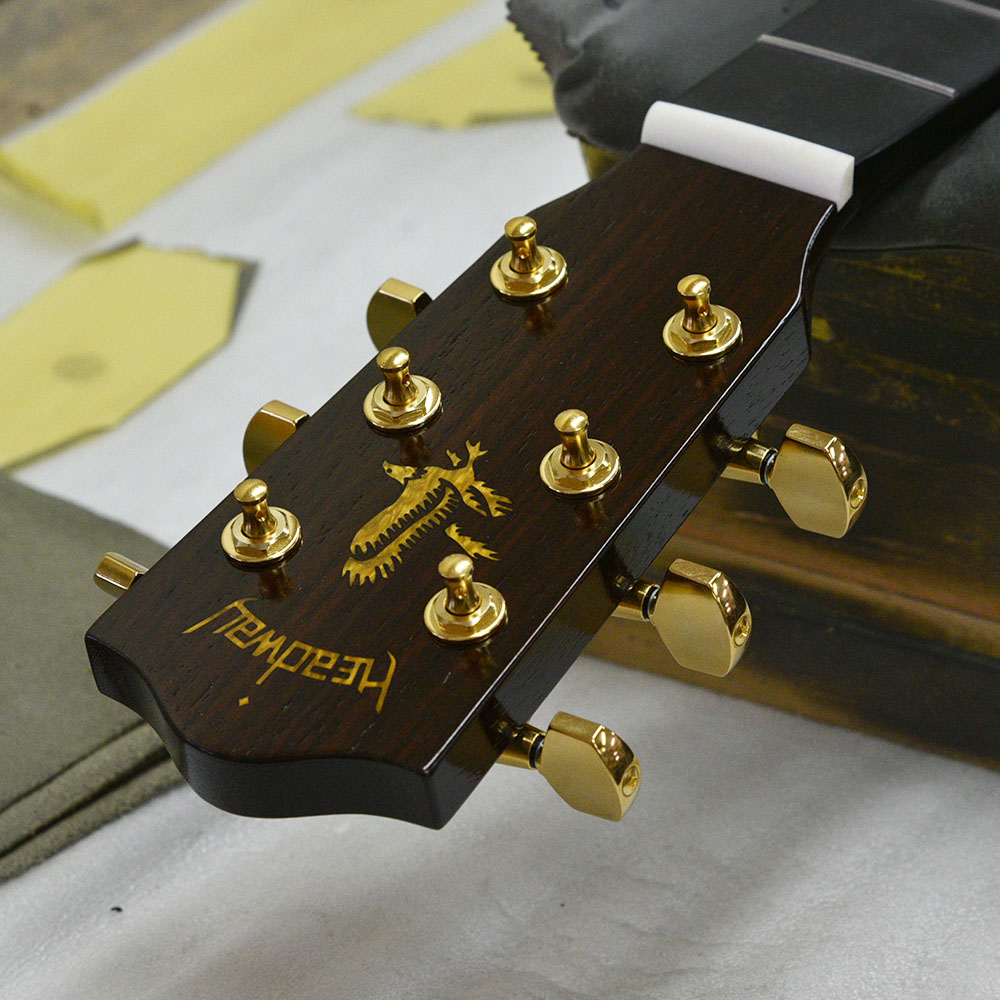
The Eagle Symbol and Crown Logo
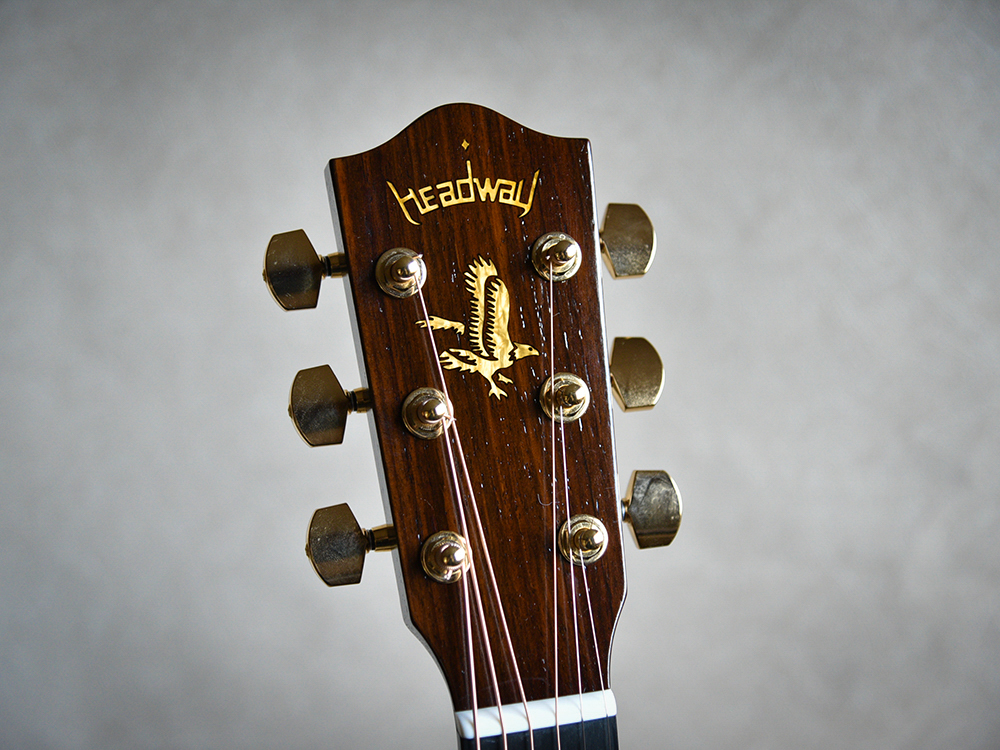
Inspired by the eagle, the king of the skies, the brand logo features the “Headway Crown Logo” design, which symbolizes a crown. This is a reimagining of the “eagle,” which Headway has used as its symbolic motif since its founding. It captures a moment of the eagle spreading its wings wide and soaring through the vast sky, evoking the image of soaring into a new era.
Feather Inlay
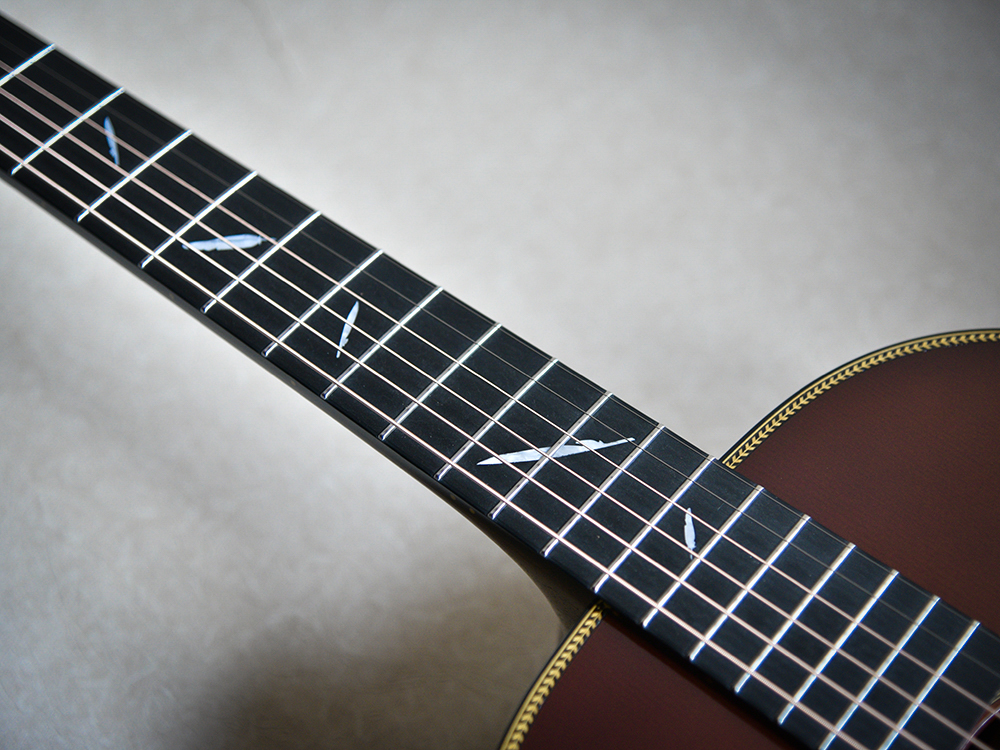
The fingerboard features a design depicting eagle feathers in flight. Eagle feathers are said to show the path ahead and help propel one into the future; this design expresses our hope for a fresh start, both for Headway and for everyone who picks up this series.
Soundhole cover
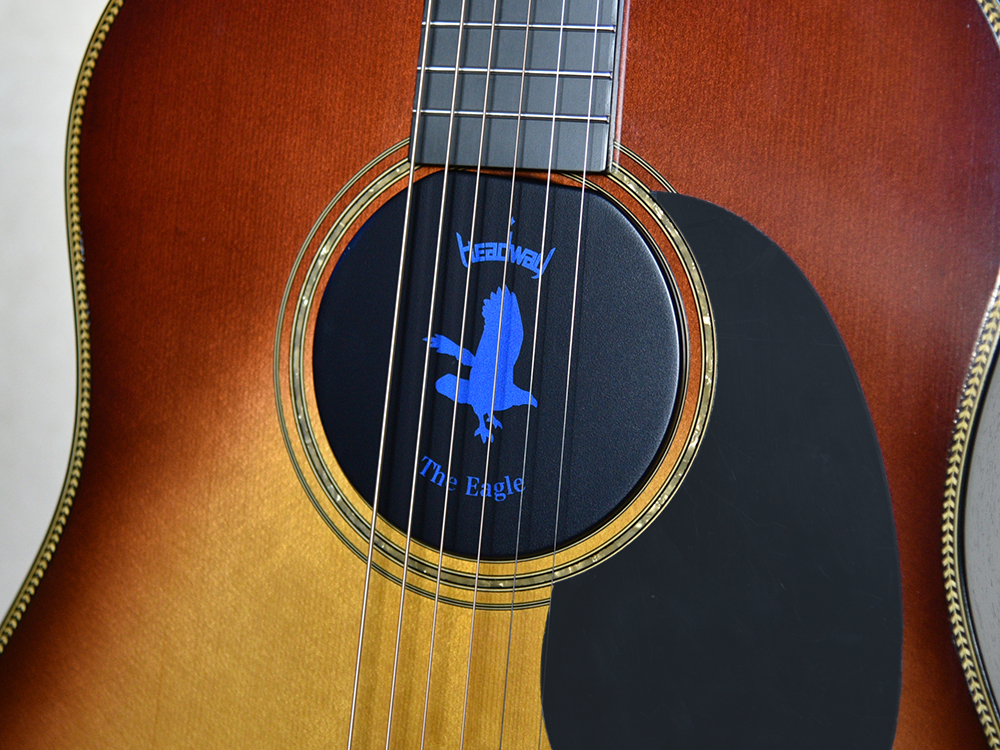
The soundhole cover helps maintain humidity inside the body and reduces feedback. It features a design symbolic of “The Eagle,” giving it a presence befitting the majestic Eagle.
Our Commitment to Wood That Produces a Beautiful Sound
木材
Our Commitment to Wood That Produces a Beautiful Sound
木材
The Eagle’s First Type J Body
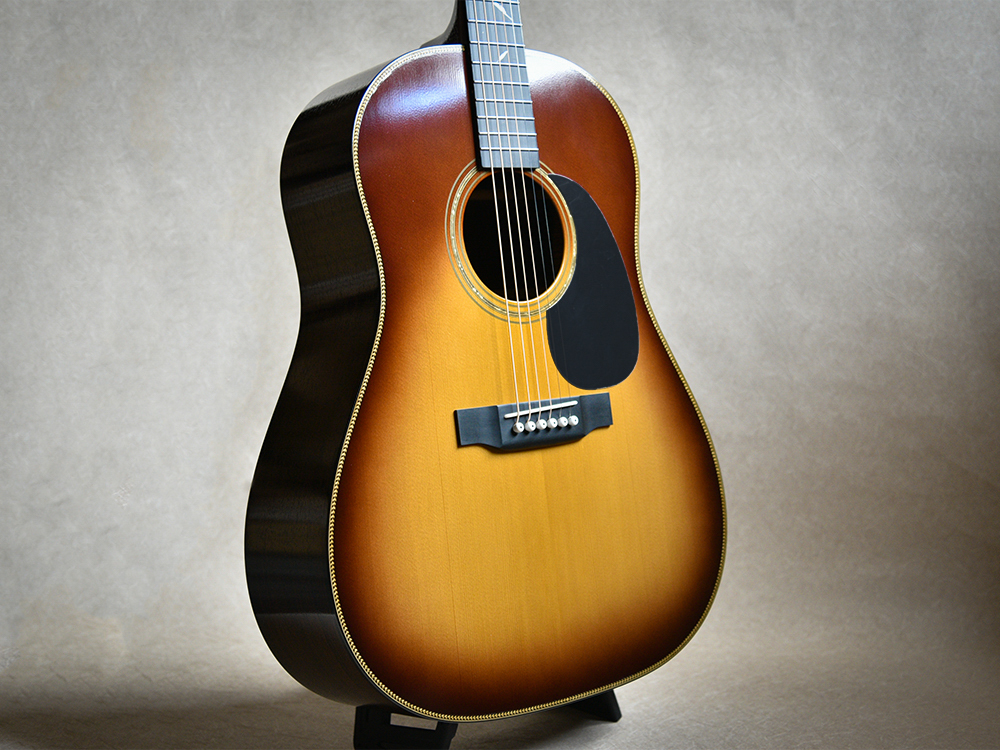
This is the first Eagle model to feature the “Type J” body. The “Type J” body has a shorter 628mm scale length and offers slightly looser string tension than the “Type D”. Yet, by combining this with a body size similar to that of the “Type D”, this body shape achieves a balance between a soft, expansive bass response and a sound that, when picked hard, distorts while still spreading out with a wild, explosive quality. Combined with The Eagle’s “Mid Point Shifted X Bracing”, this creates a sound with just the right amount of tightness—preventing it from becoming too loose, and fully brings out the unique characteristics of the “Type J.”
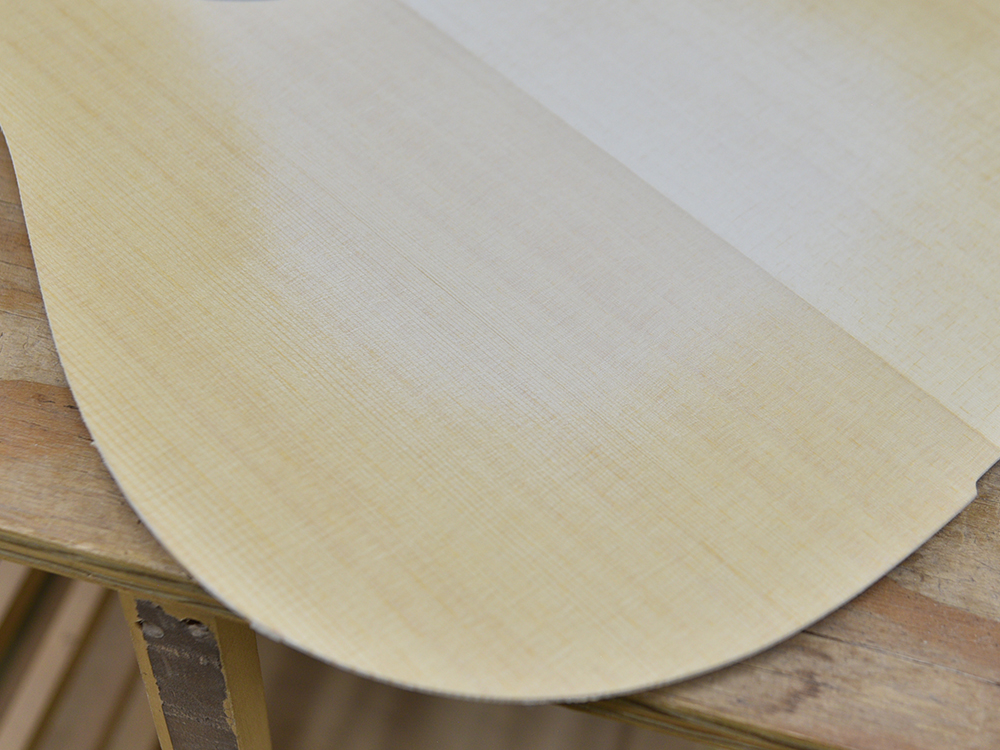
Sitka Spruce
For the top, we’ve selected Sitka spruce, often considered the gold standard for acoustic guitars. With its balanced harmonics and responsive tone, it’s a sound that works in any setting, ensuring it will remain an instrument you can play and love for years to come. The subtle variations in sound resulting from different back and side woods are naturally brought out, giving each guitar its own unique character.
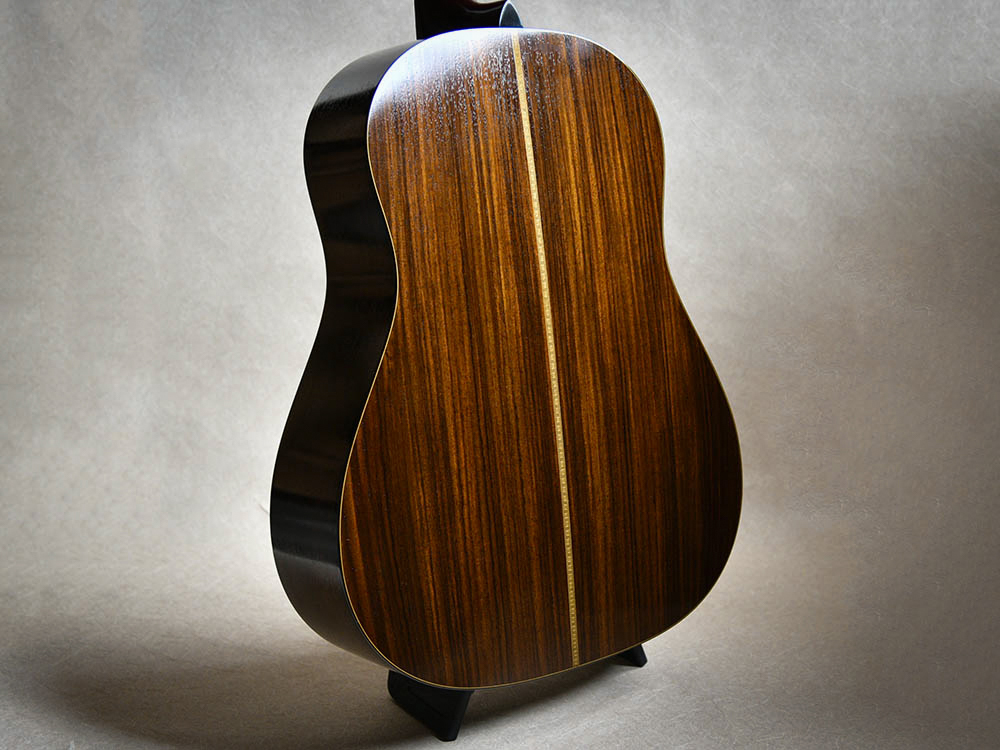
Indian Rosewood Back & Sides
“Indian rosewood,” which offers just the right balance of stiffness and resilience, is used for the back and sides. The tight bass and bright treble characteristic of rosewood form the foundation of the sound, and the combination of The Eagle’s tone with the lacquer finish brings out the maximum resonance, creating a sound with a direct, almost tangible quality.
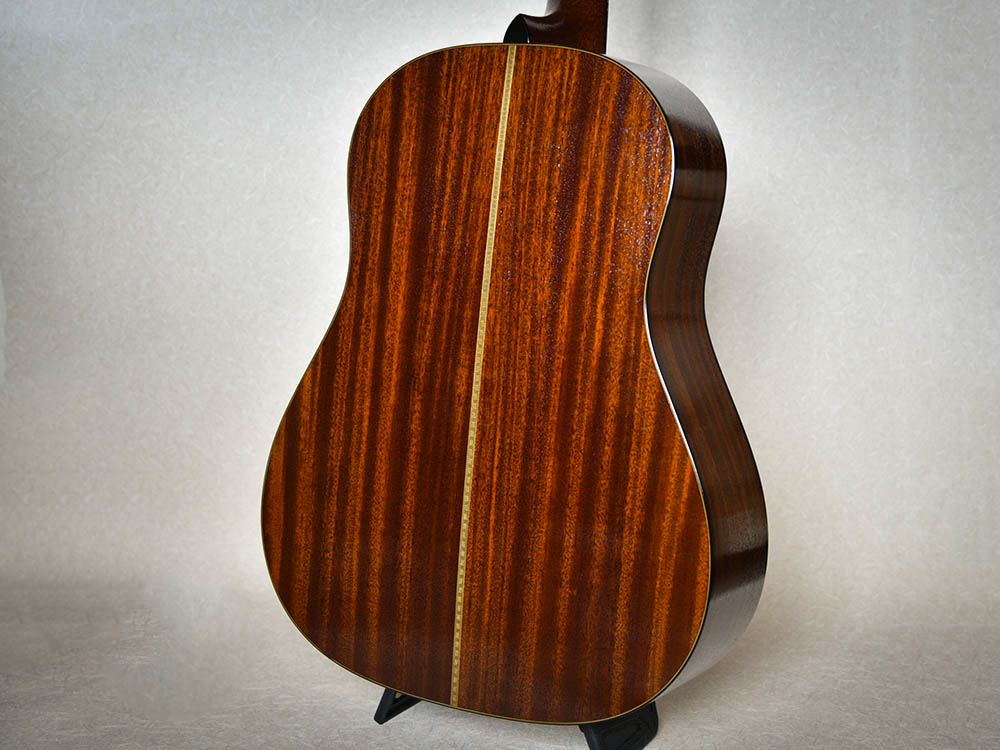
African Mahogany Back & Sides
“African Mahogany” is known for its sweet midrange sound. When combined with The Eagle’s “Mid Point Shifted X Bracing” design, its characteristically soft, expansive mahogany tone, which is softer than that of rosewood, produces a sound that starts with a solid midrange and expands outward.
One-piece mahogany neck
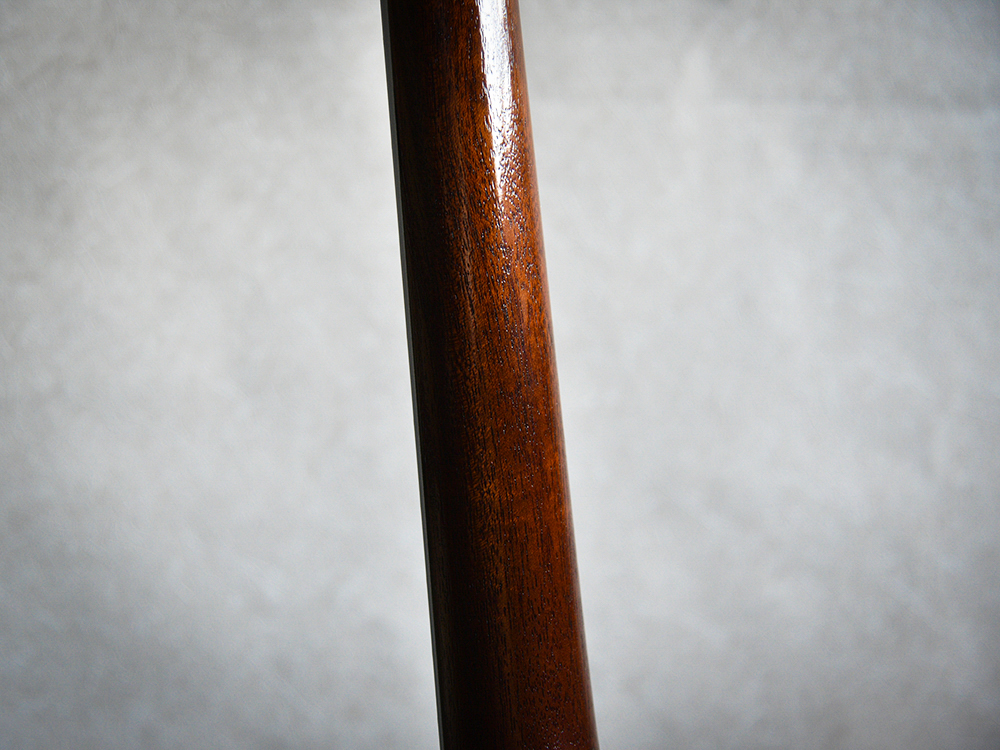
One area where Headway takes particular pride in its guitar-making process is the crafting of the neck. To create guitars that feel comfortable in the hand and can be played for many years, each one is crafted by hand, with the grip carefully checked as it is built. In addition, the neck is crafted from a single piece of mahogany; this seamless neck ensures stability against warping and results in a beautiful finish.
Product Lineup製品一覧
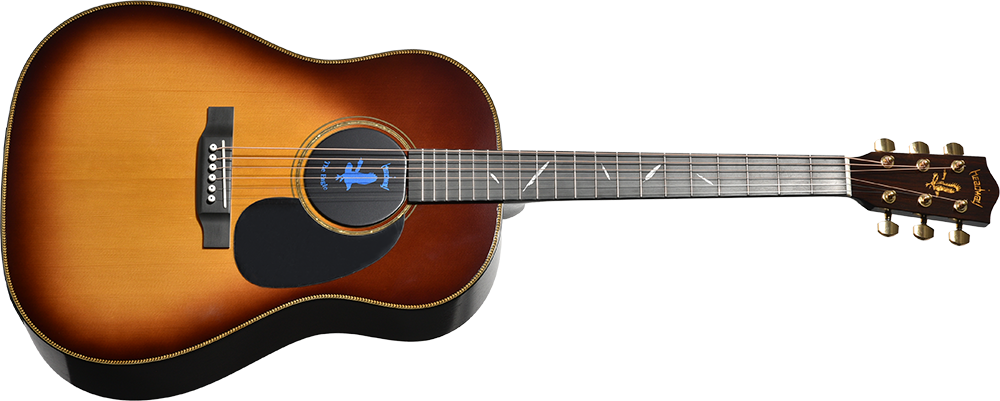
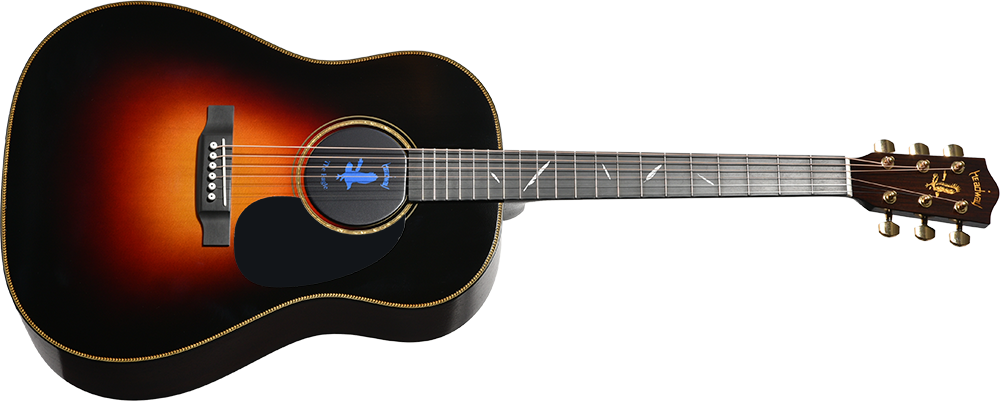
New Colors新たなるカラー
01
Indian Rosewood × Brown Sunburst
Models featuring African mahogany for the side and back are finished in “Brown Sunburst.” The color has been expertly formulated to highlight the amber hue of the lacquer, resulting in a subtle brown tone that combines a modern look with a vintage aura, a texture unique to lacquered models.
02
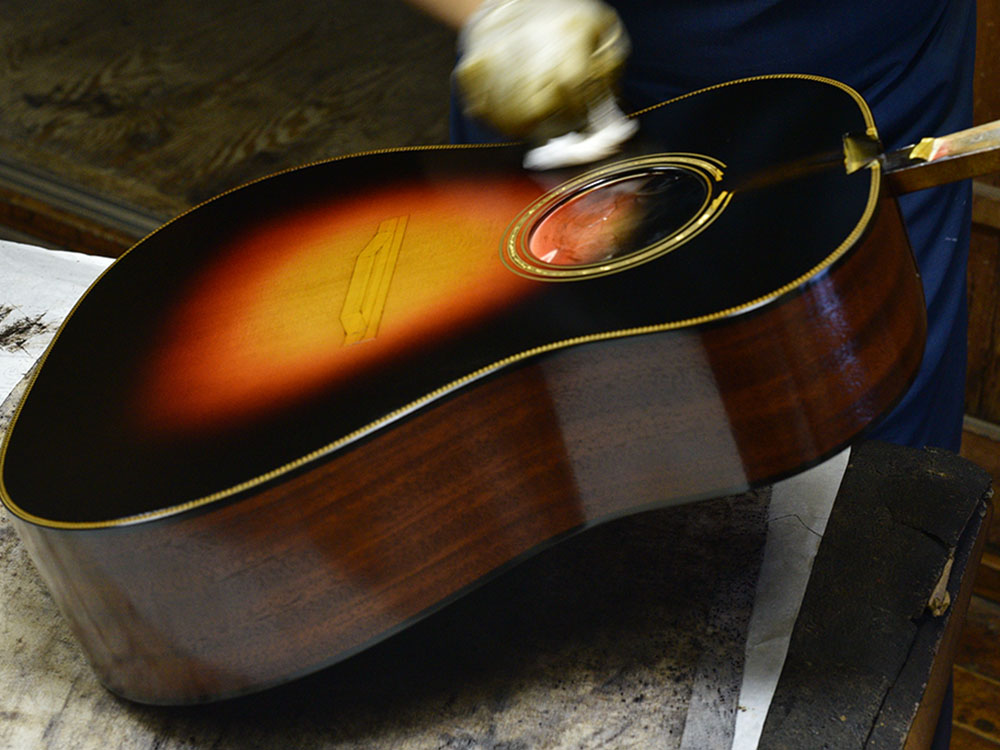
African Mahogany × Retro Burst
Models featuring Indian rosewood for the back and sides are finished in the “Retro Burst” color. The distinctive gradient, with a wider black burst that gradually fades to an amber hue toward the center, is the result of the finishers’ meticulous color selection and technical expertise. This color scheme pairs perfectly with the natural amber hue of the Urushi lacquer finish.
Specs仕様
01
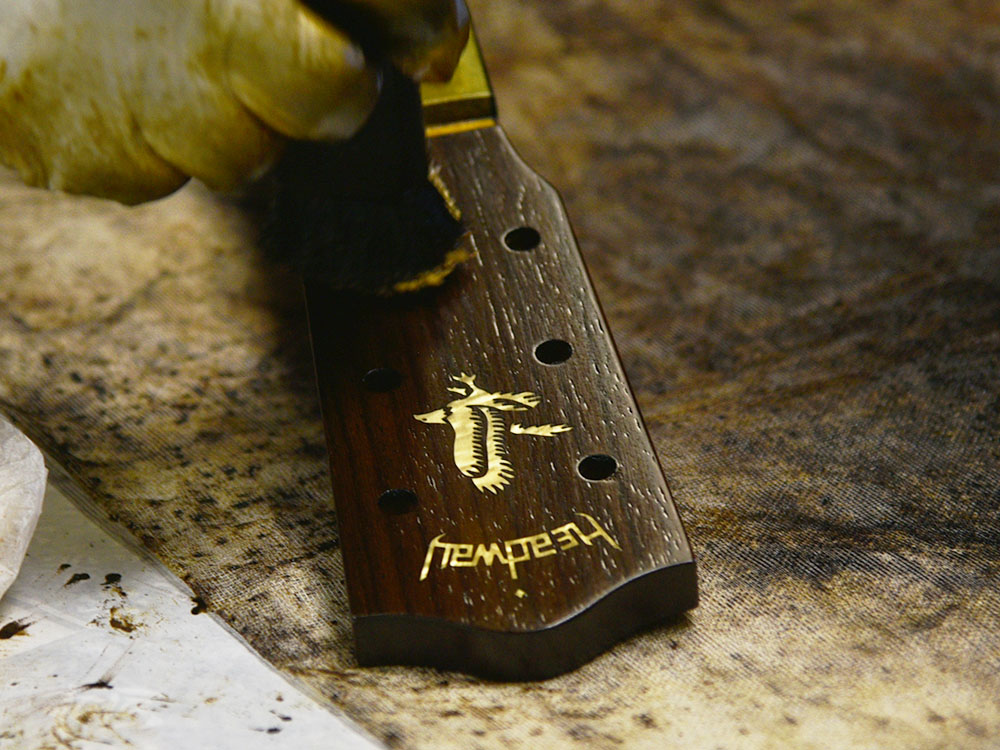
Durability of Urushi Lacquer Finishes
Urushi lacquer finishes consist of an extremely thin coating, with a thickness of approximately 0.05 mm. While this figure alone might raise concerns about durability, Urushi lacquer adheres more firmly to wood than solvent-based paints, resulting in a finish with exceptionally high rigidity. It also offers excellent preservative, waterproofing, and insect-repellent properties. It is often said that “Urushi lacquer finishes reach their peak beauty after several decades”, and, just like lacquered furniture, they offer the joy of growing more beautiful with use over time.
02
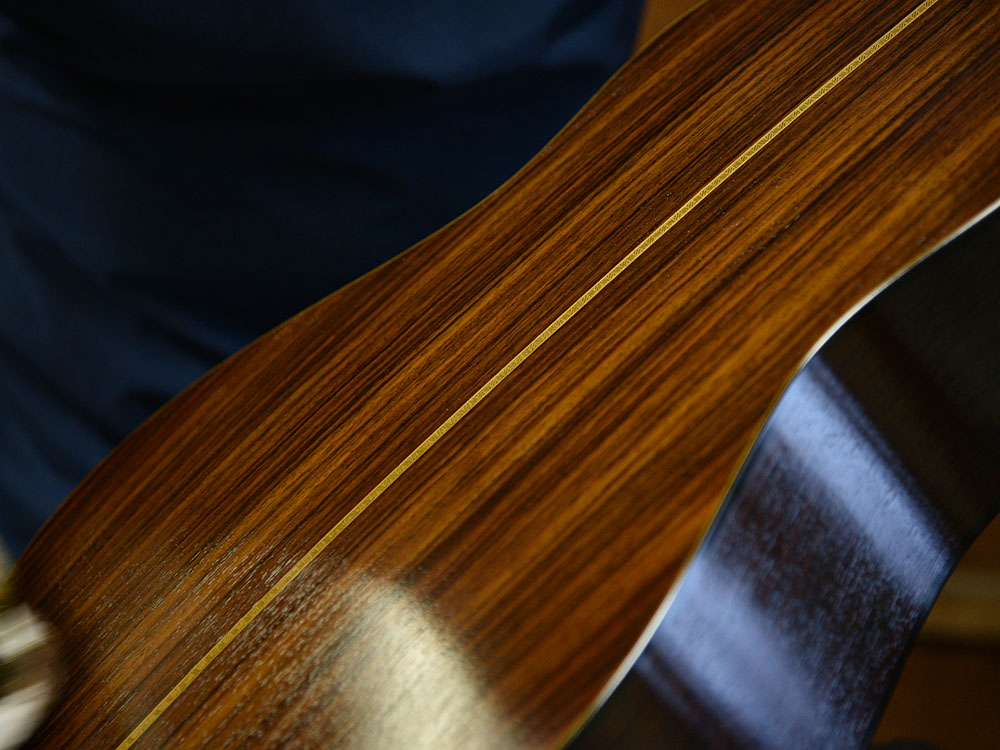
The Acoustic Properties of Urushi &
The Eagle’s “Mid Point Shifted X Bracing”
Based on the standard bracing used by Momose when Headway was founded, custom builders Yasui and Furihata incorporated modern elements and undertook a redesign, resulting in the adoption of the “Mid Point Shifted X Bracing”.
Additionaly, the “Shallow Scalloped” specification, which features shallower bracing than usual, had previously been used exclusively in Momose’s Custom Shop models, but has now been adopted as the standard specification for the -The Eagle- models. It delivers a well-defined tone with clear articulation for each note, combined with a resonant body sound in the low frequencies; this well-balanced sound, enveloped in harmonics, builds on the traditional Headway sound while hinting at new possibilities for the brand.
Specs仕様
01
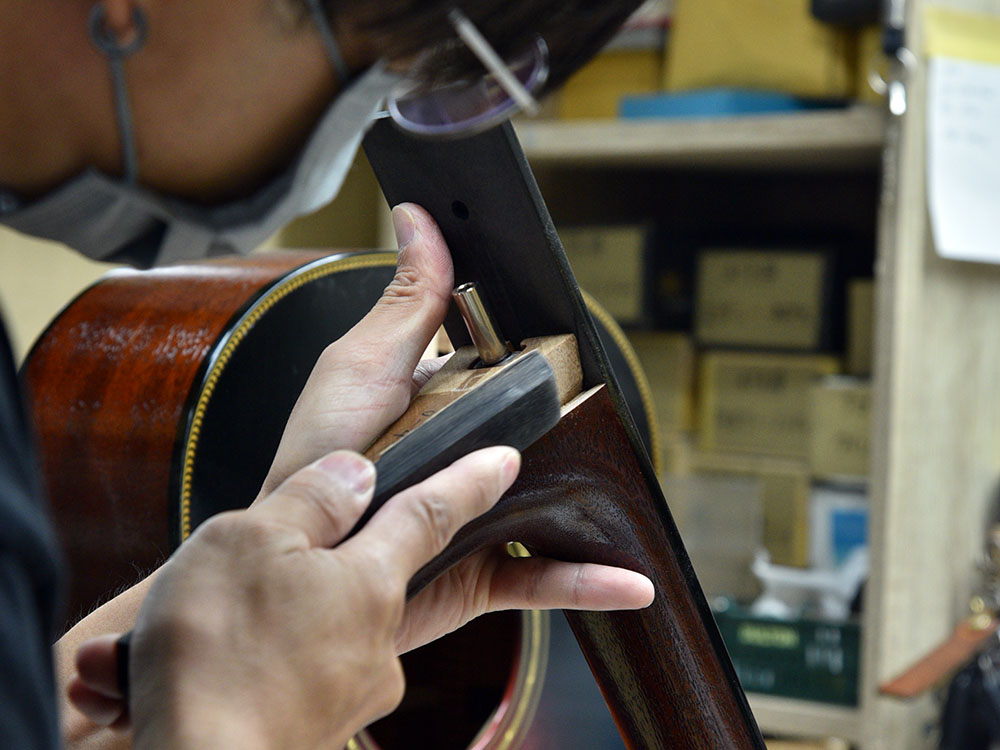
The Dovetail Joint: Precision Determines the Sound
The dovetail joint provides a large contact area, producing a rich tone that makes the body and neck sound as if they were carved from a single piece of wood. Thanks to its high structural strength, issues such as neck lift are rare, and the instrument boasts the stability that allows you to continue playing it for a lifetime while enjoying how its sound evolves and grows alongside you.
02
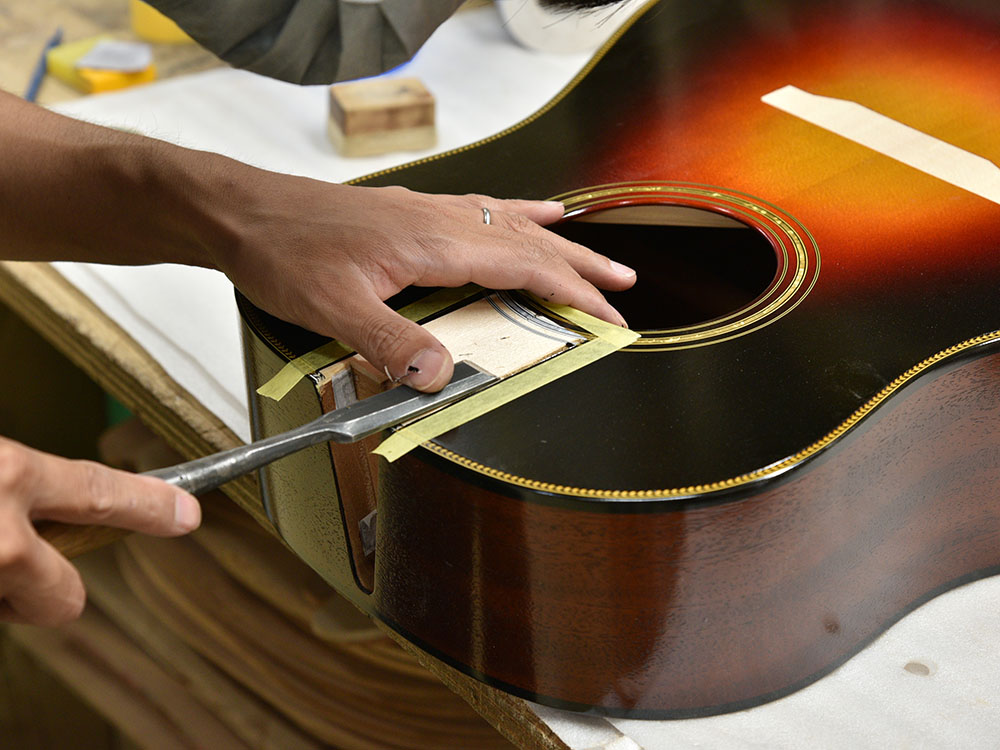
“Post-processing Assembly” Ensures High-Precision Assembly
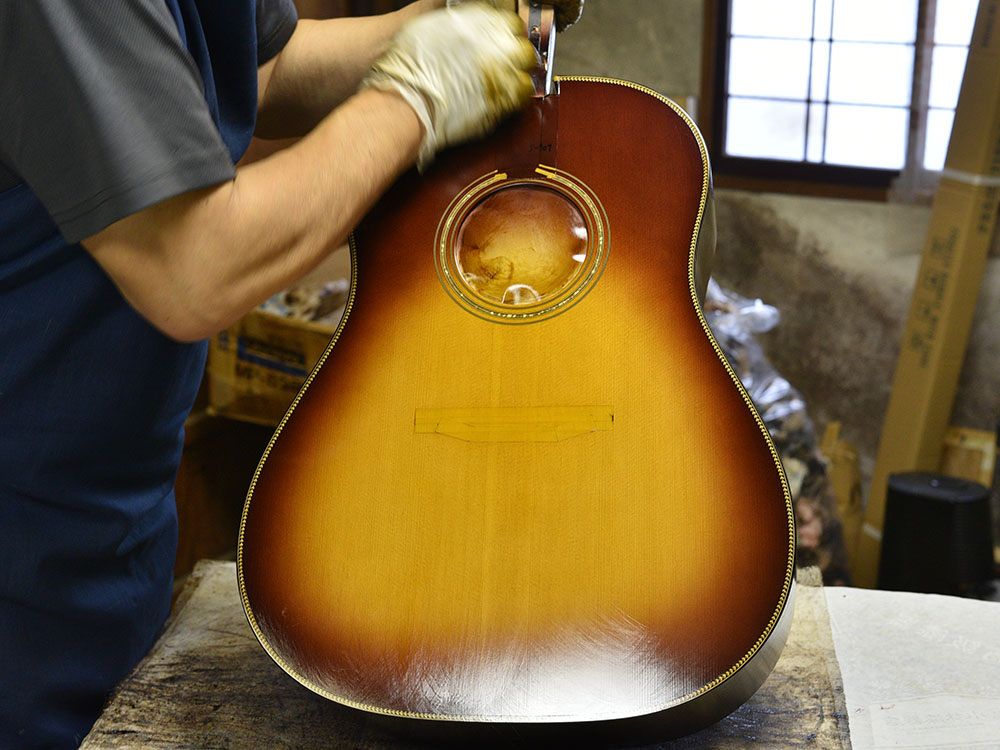
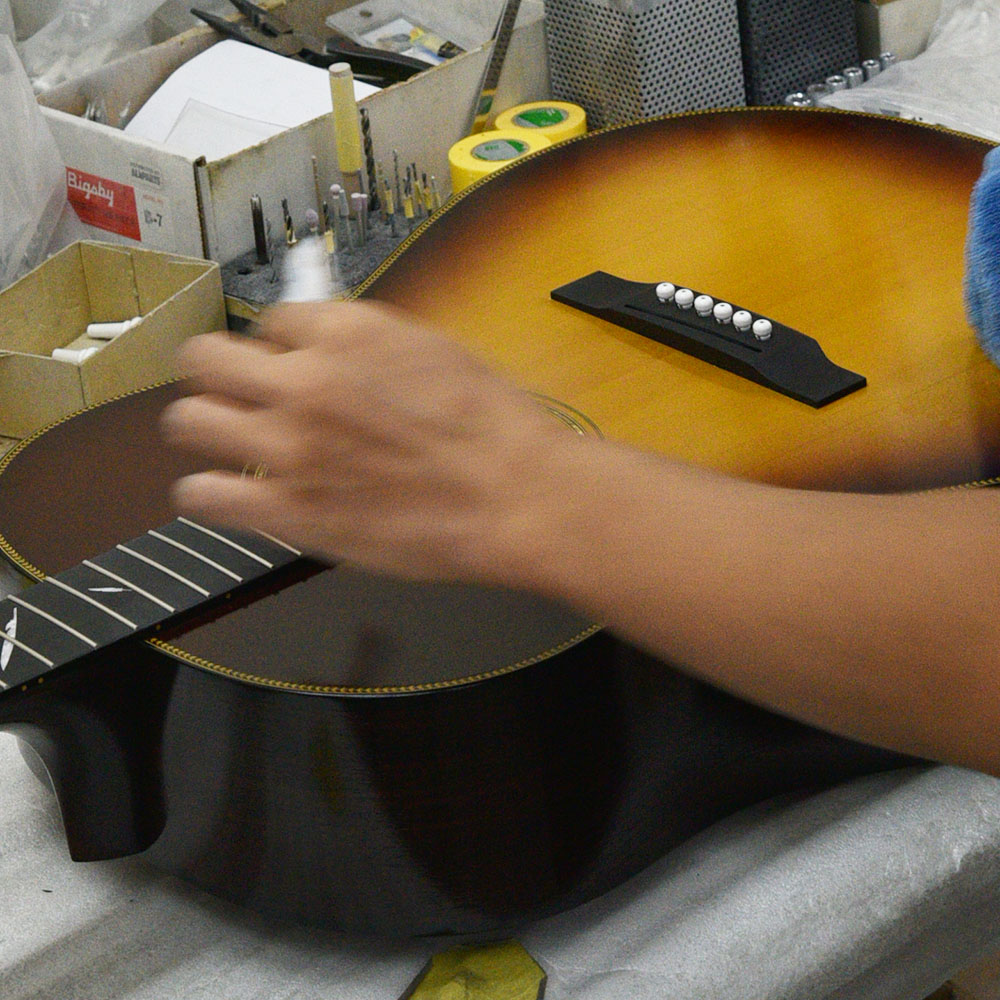
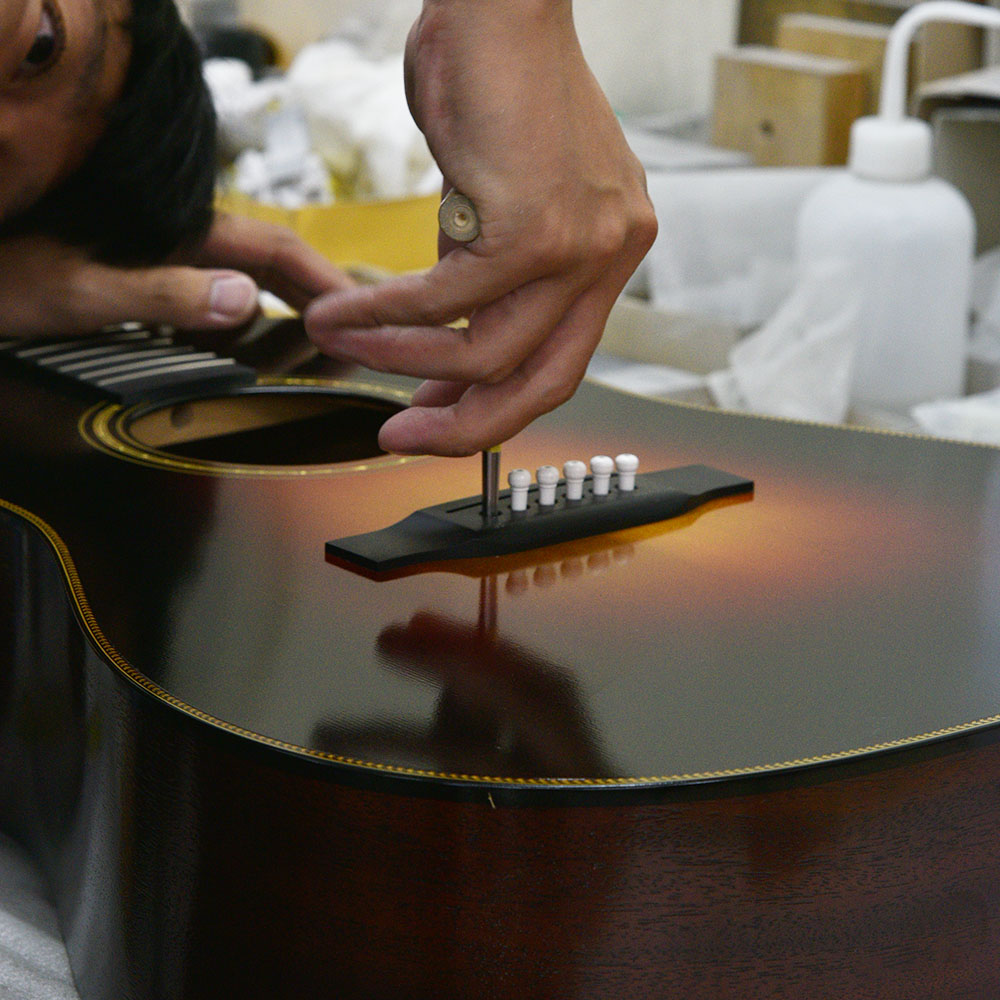
The body and neck are finished separately and then joined using the dovetail joint method. This method of joining the parts after painting is called “post-processing” assembly. By employing post-processing assembly, it is possible to observe the slight movement that occurs in both the body and neck during the finish process and make fine adjustments to the joint angle before assembling them. Since this method allows for the determination of the optimal neck angle relative to the bridge, it makes it easier to set the correct saddle height and string action, thereby contributing to improved playability.
Gallery製作風景

Precautions注意事項
-Are there any precautions I should take when caring for a Urushi lacquer-finished guitar?
For daily care, wiping the surface with a dry cloth is best. Please avoid using chemical wipes or other products containing polish or abrasives, as they can damage the finish. If there is a noticeable stain, we recommend wiping it with a cloth wrung out tightly.
-Does Urushi lacquer change over time?
Lacquer has relatively low resistance to UV rays, so while the deep color within the wood’s pores will remain, it may gradually fade over time, resulting in a lighter hue. We hope you will enjoy watching the finish change over time.
Related Pages関連ページ
The Eagle Product Page